
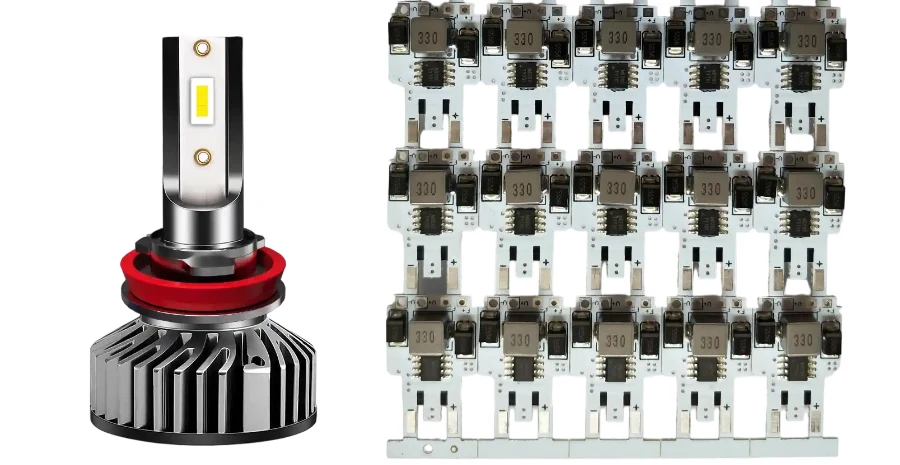
MCPCB + TIM + heatsinks, robust solder joints and EMC filtering for long lifetime under harsh conditions.
Common Questions
Why do automotive LED PCBs often use MCPCB structures?
Automotive lighting generates concentrated heat in a compact space, so the PCB has to move heat away efficiently. MCPCB structures, thermal interface materials, and heatsinks work together to keep junction temperature under control and protect long-term light output.
Why is vibration resistance so important for automotive LED boards?
Headlamps, DRLs, and rear lighting assemblies operate under continuous vibration, shock, and temperature cycling. If solder joints, mechanical support, and pad design are not robust enough, fatigue failures can appear long before the intended service life.
Why do surge protection and EMC filtering matter in vehicle lighting circuits?
Automotive electrical systems expose LED boards to load-dump events, switching noise, and EMC requirements that are much tougher than ordinary consumer products. Protection and filtering help prevent damage, reduce interference, and keep the lighting module stable in real vehicle conditions.
Why are IATF 16949 and reliability testing relevant for LED PCB suppliers?
Automotive programs require process discipline, traceability, and consistent product behavior across volume production. A supplier working to automotive-grade expectations is better positioned to support validation, endurance testing, and stable field reliability.