
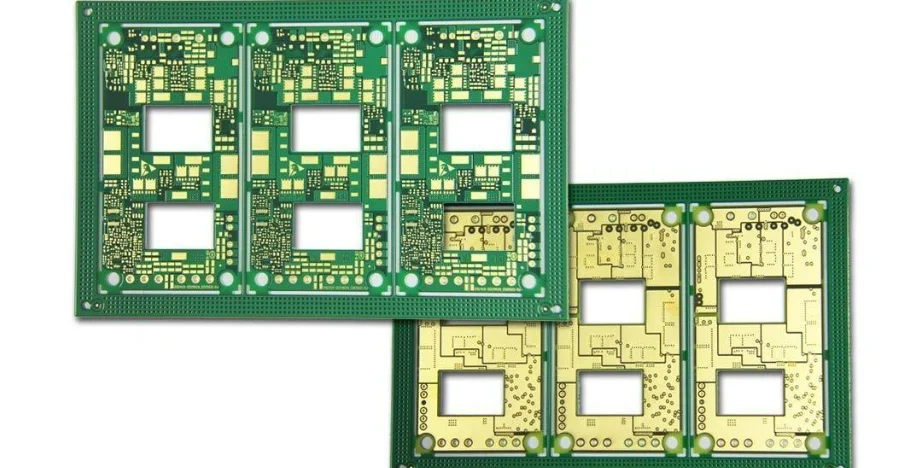
As healthcare becomes more digital, precise, and connected, Medical PCBs play an essential role in nearly every class of modern medical equipment. From diagnostic imaging to wearable health monitors, printed circuit boards are the heart of today’s life-saving innovations.
Medical PCB fabrication and assembly should follow agreed drawings, traceability, cleanliness and inspection requirements, with supplier capabilities confirmed through documented quality controls and a quality-system scope appropriate to the order. Imaging equipment, mobile care electronics and implantable systems have different supplier qualification and device verification requirements.
Medical PCBs are fundamental in medical robotics, where precision motion control and feedback are essential. Robotic-assisted surgery systems, for example, use sensor-rich PCBs to translate a surgeon’s hand movements into micromovements of surgical instruments. The controller’s response-time and error budgets determine board timing and EMC requirements; shielding is one possible measure alongside filtering, return-path design and system verification.
What Is a Medical PCB?
In laboratories, PCBs play a silent but critical role in devices like centrifuges, pipetting robots, and DNA sequencing equipment. These instruments demand repeatable control and reliable power delivery, often in thermally challenging environments. Select laminates and surface finishes for the assembly process and operating environment. Where moisture or reagent exposure is credible, evaluate enclosure protection and coating compatibility, including cleaning, residues and test access.
A Medical PCB is a printed circuit board engineered for use in medical devices. These boards must meet strict safety, reliability, and cleanliness standards. Unlike consumer electronics, medical PCBs are often used in devices that monitor vital signs, deliver therapy, or support life-critical functions, so the design must address foreseeable faults and their consequences at device level.
Medical PCB requirements should define:
- Package size and routing density for the actual portable, stationary or implantable design
- Applicable IPC fabrication and assembly acceptance criteria, with supplier certification scope checked where ISO 13485 is required
- Assembly cleanliness, handling and packaging appropriate to the specified contamination risks
- EMC, thermal and electrical safety requirements allocated from the finished device
When designing electronics for medical use, engineers should specify the expected service life, cleaning procedures, material compatibility, electrical safety and traceability. If sterilization is required, validate the particular process against the finished assembly; autoclave, EtO and radiation exposure are not interchangeable.
Common Applications of Medical PCBs
The demand for PCB assembly in medical devices spans across several fast-growing categories:
Medical electronics are becoming software-defined and cloud-connected, but the foundation remains a robust physical layer, the PCB. Real-time monitoring, device automation, and miniaturized diagnostics all depend on PCB integrity.
1. Medical Imaging Equipment
PCBs in imaging systems must handle high-speed data, analog-to-digital conversion, and precise timing:
- MRI scanner signal boards
- CT and PET data acquisition modules
- Ultrasound transducer arrays
- Digital X-ray and fluoroscopy control PCBs
2. Patient Monitoring Devices
Monitoring boards combine sensing, processing and communications. Battery life and wireless transmission apply where those functions are specified; patient-contact materials require a separate biological safety assessment:
- ECG/EKG boards
- Blood glucose and pressure monitors
- Respiratory rate sensors
- Multi-parameter telemetry modules
3. Wearable & Portable Medical Devices
Wearable and portable boards must fit their enclosure and withstand the expected handling; flex construction is an option where movement or packaging requires it:
- Health trackers with measurement performance validated for their intended use
- Wireless patches and biosensor PCBs
- Smart infusion pumps
- Real-time temperature or hydration monitors
4. Implantable Medical Electronics
Implantable PCBs are often custom-built and require extreme miniaturization and reliability:
- Cochlear implants
- Implantable cardioverter-defibrillators (ICDs)
- Responsive neurostimulation (RNS) systems
- Deep brain stimulation (DBS) devices
Key PCB Technologies for Medical Electronics
Technology selection depends on the device layout and verification plan:
- SMT Medical PCB Assembly for compact, high-density boards
- Flexible and Rigid-Flex PCB Fabrication where packaging or movement requires it; implantable use needs device-specific qualification
- HDI and Microvia Boards for dense component escape routing, with via construction qualified for the required service conditions
- Controlled Impedance Routing for RF and analog applications (calculate impedance)
- Conformal Coating and Cleaning for specified contamination or moisture control; neither establishes sterilization compatibility or biocompatibility by itself
Use our online Gerber Viewer to preview your medical PCB artwork before manufacturing. Artwork viewing does not replace electrical safety review or device validation.
Preparing a Medical PCB Manufacturing Handoff
HILPCB provides medical PCB fabrication and assembly for diagnostic, wearable and life-support equipment, with project-qualified support for implant, imaging and mobile-care applications. Available options include ISO-compatible processes, serialization/barcode and part/lot traceability, controlled assembly and clean packaging, IPC Class 3 routes, flex/rigid-flex/HDI/microvias, cleaning and coating, and high-mix/low-volume builds from fast prototypes through production. Engineering collaboration supports the released design and manufacturing handoff. HILPCB also supports low-power compact home-monitor boards, TENS/EMS and handheld therapy equipment, and smart pill-box hardware with Bluetooth, voice and app interfaces. Device risk, sterilization, biocompatibility and regulatory approval remain the finished-product team's responsibility.
Use the HilPCB quotation discussion to turn device requirements into a board-level manufacturing and release plan. Organize the handoff around five decisions:
- Supplier scope: Match any required quality-system certificate to the issuing body, supplying site and activities before approving that supplier for the order.
- Acceptance criteria: Put the agreed IPC workmanship criteria, drawing revision and inspection limits on the purchase specification so quality teams can judge the same released design.
- Traceability and handling: Define which lot and component identities must be retained, together with cleanliness limits and packaging requirements, so an affected build can be identified and investigated.
- Prototype-to-production changes: List quantities, approved substitutions and change-control requirements; identify which changes need engineering approval before the next build.
- Release package: Specify the inspection, electrical-test and assembly records to accompany each build, plus who reviews deviations and authorizes release.
ISO 13485 concerns a medical-device quality management system. A supplier certificate does not establish that a particular PCB design or finished medical device is safe or authorized for its intended use.
Medical PCBs for Consumer and Home Healthcare Devices
Medical electronics are used beyond hospitals and clinics. Today’s healthcare ecosystem includes a growing array of consumer health electronics, smart home medical devices, and assistive peripheral systems, all powered by compact, energy-efficient printed circuit boards.
Home Diagnostic Devices
Devices such as digital thermometers, blood pressure monitors, pulse oximeters, and glucometers may use microcontroller-based PCBs with wireless communication modules. These enable patients to record health metrics at home and share them with caregivers or telemedicine platforms. Battery-powered designs need a measured power budget; protecting transmitted records also requires device software, communications and access controls.
Portable Therapy Equipment
Modern physical therapy and pain relief devices, like TENS units, EMS muscle stimulators, and portable nebulizers, rely on PCBs designed for motion tolerance, efficient signal transmission, and minimal form factor. Rigid-flex construction can help where packaging or repeated movement justifies it; stimulation output, fault protection and therapeutic performance require device-level verification.
Smart Medication Dispensers and Reminders
Medication adherence technologies, including automatic pill organizers, reminder systems, and dosage verification devices, depend on intelligent PCBs with sensors, timers, and communication capabilities. Bluetooth syncing, voice alerts and app control are possible system functions; their implementation must address missed alerts, power loss and incorrect dispensing.
Assistive and Daily Living Devices
Medical PCBs are also used in devices that support mobility and independence, such as electronic canes, posture trainers, digital hearing aids, and fall-detection alarms. These applications require energy-efficient PCBs with high integration and user-friendly interfaces.
Home-use designs also need controls for charging, cleaning, handling and use by people without clinical training.
Start Your Medical PCB Project with Confidence
A useful manufacturing handoff identifies the board revision, BOM, drawings, test limits and required release records, together with responsibilities for changes and nonconformances.
For an imaging board, include the acquisition interfaces and timing requirements; for a wearable sensor, include the enclosure, movement and power constraints. Identify the board criteria the supplier must meet and the device verification retained by your engineering team before requesting a quote.
Frequently Asked Questions
Does a medical PCB always require Class 3 workmanship or the same isolation spacing?
No single workmanship class or isolation distance follows from the label “medical PCB.” Specify contractual fabrication and assembly criteria from the device risk assessment. Electrical protection depends on the circuit function, voltages, patient connections, insulation arrangement and applicable device requirements; do not substitute a generic board class for that assessment.
Does coating or a material certificate establish biocompatibility?
No. FDA’s biocompatibility overview evaluates the final finished device, including processing and sterilization where applicable. Direct or indirect body contact, tissue type and frequency and duration of exposure determine the assessment. An enclosed PCB with no contact pathway should not automatically receive the same requirements as a skin-contacting assembly or implant. Material data support the evaluation but do not authorize the finished device.