
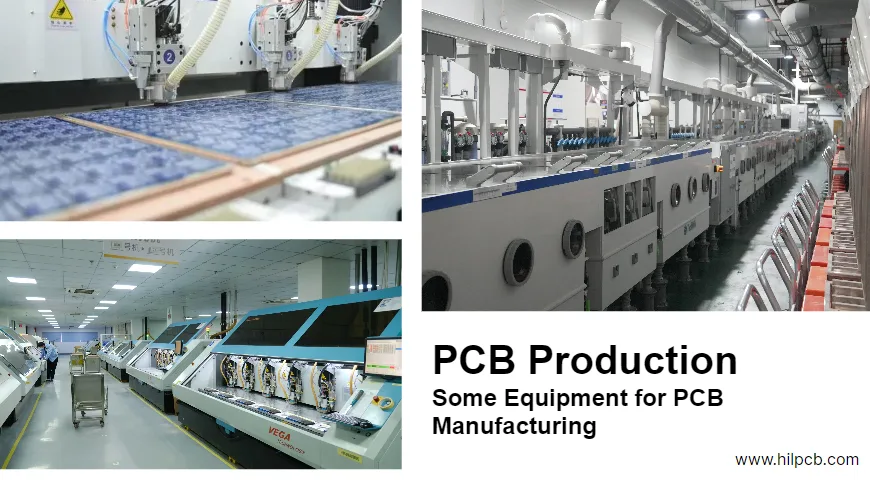
Scaling from PCB Prototyping to repeat production can expose variation and cost drivers that a small sample did not characterize. Define the construction, acceptance criteria, process route, quantity and forecast before treating a successful prototype as production qualification.
Automotive, medical and aerospace programs may impose supplier quality-system, approval and documentation requirements. IATF 16949, ISO 13485 or another certification is not automatically required for every bare board in those markets; verify the customer requirements and the proposed supplier’s legal entity, site and scope.
For HILPCB PCB Manufacturing and PCB Assembly, confirm the available technology, material supply, tooling, inspection and capacity against the actual build. A generic annual or monthly board count does not establish capacity for a particular stackup, board size or test plan.
Production Volume and Capacity Planning
Prototype, pilot, repeat and High Volume programs have different objectives; there is no universal quantity boundary or minimum order across all technologies.
| Stage or decision | Inputs and evidence to agree |
|---|---|
| Prototype | Released data, construction feasibility and targeted design checks |
| Pilot | Representative route, tooling, sample quantity and predefined acceptance criteria |
| Ramp | Measured yield/capability, material availability, bottlenecks and approved changes |
| Repeat or volume | Forecast, release quantities, capacity allocation, records and delivery milestones |
| Technology | Layer/via structure, size, material, copper, finish and assembly/test scope evaluated together |
Panel utilization, multi-up arrays and handling automation can affect output and unit cost. Evaluate rails, tooling, spacing, assembly constraints and inspection access with the supplier; a larger panel or automated line does not guarantee better yield.
HILPCB supports prototype runs through million-board annual programs, with published monthly ranges of roughly 50 to 50,000+ boards, automated panel production and dedicated, flexible or redundant line options for qualifying programs. Agree any dedicated tooling/lines, alternate equipment, maintenance plan and reserved capacity. Equipment redundancy can reduce interruption risk but does not prevent all delays. Confirm rigid, HDI, flex/rigid-flex, metal-core or specialty-material feasibility for the actual construction rather than assuming every technology is available at every volume. The published envelope spans 2–32-layer rigid, up to 64-layer qualified constructions, HDI, flex/rigid-flex, metal-core, Rogers/Taconic and ceramic; the quotation establishes the combination and available capacity.
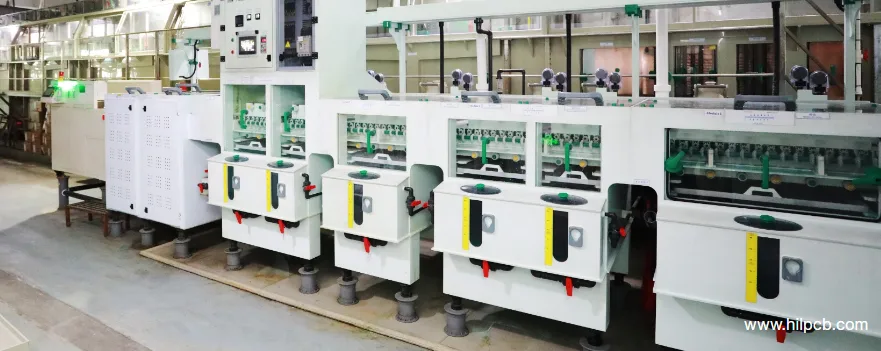
Statistical Process Control & Quality Systems
For the proposed PCB Factory, agree measured characteristics, sampling, control methods and reaction plans. Process records should identify the actual lot and approved route.
Statistical Process Control (SPC):
- Measurement plan: selected trace width, copper thickness and registration, with appropriate instruments and sampling
- Control charts: distinguish process behavior from specification limits and define investigation triggers
- Cpk analysis: assess a stable process relative to specification limits, with suitable distribution and measurement assumptions; HILPCB can plan a target above 1.33 for an agreed characteristic and process
- Alerts and reaction plans: define responsibility for out-of-control results; automation must be confirmed
- Corrective actions: investigate causes and verify whether recurrence is reduced
Process Capability Metrics:
- First-pass yield: percentage passing without rework (HILPCB can set a target above 95% for an agreed route; report actual measured yield and population)
- Defective-unit PPM: defective units divided by the defined population, multiplied by one million; defect opportunities require a separate definition
- On-time delivery: percentage meeting scheduled dates (HILPCB can target above 98% against agreed milestones; define the measurement period and report actual performance in the customer agreement)
- Customer returns: define the population, reporting period, classification and units; a return is not automatically a confirmed field failure
Quality Management Systems to Verify Where Required:
- ISO 9001:2015: quality management foundation
- IATF 16949: automotive quality-management system where required and within the supplier’s certified scope
- ISO 13485: medical-device quality-management system, subject to certified organization and scope
- AS9100: aerospace quality-management system when applicable to the certified supplier
- IPC-A-600 and IPC-6012: bare-board acceptability and rigid-board performance requirements, with the applicable revision/class and construction scope
Production Documentation: HILPCB can supply FAI, CoC, electrical-test results and requested microsection records as defined for the lot; each report covers the stated sample and acceptance criteria.
- Manufacturing travelers: record process parameters for each lot
- First article inspection (FAI): checks the documented sample and defined characteristics against released data; not proof of every subsequent unit
- PPAP documentation: automotive production part approval
- Certificate of conformance (C of C): declaration to the specified requirements, supported by agreed records; not a replacement for all test data
- Test data packages: electrical results, impedance measurements, dimensional reports
Use pilot and repeat-lot results to confirm that the approved fabrication route meets the requirements before releasing the next stage.

Production Cost Optimization Strategies
Volume production economics differ dramatically from prototype pricing. Understanding cost drivers enables optimization through advanced PCB Services support.
Material Cost Reduction:
- Volume pricing: negotiated rates with material suppliers
- Panel utilization: optimizes board layout to minimize waste
- Material standardization: reduces inventory complexity
- Alternative materials: cost-effective substitutes where performance allows
Process Efficiency Improvements:
- Automated handling: reduces labor costs, improves consistency
- Cycle time: evaluate bottlenecks, process limits and any investment needed before predicting throughput
- Yield improvement: reduces scrap and rework costs
- Lean manufacturing: eliminates non-value-added activities
Supply Chain Optimization:
- Component volume pricing: leverages purchasing power
- Vendor-managed inventory (VMI): agree ownership, carrying cost, replenishment and obsolete-stock responsibility
- Consignment: agree ownership and consumption/payment terms in the contract
- Long-term agreements: define pricing, revision clauses, commitments and supply limitations
Testing & Quality Cost Balance:
- Statistical sampling: appropriate only where agreed acceptance plans and governing requirements permit; it does not replace specified 100% bare-board electrical tests
- Automated testing: compare fixture/program costs and measured cycle time at the same fault coverage
- Root cause analysis: use confirmed causes and validated actions to reduce repeat defects
- Error proofing: verify the specific errors addressed and remaining inspection needs
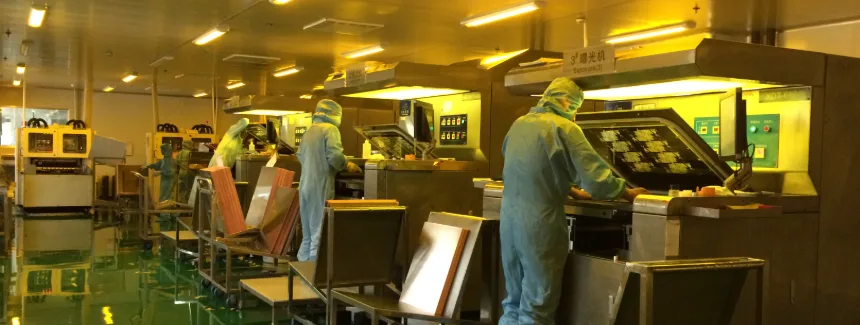
Production Planning & Supply Chain Management
HILPCB offers volume pricing, turnkey, consignment and partial-supply models, with vendor-managed inventory and buffer-stock programs available by contract. Authorized component sourcing, approved end-of-life alternatives and global logistics can be coordinated for the named program and site. Reliable production requires synchronized material flow and capacity planning coordinated through experienced PCB Manufacturer operations.
Demand Forecasting & Planning:
- Rolling forecasts: agree horizon, update frequency and firm versus nonbinding commitments
- Safety stock: buffers against demand variability
- Lead time management: coordinates material arrival with production schedules
- Capacity allocation: reserves production slots for committed volumes
Material Requirements Planning (MRP):
- Bill of materials (BOM) management: tracks component requirements
- Inventory control: balance availability, shelf life, cash and obsolete-stock risk
- Reorder point calculations: triggers procurement at appropriate timing
- Obsolescence monitoring: proactive notification of end-of-life components
Production Scheduling:
- Work order management: sequences jobs for optimal flow
- Bottleneck management: identify constraints and verify the proposed capacity plan
- Expedite requests: confirm feasibility and effects on material, inspection and other commitments
- Delivery coordination: aligns shipments with customer requirements
Supply Chain Risk Mitigation:
- Dual sourcing: qualify alternatives and assess shared dependencies; two suppliers do not eliminate all disruption risks
- Component allocation management: navigates supply shortages
- Alternative component qualification: enables substitutions when needed
- Buffer stock: protects against supply disruptions
Prototype to Production Transition
HILPCB provides pilot-build and production-ramp support, including DFM review, process-capability study, work instructions, tooling/fixture planning and first-article coordination. Use a documented transfer plan for PCB Design, fabrication, assembly and test. Freeze approved data and resolve differences between the prototype and intended production route.
Pre-Production Validation:
- Design for Manufacturing (DFM) review: optimizes for volume production
- Process capability studies: validates processes can meet specifications
- Pilot run: choose samples to represent the route, tooling, variation and acceptance evidence needed
- Yield analysis: identifies and addresses systematic issues
Production Documentation Development:
- Manufacturing work instructions: documents every process step
- Quality inspection criteria: defines acceptance standards
- Testing procedures: specifies electrical and functional verification
- Packaging and labeling: ensures correct product identification
Tooling & Equipment Preparation:
- Test fixtures: bed-of-nails or flying probe programming
- SMT stencils: optimized apertures for production paste deposition
- Assembly fixtures: ensures consistent component placement
- Handling trays and carriers: protects boards during processing
First Article Inspection (FAI):
- Dimensional verification: confirms finished size and features
- Electrical testing: use the specified netlist, continuity/isolation method, coverage and limits
- Microsection analysis: assess selected internal features on sampled structures; it does not inspect every board feature
- Functional testing: where assemblies are included, define stimuli, loads, firmware and measured behavior; a bare board has no complete product function

Production Release Evidence for a HILPCB Quote
Confirm the proposed fabrication and assembly site, external operations and current capacity for the actual technology. HilPCB's published envelope reaches up to 64 layers and 20 oz copper on qualified constructions, but production scale and availability must be confirmed for the actual technology — do not infer either from the service label.
- Construction: Exact materials, layer/via structure, outline, copper and acceptance requirements.
- Assembly: BOM, packages, sourcing model, stencil/fixtures, programming and test access.
- Quality: Applicable certificates, inspection plan, lot/unit traceability and deviation/change approval.
- Measured performance: Defined first-pass yield, defective-unit/return metrics and delivery reporting periods.
- Supply and schedule: Material/tooling availability, forecast commitments, inventory ownership and logistics.
A PCB Solutions package should state what is included and which records demonstrate conformance. Compare total landed costs and contractual commitments, not a geographic or production-volume label alone.
Frequently Asked Questions
What is the minimum order quantity for production?
Request a build-specific minimum and quantity price breaks after construction, tooling, material and test review. Prototype, pilot and volume labels do not establish universal board counts.
How does China PCB production pricing compare to domestic manufacturing?
Location alone does not establish a fixed manufacturing cost advantage. Compare equivalent specifications, sampling and electrical test requirements, order volumes, shipping, duties and delivery risk before selecting the lowest total landed-cost option.
What quality certifications are important for production PCB manufacturing?
ISO 9001, IATF 16949, ISO 13485 or AS9100 may be relevant to the customer program and supplied scope. Verify current legal entity, site, certificate coverage and customer approval; these are quality-system claims, not automatic approval of every finished board or product.
How long does prototype-to-production transition take?
Agree tooling, material procurement, pilot acceptance, corrective actions, customer approval and ramp milestones. The required evidence and actual build determine duration; a fixed pilot/ramp week range is not a universal commitment.