
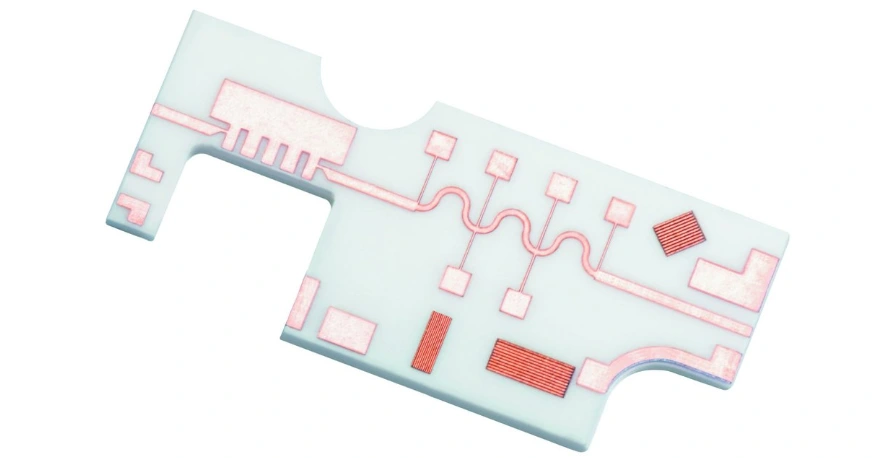
Ceramic circuit boards are ideal for high-frequency, high-voltage, or heat-intensive environments. The most common ceramic substrates include alumina (Al₂O₃) for cost-effective general applications, often called an alumina pcb or alumina circuit board, and aluminum nitride for superior thermal conductivity. Advanced applications also use LTCC pcb technology for multilayer integrated circuits and DPC ceramic pcb processes for direct-plated copper metallization. For high-voltage designs, engineers specify Al₂O₃ ceramic pcb for high voltage applications alongside dbc and dpc ceramic pcb configurations that offer excellent thermal cycling performance. At HilPCB PCB Factory, we specialize in building custom ceramic PCBs using these material systems.
From RF modules and power amplifiers to high-density LED platforms and aerospace-grade modules, we support design teams with fast lead times and precise builds.
Explore our product categories or learn more about our PCB manufacturing capabilities.
Ceramic PCB Configurations and Material Pairings
To support diverse design needs, we offer a range of material and layout choices:
| Material Type | Use Case | Notes |
|---|---|---|
| Alumina (Al2O3) | LED, RF, control | Cost-effective, reliable |
| Aluminum Nitride (AlN) | High-power, thermal | Superior conductivity |
| Zirconia | Sensor platforms | Tough and chemically stable |
| Metallization | AgPd, Au, Cu | For direct bonding and wire bonding |
| Finish Options | ENIG, OSP, Ag | Compatible with gold wire bonding |
We also support multilayer ceramic circuit board builds using LTCC or thick-film hybrid technology for special applications.
Design Considerations for Ceramic Circuit Boards
Working with ceramic circuit board technology requires specialized layout and production understanding. Unlike FR4-based boards, ceramic PCBs have unique physical and thermal behaviors that directly impact manufacturability and performance. At HilPCB, we help engineering teams adapt their existing stack-ups and routing to suit the properties of ceramic substrates.
Ceramic boards are dimensionally stable and support high-frequency signals, but they are more brittle and must be handled differently during both drilling and assembly. Standard mechanical vias may be replaced with laser-formed structures. Conductive layers are often screen-printed or plated with silver-palladium or gold systems for better bonding and conductivity.
Additionally, ceramic substrates enable direct heat transfer from components to enclosures or heatsinks. This thermal efficiency makes them ideal for high-power LED systems, RF amplifiers, and embedded control modules. Our engineering team often recommends design strategies such as split ground planes, isolated thermal islands, or silver-filled thermal vias to optimize heat distribution.
For designers shifting from standard PCB materials to ceramic, we provide guidance on layout constraints, edge clearance, metallization compatibility, and packaging options. Our full PCB manufacturing process is equipped to handle both thin-film and thick-film ceramic production technologies with advanced lamination and metallization control.
For designers unfamiliar with ceramic PCB fabrication, here’s how layout rules differ:
| Area | Ceramic Boards | Standard FR4 |
|---|---|---|
| Vias | Laser-drilled or punched | Mechanically drilled |
| Conductors | Screen-printed or plated | Etched copper foils |
| Tolerances | Tighter dimensional control | More lenient |
| Mounting | Direct die attach and silver epoxy | Solder paste with FR4 pads |
| Fragility | Brittle substrate | Fiberglass base |
Understanding these differences helps ensure first-pass success when transitioning from FR4 to ceramic circuit board designs.
Full-Service Ceramic Circuit Board Manufacturer and Assembler
HilPCB supports the complete ceramic PCB process:
- File check and layout adaptation for ceramic constraints
- Substrate sourcing: confirm grades and approved suppliers of AlN and Al₂O₃; beryllium oxide requires special hazardous-material controls and must not be assumed available.
- Metallization route selection: request supplier confirmation of thick-film, thin-film, DBC, AMB or LTCC capabilities relevant to the design.
- SMT and die-attach using conductive pastes or epoxy
- AOI, X-ray inspection, and test fixture design
- Global logistics with protective packaging and flexible payment options
Try our Gerber Viewer or 3D Viewer to verify design integrity before submission.
HILPCB supports AlN and Al₂O₃ sourcing, screen printing, sintering, and metallization, including difficult stackups, sensitive metallization, and thermally sensitive packages, with global order fulfillment. BeO sourcing, where requested, requires the applicable hazardous-material controls and project review. Confirm the production route and site for the selected ceramic construction.
Conclusion
As a trusted ceramic circuit board manufacturer and assembly partner, HilPCB PCB Factory is ready to support your most demanding projects. Whether you're building RF modules, high-voltage power delivery boards, or dense LED arrays, we have the tools, expertise, and materials to deliver precision results at speed.
Capability, material sourcing, assembly route and test coverage should be confirmed in writing for the selected ceramic substrate before committing to production.
From prototype to full production, we help you move forward, quickly and confidently, with ceramic PCB solutions engineered to perform. We collaborate with developers across industries, RF communications, laser driver systems, and aerospace modules, to deliver stable, repeatable results with each order.
Common Questions
What kinds of products are usually a good fit for ceramic circuit boards?
Ceramic boards are a strong fit for high-frequency, high-voltage, or high-heat applications where dimensional stability also matters. Typical examples include RF modules, power amplifiers, dense LED platforms, and selected aerospace or industrial control assemblies.
What is the biggest design adjustment when moving from FR4 to ceramic PCB?
The material behaves very differently. Ceramic is more stable thermally and electrically, but it is also more brittle, so drilling, metallization, edge handling, and assembly rules cannot simply be copied from an FR4 design flow.
Why is ceramic PCB manufacturing and assembly harder than standard FR4 work?
Because the challenge is not just one process step. Material choice, metallization system, firing or thick-film and thin-film processing, and downstream assembly all have to remain compatible with each other.
What should an engineering team do first when migrating an FR4 design to ceramic?
Start by re-evaluating the thermal path, layout margins, hole strategy, and package interface instead of trying to transfer the old design unchanged. The earlier the fabricator and assembly team join that review, the less rework you usually face later.
How should ceramic PCB materials and manufacturing processes be selected?
Ceramic board selection starts with substrate and conductor process. Compare alumina, AlN and other qualified substrates against thermal, insulation and mechanical requirements, then distinguish thick-film, thin-film and co-fired constructions. For LED or power-module sourcing, provide dissipation, isolation, joining and dimensional requirements so suppliers can confirm the actual ceramic route and its acceptance evidence.