
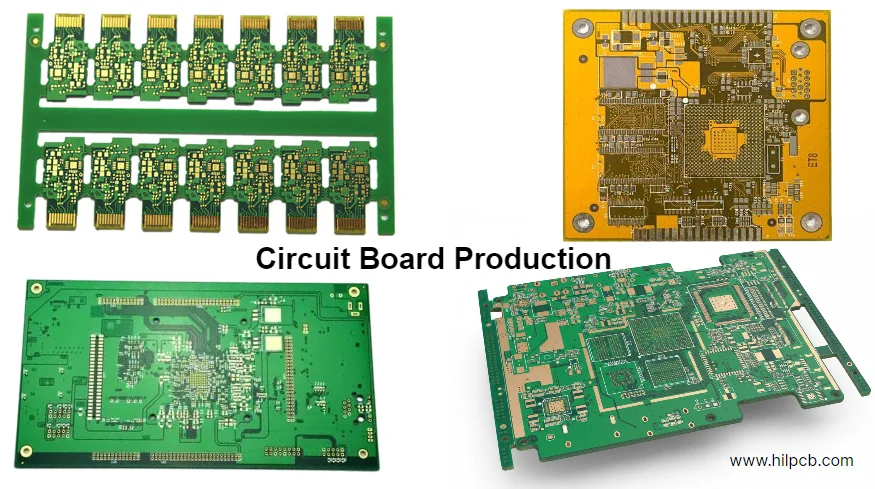
Circuit board production is the controlled transfer of a released PCB or PCBA design into repeatable manufacturing at the required quantity, quality level, test coverage, and delivery rate. Scaling is not simply running a prototype process more times; it requires frozen data, capable processes, supplier controls, traceability, and acceptance evidence.
Key Takeaways
- Freeze the product baseline and resolve prototype concessions before volume release.
- Identify critical-to-quality features and link each one to a process control or acceptance test.
- Separate first-article, lot-acceptance, periodic, and system-level tests.
- Track material, revision, process, inspection, test, rework, and disposition records at the level needed for containment.
- Compare quotations using written assumptions, NRE, recurring cost, yield ownership, and change-control terms.
Is the Design Ready for Volume Production?
A successful prototype proves selected functions on a small sample. It may not prove panel yield, material availability, process capability, fixture repeatability, long-term reliability, or alternative-component behavior. Before volume release, close the gaps that were temporarily accepted during development.
- Release one controlled set of schematics, fabrication data, assembly data, BOM, drawings, software, and test limits.
- Resolve blue-wire changes, hand rework, manual programming, temporary components, and undocumented operator instructions.
- Confirm stack-up, pressed thickness, impedance, hole and via structures, copper, finish, panel rails, tooling, fiducials, and depanelization.
- Review lifecycle, moisture sensitivity, approved alternates, counterfeit controls, and do-not-substitute parts.
- Define product class, cosmetic criteria, cleanliness, coating, serialization, packaging, and retained records.
- Approve the production fixture, software, golden unit or limits, calibration method, and failure disposition.
How Should Prototype Data Transfer Into Production?
Transfer the learning, not every temporary prototype method. Record the material lot, process route, reflow profile, inspection findings, test setup, failures, and rework from early builds. Then decide which settings become controlled production parameters and which were only development experiments.
First-article inspection should confirm that the released data, tooling, programs, and documentation produce the intended construction. A pilot build then exercises panel flow, component replenishment, line balance, fixtures, traceability, rework, packaging, and operator instructions at a representative scale. Volume release should follow agreed evidence, not the absence of obvious defects on a few boards.
How Does Quality Control Work at Scale?
Quality control begins with a control plan. Each critical feature needs a requirement, method, frequency, acceptance limit, record, and reaction plan.
| Production stage | Typical controlled inputs | Useful evidence |
|---|---|---|
| Incoming material | Laminate, copper, chemistry, components, storage and shelf life | Certificates, lot identity, incoming inspection, moisture and storage records |
| PCB fabrication | Imaging, registration, drilling, plating, lamination, etching, finish | Coupons, measurements, electrical test, AOI, microsection or impedance data as specified |
| Assembly | Paste, stencil, placement, reflow, THT process, cleaning, coating | SPI, AOI, X-ray, profile records, workmanship inspection, process logs |
| Programming and test | Firmware, fixture, instrument, limits, calibration, test sequence | Unit or lot results linked to revision and serial or lot |
| Nonconformance | Defect classification, containment, rework, retest, disposition | Traceable NCR, authorization, repair history, retest result, root-cause action |
| Change control | Material, component, process, tooling, program or site change | Notification, risk review, first article, targeted requalification and approval |
Statistical process control is useful where measurements are repeatable and the process has enough data to establish meaningful limits. It does not replace product acceptance, and a high first-pass yield does not prove that test coverage is adequate.
Which Failure Modes Matter During Scale-Up?
| Failure mode | Scale-up cause | Prevention or detection |
|---|---|---|
| Via or barrel defects | Drilling, desmear, plating, lamination or thermal stress | Coupon design, electrical test, microsection and reliability evidence by risk |
| Impedance drift | Material, pressed thickness, copper or etch variation | Released stack-up, controlled coupons, TDR limits and lot records |
| Solder opens or bridges | Paste transfer, placement, warpage, profile or contamination | SPI, AOI, X-ray where needed, profile validation and functional test |
| Wrong or mixed components | BOM ambiguity, replenishment, alternate or labeling failure | Approved BOM, feeder verification, traceability and first-off checks |
| Intermittent functional failures | Marginal power, timing, connector, firmware or fixture behavior | Defined operating modes, calibrated limits, fixture correlation and failure analysis |
| Recurring rework | Design escape or process window accepted as normal | Pareto review, corrective action, DFM change and requalification trigger |
What Drives Production Cost?
Recurring cost follows panel utilization, layer count, material, feature limits, via structure, finish, copper, controlled impedance, component mix, placement and THT time, inspection, test, handling, traceability, and scrap risk. Non-recurring engineering includes tooling, stencils, pallets, fixtures, programs, coupons, first articles, and qualification work.
Quote prototype, pilot, and production quantities separately. A manual prototype route can hide the fixture and cycle-time needs of volume production, while expensive tooling may be premature before the design is stable.
Circuit Board Production RFQ Checklist
- Released fabrication and assembly data, schematics, BOM with approved alternates, drawings, netlist, software, and revision history
- Stack-up, material and copper requirements, controlled impedance, hole and via structures, finish, panel constraints, and product class
- Component sourcing ownership, lifecycle requirements, consigned material, moisture controls, traceability, and substitution rules
- Solder alloy, cleanliness, coating, press-fit or selective-solder requirements, rework limits, and cosmetic criteria
- Electrical test, SPI, AOI, X-ray, programming, ICT, flying probe, functional test, environmental or reliability tests, and pass/fail limits
- Prototype, pilot and production quantities, forecast, target dates, packaging, records, NRE ownership, change notification, and requalification rules
Reference Standards and Responsibility Scope
- IPC-2221 — IPC
- IPC-6012 — IPC
- IPC-A-600 — IPC
- IPC-A-610 — IPC
- IPC J-STD-001 — IPC
- IPC-9252 — IPC
- ISO 9001 — International Organization for Standardization
Confirm current revisions, applicable class, customer specifications, and contractual precedence. HILPCB can control and document the manufacturing work included in the quotation. The customer retains responsibility for design intent, supplier approval criteria, system verification, safety and regulatory compliance, field reliability, and final release unless those activities are explicitly assigned.
Why Use HILPCB for Production Transfer?
HILPCB can coordinate DFM, stack-up review, PCB fabrication, component sourcing, assembly, inspection, programming, functional-test planning, and production records under one revision-controlled quotation. Buyers should request sample reports and written assumptions for their exact product rather than relying on unsupported yield, defect-rate, capacity, or lead-time claims.
Frequently Asked Questions
Can the same process be used for prototypes and volume production?
Sometimes, but not automatically. Materials and core process intent should transfer, while manual assembly, temporary tooling, broad substitutions, and development-only tests may need production replacements.
Does 100% electrical test guarantee PCB quality?
No. Electrical test finds defined opens and shorts, but it does not prove every dimensional, material, plating, cleanliness, thermal, assembly, or long-term reliability requirement.
When is first-article inspection required?
Use it when released data, tooling, material, process, site, supplier, or a critical design feature needs confirmation before broader production. Define the scope and acceptance evidence in the purchase requirements.
How should reworked boards be traced?
Link the defect, authorization, method, operator or station, replaced material, inspections, retest result, and final disposition to the board serial number or production lot.
What most improves volume-production quote accuracy?
A stable data package, realistic forecast, sourcing rules, test limits, traceability level, packaging, NRE ownership, and change-control expectations remove the largest assumptions.
Scale the Control Plan With the Product
Reliable volume production comes from a stable baseline and evidence matched to product risk. Send HILPCB the released package, expected volumes, critical features, and acceptance plan so prototype learning can become a controlled production process.