
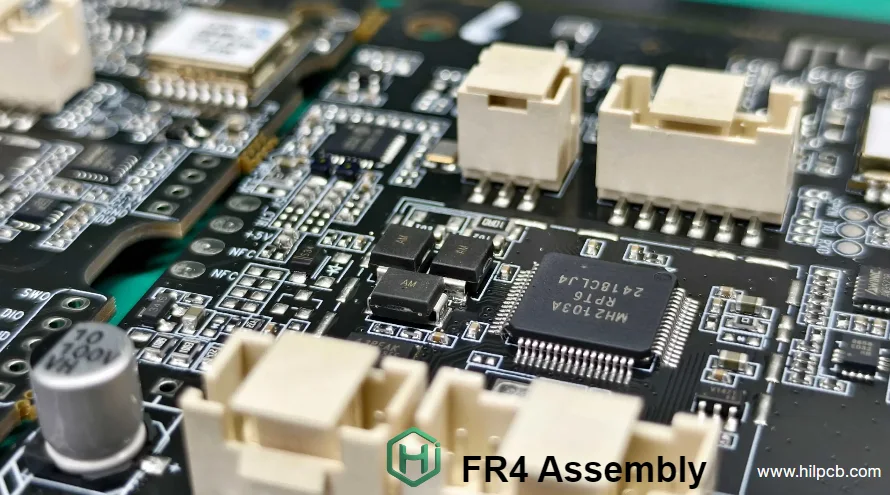
Looking for FR4 PCB assembly that is fast, clear, and reliable? This page tells you exactly:
- What we need to quote
- How soon you can get boards
- What drives cost (and how to lower it)
- How we ensure quality
- When to choose turnkey vs. consigned
1. What we need to quote (send these files)
- BOM (PN, package, qty, alternates if any)
- Gerber/ODB++ (or CAD + fabrication notes)
- Pick-and-Place / Coordinates + Assembly Drawing
- Test requirements (ICT/FCT/flying probe) and any special programming
- Target qty & schedule (prototype / pilot / mass production)
Need bare boards too? We build FR4 PCBs in-house — see our one-stop PCB manufacturing, plus high-layer multilayer PCB and dense-routing HDI PCB.
2. Realistic lead times (so you can plan)
- Proto (parts ready): 48–72 hours
- Small batch (50–500): ~5–7 days
- Production (500+): ~10–15 days
- HDI / complex builds: add a few days for material & stencil prep
Lead time depends on parts availability and DFM readiness. If you’re time-critical, ask for expedite in the quote form.
3. What drives cost — and how to lower it
Main cost drivers
- Placement points (total components), BGA/fine-pitch, double-sided reflow
- Special processes (selective solder, heat sinks, conformal coating)
- Test scope (flying probe/ICT + functional tests)
- Setup/stencil per SKU, changeovers, packaging
Quick ways to save
- Keep most parts on one side when possible
- Prefer standard packages (e.g., 0402/0603, common QFN/QFP)
- Use economical finish on FR4 boards when ENIG isn’t required
- Provide approved alternates in BOM to prevent delays
- Panelize for better SMT throughput (we’ll propose a panel if needed)
4. Quality you can expect
Process controls (every build)
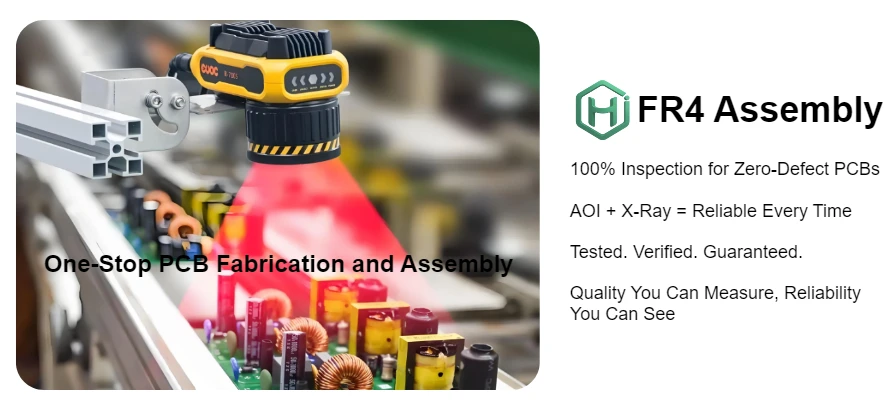
- SPI before placement → consistent paste volume
- AOI after reflow → 100% visual coverage
- X-ray for BGAs/hidden joints (as needed)
- First Article sign-off each run + traceable lot labels
- Optional: flying probe, ICT, and functional testing to your spec
Standards we build to
- IPC-A-610 Class 2 (default) or Class 3 on request
- RoHS/REACH compliant materials and processes
Documentation
- First Article photos, AOI/X-ray reports (when applicable)
- Test logs and rework tickets (if any)
- Full traceability for boards and components
Doing dense layouts or tight impedance? Our fab can pair assembly with controlled-impedance FR4 boards and local HDI (via-in-pad where needed). See HDI PCB.
5. Turnkey vs. Consigned — which is right for you?
| If you need… | Choose | Why |
|---|---|---|
| Speed and one-stop accountability | Turnkey | We source parts, build boards, assemble, and test — one PO, one timeline |
| Lowest part prices from your channels | Consigned | You buy & ship components; we assemble |
| A balance (you keep key ICs) | Hybrid | You consign critical/long-lead parts; we supply passives & common parts |
Unsure? Start turnkey to move fast; switch to hybrid/consigned once your supply chain is stable.
Capabilities at a glance
- SMT down to 01005, fine-pitch 0.3 mm, full BGA/µBGA support
- Through-hole: wave & selective solder
- Reflow: lead-free, nitrogen profiles available
- Testing: flying probe, ICT, FCT; programming & calibration on request
- Scale: prototypes to mass production under one roof
- Boards: in-house FR4 fab with PCB manufacturing, plus multilayer PCB / HDI PCB
FAQ
What’s the fastest way to start?
Send BOM + Gerber + Pick-and-Place. Tell us your qty and deadline in the notes. We’ll reply with price, lead time, and any DFM flags.
Can you help if parts are hard to find?
Yes — turnkey quotes include alternates and stock checks. For urgent builds we’ll suggest drop-in equivalents (with your approval).
Do you also make the FR4 bare boards?
Yes — that’s why many customers choose our one-stop build: fewer hand-offs, faster issues-to-fix loop, and unified QA.
How do you price testing?
By time and fixture complexity. Flying probe is fastest for prototypes; ICT/fixtures make sense at volume; FCT follows your spec.