
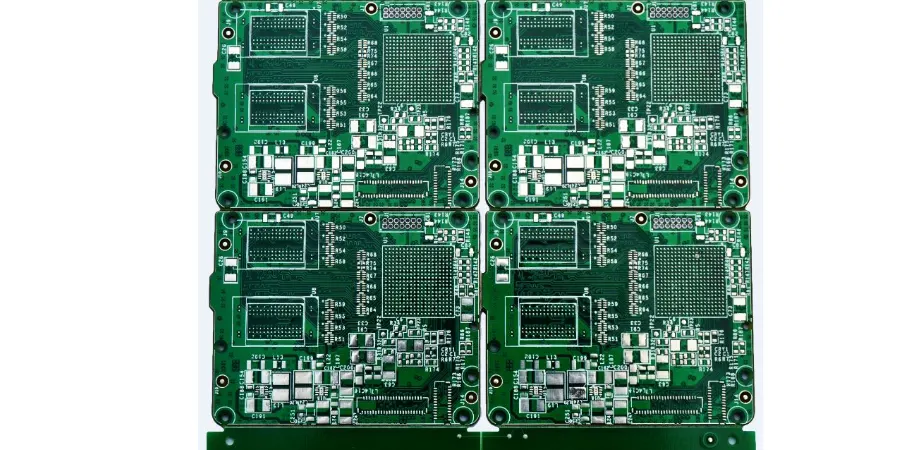
Immersion silver can provide a flat, solderable coating on exposed copper. For a HilPCB PCB Factory (HILPCB) quotation, specify the finish, board construction, assembly and storage conditions. Confirm process availability and the inspection/test package; the finish alone does not guarantee RF performance, solder-joint life or suitability for every environment. HILPCB manufactures and assembles boards using HASL, immersion gold and immersion silver finishes, including complex high-frequency PCB projects, and provides tailored design consultation through fabrication, assembly and final testing as a turnkey route. Finish selection, storage, solderability, press-fit and RF performance are evaluated for the specified chemistry and use; no finish guarantees universal lifetime or environmental performance.
What is Immersion Silver PCB?
Immersion silver (ImAg or IAg) is a thin immersion deposit over copper. Agree the chemistry/process, deposit requirements, measurement locations and applicable purchaser-selected specification revision. The IPC-4553A public scope addresses this finish, including solderability and packaging; it does not make a surface-finish label a complete product qualification.
During soldering, the silver can dissolve into the bulk solder, leaving a copper–tin joint interface. MacDermid Alpha describes this for its Sterling process. Its supplier-specific process claims are not evidence that HILPCB uses that chemistry or that every immersion-silver build has identical performance.
Benefits of Immersion Silver PCB
Immersion Silver is widely known for its benefits in applications requiring low resistance, excellent solderability, and a clean finish. Here are some of the advantages:
1. Superior Solderability
A qualified deposit can offer a relatively flat solderable surface for fine-pitch assembly. Actual wetting and joint quality depend on surface condition, storage, flux/paste, thermal profile and package geometry. Flatness does not by itself establish complete solder coverage or long-term reliability.
2. High Electrical Performance
The silver layer in Immersion Silver PCBs offers excellent conductivity and low electrical resistance, making it an excellent choice for high-frequency and high-speed applications. The conductive finish can reduce nickel-related surface-loss concerns on exposed RF features, but the finished channel must be evaluated for loss and reliability in RF circuits and digital systems.
3. Cost-Effectiveness
Compare finish quotations for the same geometry, quantity, inspection and assembly route. Immersion silver may avoid the nickel/gold process used in ENIG, but price, yield, packaging and storage costs are supplier- and order-dependent; there is no universal cost or durability ranking.
4. Environmental Benefits
An immersion-silver finish can be used in a RoHS-compliant PCB build when the complete materials and processing meet the applicable restrictions for modern PCB manufacturing. The finish alone does not establish the environmental impact or compliance of the finished assembly.
5. Storage and Handling Controls
Silver can discolor in moisture and sulfur- or chlorine-containing contamination. Keep boards in the fabricator/chemistry supplier's approved packaging with compatible interleaves and handling materials; control storage conditions, opening time, resealing and lot age. Avoid direct pad handling and unapproved cleaning, polishing or baking. A dry bag or vacuum seal alone does not establish protection from all contaminants or an unlimited shelf life.
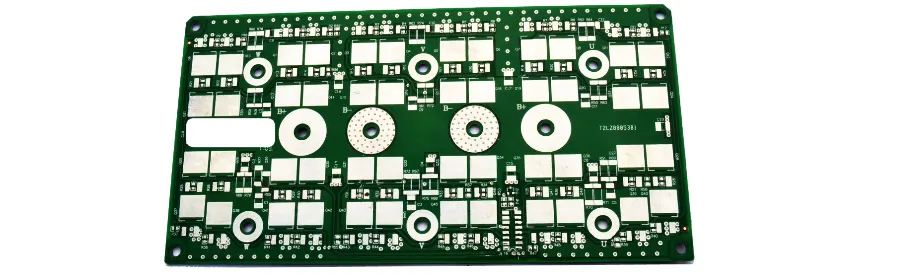
Applications of Immersion Silver PCBs
Immersion Silver is used in various applications where excellent solderability and high electrical performance are required. Some common use cases include:
- Consumer Electronics: A candidate for suitable smartphones, wearables and other assemblies when package, storage and reliability conditions are qualified.
- Automotive Electronics: Automotive sensors, controllers and ECUs require program-specific finish and assembly qualification, including exposure conditions; ImAg alone does not establish harsh-environment durability.
- Telecommunications: Evaluate nickel-free exposed conductor surfaces against the actual RF loss model and environment for high-frequency PCBs used in communication devices, satellite systems, and RF circuits.
- Medical Devices: For medical electronics, finish selection must be qualified against storage, assembly and end-use reliability requirements.
- High-Speed Digital Systems: In high-speed PCBs, especially those involving high-frequency signals and dense interconnections, Immersion Silver maintains superior performance when a low-loss conductor surface is beneficial, subject to stack-up and channel validation.
Comparing Immersion Silver to Other Surface Finishes
While Immersion Silver provides excellent solderability and conductivity, it is important to compare it with other surface finishes, such as ENIG and HASL, to understand where it excels and where it might fall short.
Immersion Silver vs ENIG: ImAg is a thin silver-over-copper finish; ENIG uses electroless nickel and immersion gold. Compare pad flatness, soldering and any contact/bonding requirements, assembly exposures and end-use environment. Neither is universally more durable or preferable for every RF, storage or thermal-cycle condition.
Immersion Silver vs HASL: HASL leaves a solder coating whose pad height varies with geometry and leveling. ImAg can provide a flatter surface. Compare actual coplanarity, solderability, thermal exposure, cost and handling rather than assuming one finish always solders better.
Why Choose HilPCB PCB Factory for Immersion Silver PCBs?
For PCB manufacturing services, supply the required finish, alloy/assembly constraints, storage and expected environment. Confirm the qualified process, thickness/coverage criteria, lot identity, packaging and any extra acceptance tests with HILPCB before release.
For deposit thickness, agree a calibrated method suitable for a thin coating, such as XRF with appropriate standards, spot size and measurement locations. Thickness is not a solderability test. Specify visual coverage/contamination checks and any solderability conditioning, sampling and acceptance separately. The public IPC-4553A contents identify thickness, solderability, storage and XRF as distinct topics; full contractual requirements must be obtained and agreed.
For more information, explore our other products, such as ceramic PCBs, rigid-flex PCBs, and IC substrate PCBs.
Frequently Asked Questions
What is an immersion-silver circuit board?
It is a board with a thin immersion-silver finish over exposed copper. The finish protects solderable surfaces within its qualified handling/storage conditions; it does not specify the laminate, layer count, impedance or complete product reliability.
How does immersion silver compare with ENIG and HASL?
Compare the actual assembly, flatness, exposed RF geometry, contact/bonding needs, environmental exposure and total order cost. ENIG has a nickel/gold structure; HASL leaves a leveled solder coating. No finish is universally best or longest-lived for all uses.
Is immersion silver suitable for multiple reflow cycles?
It can be when the selected chemistry, deposit, storage and complete assembly sequence are qualified. Sterling is one supplier example described for multiple heat excursions; it is not a universal cycle-count guarantee. Multiple assembly reflows and repeated in-service thermal cycles are different qualification questions.
How should immersion-silver boards be stored?
Use the supplier-approved packaging and compatible materials, with defined storage, handling, opened-pack and resealing instructions. Control moisture and contaminant exposure, particularly sulfur and chlorine. Do not substitute a generic vacuum-pack recommendation or a fixed shelf life for the actual process instructions.
Does visible tarnish prove solderability has failed?
No. Appearance and solderability are different acceptance characteristics. Record the discoloration, exposure and lot history, then use the agreed visual and solderability criteria to decide disposition. Do not accept or reject solely from color, and do not remove tarnish with an unqualified treatment.
Can immersion silver be used with press-fit connectors?
Some connections can use it; IPC-4553A's public scope explicitly allows possible press-fit use. Confirm the connector supplier's approved hole finish, finished-hole geometry, insertion forces and electrical/mechanical qualification. Neither softness alone nor a thicker ENIG coating establishes compatibility or repeated-mating durability.