
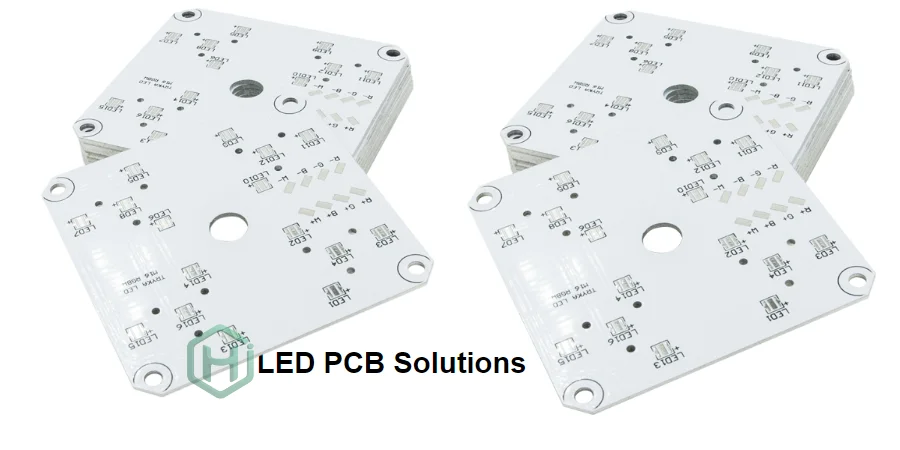
Professional LED PCB manufacturing requires thermal engineering expertise preventing hotspots, aluminum substrate fabrication processes ensuring dielectric integrity, driver circuit integration managing power conversion, and assembly capabilities handling thermal interface materials. Success demands complete solutions balancing thermal performance, electrical isolation, optical design, and cost effectiveness across diverse lighting applications.
At HILPCB, we deliver comprehensive LED lighting PCB solutions including aluminum LED PCB supplier materials, high thermal conductivity LED PCB designs, and complete LED PCB assembly service for commercial fixtures, street lighting, automotive headlamps, and industrial high-bay systems. Our LED PCB fabrication service and MCPCB for LED lighting expertise serve customers developing high brightness LED PCB, outdoor LED PCB, and integrated systems. As a leading LED PCB manufacturer and LED driver PCB manufacturer, we provide LED PCB prototype service with thermal validation and scalable production for LED PCB OEM supplier partnerships alongside custom LED PCB solutions and cost effective LED PCB optimization with comprehensive LED PCB design support.
Managing Thermal Dissipation in High-Power LED Arrays
LED junction temperature directly determines luminous efficiency, color stability, and operational lifetime—every 10°C increase above optimal temperature reduces light output by 3-5% and halves LED lifespan. High-power LED arrays in commercial fixtures generate 50-200W of heat requiring efficient thermal paths from LED junctions through PCB to heat sinks preventing thermal runaway and premature failures.
At HILPCB, our high thermal conductivity LED PCB engineering implements systematic thermal management ensuring junction temperatures remain within manufacturer specifications for LED lighting PCB solutions across demanding applications.
Key Thermal Management Techniques
- Aluminum Substrate Selection: Using MCPCB for LED lighting with 1-3mm thick aluminum base (thermal conductivity 120-200 W/m·K) provides superior heat spreading compared to standard FR4 (0.3 W/m·K) for high brightness LED PCB applications.
- Dielectric Layer Optimization: Thin dielectric layers (75-100μm) with high thermal conductivity (1-3 W/m·K) minimize thermal resistance while maintaining electrical isolation between copper circuit layer and aluminum base in aluminum LED PCB supplier constructions.
- Thermal Via Implementation: Although solid aluminum base provides primary heat path, strategic copper thermal vias through dielectric layer enhance local heat transfer beneath highest power LED dies for custom LED PCB solutions performance.
- Copper Layer Thickness: Using 2-4oz copper traces improves lateral heat spreading across LED array while providing adequate current capacity for LED driver PCB manufacturer power distribution networks.
- Thermal Interface Material Integration: PCB design accommodating thermal grease or phase-change materials between aluminum base and heat sink ensures effective thermal coupling in LED PCB assembly service installations.
- LED Spacing Optimization: Strategic LED placement preventing thermal clustering while maximizing optical uniformity ensures even temperature distribution across outdoor LED PCB modules.
Thermal Performance Validation
Through thermal simulation (finite element analysis), infrared thermal imaging at operating power levels, and accelerated life testing at elevated temperatures, HILPCB validates LED PCB manufacturer thermal designs maintain junction temperatures within specifications. Documented thermal testing supports customer product validation and warranty calculations for LED lighting PCB solutions requiring verified reliability.
Achieving Electrical Isolation in Metal Core LED PCB Designs
Aluminum MCPCB substrates require dielectric insulation layers preventing electrical shorts between circuit copper and conductive aluminum base while maintaining thermal performance. Inadequate dielectric thickness, pinholes, or breakdown under operating voltages cause catastrophic failures requiring rigorous material selection and process controls.
At HILPCB, dielectric integrity engineering ensures electrical isolation safety in MCPCB for LED lighting handling mains voltages and high LED string voltages for LED PCB fabrication service reliability.
Key Electrical Isolation Techniques
- Dielectric Material Selection: Using polyimide or ceramic-filled epoxy dielectrics rated for 2-3kV breakdown voltage provides safety margin for LED systems operating at 48-400VDC in high thermal conductivity LED PCB designs.
- Dielectric Thickness Control: Manufacturing process controls maintaining minimum dielectric thickness (typically 75-125μm) prevent weak spots while balancing thermal performance requirements for aluminum LED PCB supplier quality.
- Hi-Pot Testing Validation: 100% electrical testing at 1.5-2× rated voltage verifies dielectric integrity on production boards preventing field failures in LED lighting PCB solutions applications.
- Clearance and Creepage Design: Adequate spacing between circuit elements and board edges per IEC 60950/62368 standards ensures electrical safety for mains-connected LED driver PCB manufacturer circuits.
- Edge Coverage Protection: Conformal coating or potting at board edges prevents moisture ingress and contamination compromising dielectric integrity in outdoor LED PCB installations exposed to weather.
- Voltage Rating Documentation: Material certifications and test reports documenting dielectric breakdown voltage support customer safety approvals and regulatory compliance for custom LED PCB solutions requiring certification.
Isolation Performance Testing
Through hi-pot testing, insulation resistance measurement, and environmental stress testing (temperature-humidity-bias), HILPCB verifies electrical isolation meets specifications. Our LED PCB manufacturer quality systems ensure dielectric integrity throughout product life for LED PCB assembly service requiring long-term safety.

Integrating LED Driver Circuits on Thermal Substrates
Complete LED lighting solutions integrate constant-current driver circuits on the same PCB as LED arrays—combining power conversion, current regulation, dimming control, and thermal management. Mixed-technology integration requires balancing thermal demands of power semiconductors with LED cooling requirements while maintaining electrical performance.
At HILPCB, our LED driver PCB manufacturer expertise enables integrated LED lighting PCB solutions combining power electronics with LED arrays for compact, cost-effective lighting modules.
Key Driver Integration Techniques
- Hybrid Substrate Architecture: Using aluminum base beneath LED sections while heavy copper PCB or standard FR4 for driver circuits optimizes thermal management and cost in segmented custom LED PCB solutions layouts.
- Thermal Zone Management: Strategic component placement separating LED thermal zones from driver heat sources prevents thermal interference while sharing overall heat sink for high brightness LED PCB assemblies.
- Power Trace Optimization: Heavy copper traces (2-4oz) distributing high LED currents (350mA-3A per string) minimize resistive losses and voltage drop in MCPCB for LED lighting power distribution.
- EMI Control Strategy: Careful layout of switching converter circuits (flyback, buck converters) minimizing magnetic loop areas and controlling high-frequency noise for LED driver PCB manufacturer EMC compliance.
- Protection Circuit Integration: Overcurrent, overvoltage, and thermal shutdown protection integrated on driver PCB ensuring LED system safety and longevity for LED PCB fabrication service reliability.
- Dimming Interface Implementation: PWM or 0-10V dimming control circuits with proper isolation and filtering enabling smooth dimming performance in LED lighting PCB solutions for commercial applications.
Driver Circuit Validation
Through power efficiency measurement, current regulation accuracy testing, dimming performance characterization, and thermal imaging of driver components, HILPCB validates integrated driver designs meet specifications. Our LED PCB assembly service ensures driver circuit performance across production volumes for LED PCB OEM supplier quality consistency.
Optimizing Optical Performance Through PCB Design
While thermal management dominates LED PCB design, optical considerations affect lighting quality, uniformity, and efficiency. PCB material reflectivity, LED placement geometry, and solder mask color influence optical output and beam characteristics requiring coordination between thermal and optical requirements.
At HILPCB, optical design support integrated into LED PCB design support services optimizes light output and quality for LED lighting PCB solutions across commercial and industrial applications.
Key Optical Optimization Techniques
- White Solder Mask Application: High-reflectivity white solder mask (reflectance >85%) maximizes light extraction and improves illumination efficiency compared to standard green mask for high brightness LED PCB designs.
- LED Placement Geometry: Optimized LED spacing and array patterns balancing thermal constraints with optical uniformity requirements ensure consistent illumination in outdoor LED PCB fixtures.
- Reflective Cavity Integration: PCB-based reflector cavities formed by white-coated sidewalls directing light forward improve extraction efficiency for directional LED lighting PCB solutions applications.
- Color-Coded Circuit Identification: Using different colored solder masks for multi-channel LED systems (RGB, tunable white) aids assembly and troubleshooting for custom LED PCB solutions complexity.
- Surface Finish Reflectivity: ENIG surface finish providing consistent reflectivity and preventing oxidation-related degradation maintains optical performance over lifetime in aluminum LED PCB supplier products.
- Secondary Optics Integration: PCB design accommodating lenses, reflectors, or diffusers with proper mechanical mounting and optical alignment for complete LED PCB assembly service lighting modules.
Optical Performance Verification
Through photometric testing (total lumens, beam angle, color temperature, CRI), HILPCB validates optical performance meets lighting specifications. Our LED PCB manufacturer designs balance thermal and optical requirements delivering efficient, high-quality illumination for cost effective LED PCB commercial and industrial lighting.

Enabling Cost-Effective LED PCB Manufacturing
Aluminum MCPCB materials and thermal design requirements typically cost 2-5× more than standard FR4 PCBs—for cost-sensitive commercial lighting markets, optimizing thermal performance without over-specification determines competitive positioning. Professional LED PCB suppliers help customers balance performance with economics.
At HILPCB, cost effective LED PCB approaches optimize value for LED PCB OEM supplier partnerships in competitive lighting markets while maintaining thermal reliability and electrical safety.
Key Cost Optimization Strategies
- Selective Aluminum Usage: Using aluminum substrate only for high-power LED sections while standard FR4 for driver circuits and controls reduces material costs in segmented LED lighting PCB solutions designs.
- Dielectric Thickness Optimization: Balancing thermal performance (thinner better) with electrical safety requirements and manufacturing yield prevents over-specification in MCPCB for LED lighting production.
- Standard Aluminum Thickness: Leveraging common 1.0-1.6mm aluminum base thicknesses rather than custom specifications reduces material costs and lead times for aluminum LED PCB supplier orders.
- Copper Weight Selection: Using 2oz copper rather than defaulting to 4oz where current requirements permit reduces costs while maintaining adequate performance for LED driver PCB manufacturer power distribution.
- Panel Utilization Optimization: Efficient board layouts maximizing aluminum panel usage reduces per-unit material waste particularly significant for smaller LED modules in LED PCB fabrication service production.
- Process Simplification: Minimizing premium processes (laser drilling, buried vias) where conventional manufacturing meets requirements controls costs for custom LED PCB solutions manufacturing.
Total Value Optimization
Beyond piece price, HILPCB's LED PCB manufacturer services deliver value through design optimization (preventing thermal over-engineering), validated reliability (reducing warranty costs), and responsive LED PCB design support (accelerating development). These factors optimize total cost of ownership for high brightness LED PCB requiring both performance and cost effectiveness.
Accelerating LED Product Development with Prototype Services
LED lighting development requires hardware validation across thermal performance, optical characteristics, driver circuit functionality, and environmental resistance before production release. Traditional MCPCB lead times create bottlenecks delaying validation testing and market introduction.
At HILPCB, LED PCB prototype service delivers functional aluminum substrate boards in 7-10 days enabling rapid validation for LED lighting PCB solutions development programs across commercial, industrial, and automotive applications.
Key Rapid LED Prototyping Capabilities
- Quick-Turn Aluminum Processing: Streamlined fabrication for standard MCPCB configurations (1.0-1.6mm aluminum, 75-100μm dielectric) enables fast turnaround supporting LED PCB prototype service development velocity.
- Thermal Design Verification: Expert review identifying thermal design issues (insufficient heat spreading, LED placement concerns, inadequate heat sink interface) before fabrication saves costly iterations for LED PCB design support efficiency.
- Flexible Prototype Quantities: Low MOQ (5-10 pieces) supports LED development including engineering builds, thermal testing, photometric validation, and reliability screening for custom LED PCB solutions projects.
- Driver Circuit Integration: Combined LED array and driver circuit prototyping validates complete system functionality and interactions for integrated LED driver PCB manufacturer solutions.
- Assembly and Testing: LED PCB assembly service with thermal interface material application, heat sink attachment, and operational testing delivers functional prototypes supporting performance validation and customer demonstrations.
- Thermal Imaging Services: Infrared thermal mapping at rated power identifies hotspots requiring design optimization before production commitment for high thermal conductivity LED PCB validation.
Development Velocity for LED Products
Rapid prototyping particularly benefits LED lighting products where thermal iteration often requires multiple hardware spins and competitive markets demand fast time-to-market. HILPCB's LED PCB manufacturer responsiveness enables agile development with compressed design cycles for commercial lighting, outdoor LED PCB fixtures, and automotive applications.
LED PCB Solutions Across Lighting Applications
LED technology spans residential, commercial, industrial, and automotive lighting—each domain presenting unique thermal, optical, electrical, and environmental requirements demanding specialized LED lighting PCB solutions engineering.
Commercial and Retail Lighting
- Downlight and Troffer Fixtures: MCPCB for LED lighting in recessed ceiling fixtures requiring compact thermal design, driver integration, and consistent color temperature for retail and office applications using LED PCB fabrication service quality.
- Track and Accent Lighting: High brightness LED PCB for directional lighting requiring precise optical control, dimming capability, and thermal management in constrained fixture volumes.
- Linear LED Systems: Aluminum LED PCB supplier boards for continuous linear fixtures requiring uniform illumination, efficient thermal management, and flexible driver configurations.
Industrial and Outdoor Lighting
- High-Bay Industrial Fixtures: High thermal conductivity LED PCB handling 100-200W thermal loads for warehouse and manufacturing facility lighting requiring robust construction and long operating life.
- Street and Area Lighting: Outdoor LED PCB with environmental protection (IP65/IP66), wide temperature operation (-40°C to +50°C ambient), surge immunity, and validated long-term reliability for municipal applications.
- Floodlight and Security Lighting: Custom LED PCB solutions for high-output directional lighting requiring thermal management for compact housings and driver circuits handling mains power transients.
Automotive Lighting
- Headlamp Assemblies: LED lighting PCB solutions for automotive forward lighting requiring heavy copper PCB qualification (AEC-Q200), thermal management in enclosed housings, and integration with adaptive driving beam controls.
- Tail Lamp and Signal Lights: Cost effective LED PCB for vehicle exterior lighting balancing performance with automotive cost targets while meeting vibration, temperature, and lifetime requirements.
- Interior Ambient Lighting: LED driver PCB manufacturer circuits for RGB color-changing interior lighting requiring PWM dimming, low noise, and integration with vehicle communication networks.
Conclusion
Whether you're developing commercial fixtures, outdoor LED PCB street lighting, high brightness LED PCB industrial systems, or automotive lamps, HILPCB's LED PCB manufacturer capabilities provide the thermal engineering and aluminum substrate expertise your applications demand. As a leading aluminum LED PCB supplier, LED driver PCB manufacturer, and LED PCB OEM supplier serving global lighting markets, we deliver high thermal conductivity LED PCB performance, custom LED PCB solutions flexibility, cost effective LED PCB economics, and comprehensive LED PCB design support enabling your lighting innovation.
If your product roadmap also includes high-reliability interconnect projects beyond lighting, you can reference our HDMI PCB manufacturing resource for practical fabrication and assembly considerations.
Contact us for LED PCB prototype service, thermal design consultation, or volume LED PCB fabrication service—delivered with LED thermal management expertise and manufacturing excellence that accelerate your development while ensuring luminous performance and long-term reliability.
Common Questions
Why does thermal design dominate LED PCB performance?
LED light output, color stability, and lifetime all depend heavily on junction temperature, so a weak thermal path will undermine even a good driver design. Many early LED failures are really thermal-management failures.
When should an LED design use aluminum MCPCB instead of standard FR4?
High-power lighting, compact fixtures, and applications with sustained heat flux usually benefit from aluminum or other metal-core substrates. Lower-power control sections or designs with distributed heat can often stay on FR4.
What is the advantage of using one supplier for prototyping, assembly, and thermal validation?
It shortens the feedback loop between materials, soldering, thermal interface choices, and powered testing, while reducing handoff friction between vendors. That matters most when the design needs several thermal iterations before release.