
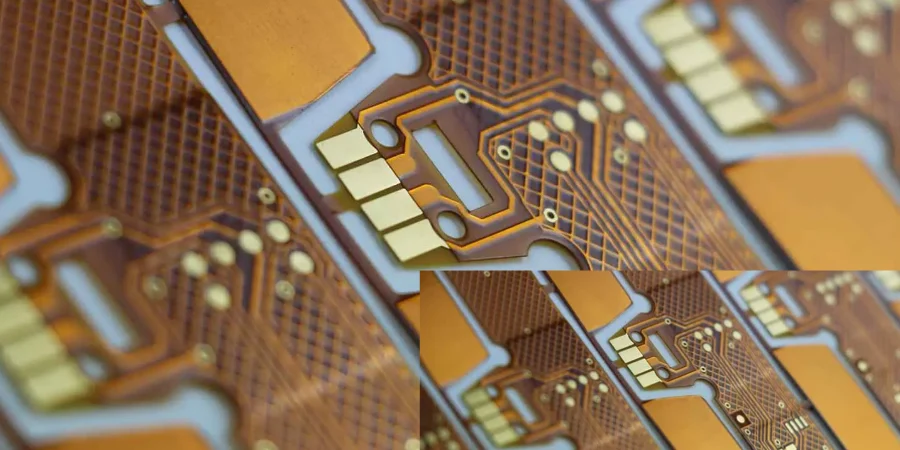
As a leading polyimide PCB manufacturer and assembly specialist, we deliver advanced flexible and rigid-flex circuit solutions for demanding applications requiring exceptional thermal stability, chemical resistance, and mechanical flexibility. Our state-of-the-art facility combines specialized equipment with decades of expertise to produce high-quality polyimide PCBs with rapid turnaround times, comprehensive quality assurance, and global logistics support.
Polyimide PCB Materials and Superior Performance Characteristics
Polyimide substrates offer unmatched performance in extreme environments where traditional FR-4 PCB materials fail. With glass transition temperatures exceeding 260°C and continuous operating temperatures up to 400°C, polyimide PCBs maintain dimensional stability and electrical properties in applications ranging from aerospace avionics to downhole drilling equipment. The material's inherent flexibility enables dynamic flexing applications with millions of bend cycles, while its low dielectric constant (3.5 at 1MHz) and dissipation factor (0.002) support high-frequency PCB designs up to microwave frequencies.
We process various polyimide material systems including Kapton (DuPont), UPILEX (UBE), Apical (Kaneka), and adhesiveless copper-clad laminates from leading suppliers. Our inventory includes single-sided, double-sided, and multilayer polyimide constructions with copper weights from 0.5 oz to 2 oz, supporting both flex PCB and rigid-flex configurations. The exceptional chemical resistance of polyimide withstands aggressive solvents, fuels, and cleaning agents while maintaining UL 94 V-0 flammability rating without halogenated flame retardants.
Advanced Manufacturing Processes for Polyimide Circuit Boards
Polyimide PCB fabrication requires specialized processes to address the material's unique properties. Our laser cutting systems deliver precise profiling with minimal heat-affected zones, critical for maintaining the integrity of fine-pitch circuits. We employ UV laser drilling for microvias down to 50 microns diameter, enabling high-density interconnect designs in space-constrained applications. The drilling process utilizes controlled parameters to prevent smearing and ensure reliable plated through-hole connections.
Surface preparation for polyimide substrates includes plasma treatment to enhance adhesion and remove organic contaminants. Our additive and semi-additive processes build fine-line circuits down to 25-micron trace/space, supporting impedance-controlled designs for high-speed digital and RF applications. The photolithographic process employs specialized resists compatible with polyimide's surface chemistry, ensuring sharp feature definition and consistent etching results across production volumes.
Polyimide vs. FR-4: Making the Right Material Choice
| Property | Polyimide | Standard FR-4 | Application Impact |
|---|---|---|---|
| Tg (°C) | >260 | 130-180 | High-temperature stability |
| CTE (ppm/°C) | 12-16 | 14-17 | Dimensional stability |
| Flexibility | Excellent | None | Dynamic flexing capability |
| Dielectric Constant | 3.5 @ 1MHz | 4.5 @ 1MHz | Lower signal loss |
| Moisture Absorption | 0.4% | 0.15% | Environmental resistance |
| Cost Factor | 3-5x FR-4 | Baseline | Premium applications |
Critical Applications Leveraging Polyimide PCB Technology
Aerospace and Defense Systems
Polyimide PCBs excel in aircraft avionics, satellite systems, and military electronics where extreme temperatures, vibration, and reliability are paramount. We support aerospace programs with AS9100D certified processes, full traceability, and extensive environmental testing including thermal vacuum, vibration, and shock qualification.
Medical Implantables and Wearables
The biocompatibility and flexibility of polyimide enable innovative medical devices including implantable sensors, hearing aids, and wearable health monitors. Our ISO 13485 certified cleanroom assembly ensures contamination-free production meeting stringent medical device requirements.
Automotive Under-Hood Electronics
Engine control modules, transmission sensors, and electric vehicle power electronics benefit from polyimide's high-temperature performance. We maintain IATF 16949 certification and implement automotive-grade quality controls including PPAP documentation and ongoing reliability monitoring.
Industrial and Energy Applications
Oil and gas exploration equipment, solar inverters, and industrial automation systems leverage polyimide PCBs for reliable operation in harsh environments. Our heavy-copper polyimide capabilities support high-current applications while maintaining flexibility for installation in confined spaces.
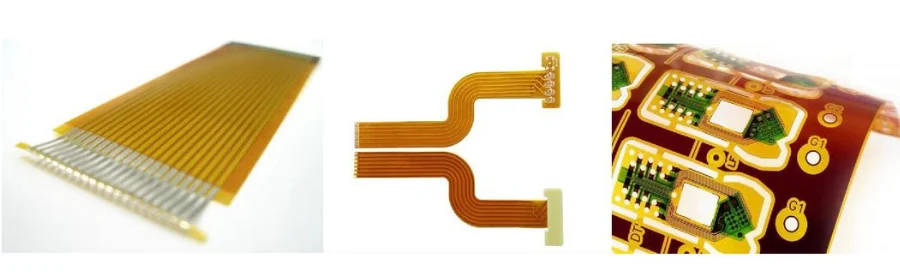
Rapid Prototyping and Volume Production Capabilities
Time-to-market pressures demand responsive manufacturing partners. Our quick-turn polyimide PCB service delivers prototypes in 48-72 hours for standard 2-layer flex designs, with rigid-flex PCB prototypes available in 5-7 days. We maintain dedicated prototype lines with streamlined CAM processes and pre-qualified material inventory to eliminate procurement delays.
Volume production leverages automated handling systems designed for polyimide's unique requirements. Our monthly capacity exceeds 50,000 square feet of polyimide PCBs across single-sided, double-sided, and multilayer configurations. Advanced planning systems optimize panel utilization while our parallel processing approach ensures consistent delivery performance. Standard production lead times range from 7-10 days with expedite options available.
Our impedance calculator helps optimize your polyimide PCB designs for controlled impedance applications, while our engineering team provides stackup recommendations balancing electrical performance, mechanical requirements, and cost targets.
Comprehensive Quality Systems and Testing Protocols
Every polyimide PCB undergoes rigorous inspection exceeding IPC-6013 Class 3 requirements for flexible circuits. Our quality assurance protocol encompasses:
- Dimensional Verification: Laser measurement systems confirm outline tolerances within ±0.05mm
- Electrical Testing: 100% netlist verification using flying probe or dedicated fixtures
- Flexibility Testing: Bend radius qualification and dynamic flex cycle testing to 1 million cycles
- Impedance Measurement: TDR analysis with comprehensive reporting for controlled impedance designs
- Microsection Analysis: Cross-sectional examination verifying copper plating quality and adhesion
- Environmental Screening: Temperature cycling, humidity testing, and chemical resistance validation
- Cleanliness Testing: Ionic contamination analysis per IPC-TM-650 ensuring reliability
Full documentation packages include material certifications, test reports, and first article inspection data. Our quality management system maintains ISO 9001:2015 certification with additional AS9100D and ISO 13485 qualifications supporting aerospace and medical customers.
Your Trusted Polyimide PCB Manufacturer and Assembly Partner
Beyond polyimide PCB fabrication, we offer complete turnkey assembly solutions streamlining your supply chain. Our SMT lines handle 01005 components and fine-pitch BGAs with placement accuracy of ±25 microns. Specialized fixtures support flex and rigid-flex assembly while automated optical inspection ensures quality. We manage component sourcing, programming, conformal coating, and functional testing, delivering fully assembled products ready for system integration.
Payment flexibility includes PayPal, wire transfer, credit cards, and NET terms for qualified accounts. Our secure online portal provides instant quotes, real-time order tracking, and direct engineering communication. Global shipping via DHL, FedEx, and UPS ensures reliable delivery with options for temperature-controlled transport and expedited customs clearance.
Choose a polyimide PCB manufacturer combining technical excellence with customer-focused service. Our engineering team provides complimentary design reviews, material selection guidance, and ongoing support throughout your product lifecycle. Whether you need quick-turn prototypes, volume production, or full box build assembly, we deliver quality products meeting your specifications, timeline, and budget. Contact us today to discuss your polyimide PCB requirements and experience the difference of working with industry experts committed to your success.
Common Questions
When is a polyimide PCB a better choice than standard FR-4?
When the product needs higher temperature resistance, repeated flexing, chemical durability, or more stable high-frequency behavior, polyimide is usually the better fit. Flexible circuits, rigid-flex assemblies, aerospace hardware, hot automotive zones, and some medical wearables are all common examples.
Why does a polyimide PCB usually cost noticeably more than FR-4?
The premium comes not only from the laminate itself, but also from tighter drilling, surface finishing, testing, and assembly requirements. In practice, you are paying for an entire process window built around heat resistance and mechanical flexibility, not just a different base material.
Does calling a board polyimide automatically mean it is flexible?
No. Polyimide is common in flex and rigid-flex products, but it can also be used in rigid constructions that need thermal stability or special environmental resistance. The real decision should come from the application environment and mechanical demands, not the material name alone.
What should be locked down first in a polyimide PCB project?
Teams should confirm bend requirements, operating temperature, copper thickness, impedance targets, and downstream assembly method early. In flex and rigid-flex programs especially, unclear starting constraints often lead to mechanical reliability issues or assembly rework later.