
Turnkey PCB Assembly & Electronic Contract Manufacturing | 2h BOM Quote
Agile turnkey PCB assembly and electronic contract manufacturing (ECM) designed for speed and cost optimization. From 2-hour rapid BOM quoting to 5-day prototype delivery and volume production, HilPCB handles PCB fabrication, franchised component sourcing (DigiKey/Mouser/Arrow), automated SMT assembly, and 100% electrical testing.
Capabilities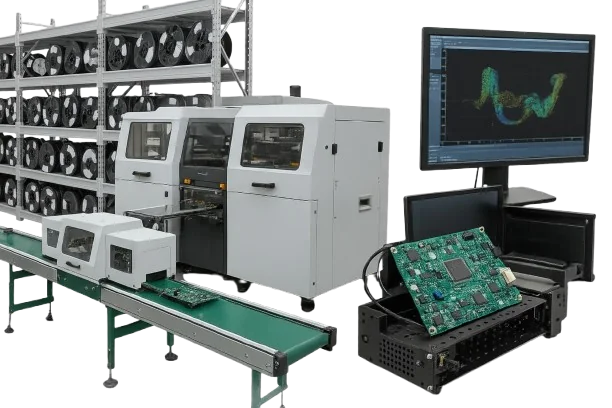
Best for BOM Ownership and Build Accountability
Use turnkey when sourcing risk and assembly execution need one controlled workflowTurnkey assembly is the right page when the project needs more than board placement. It covers BOM scrub, lifecycle review, alternates, authorized sourcing posture, assembly route planning, inspection, test, serialization, and traceability under one accountable workflow. This is different from simply asking for SMT or through-hole capacity.
If you already own all parts and only need placement, use SMT assembly or through-hole assembly. If the program is already stable and forecast-driven, use large-volume assembly. If the deliverable includes enclosure, cable harness, firmware, and final pack-out, move to box build assembly.
What to send for a quote: Gerbers, BOM with manufacturer part numbers, AVL or approved alternates, placement data, test requirements, annual or batch quantity, target lead time, consigned-part list if any, and sourcing constraints such as authorized-only procurement.
- Best fit: BOM sourcing plus PCBA execution under one accountable flow
- Kitted, partial-turnkey, and full-turnkey scope options
- Lifecycle, alternates, AVL, and constrained-supply review
- SMT, THT, mixed-technology, inspection, and test route planning
- Traceable handoff to box build or large-volume production when needed
🚀 Quick Quote Request
📋 Get Full Capabilities
From BOM Scrub to Tested PCBA
Resolve part risk before it becomes a line or test problemThe turnkey workflow starts with BOM identity: exact part numbers, lifecycle status, alternates, lead-time exposure, approved substitutions, and traceability requirements. Manufacturing then connects that sourcing plan to stencil, placement, soldering, inspection, test, labeling, and revision control.
For NPI, the first build should expose DFM, DFT, sourcing, and test gaps. For repeat builds, the same traveler and component history support change control. When the product needs enclosure or final configuration, the workflow can hand off to box build; when demand stabilizes, it can move into large-volume assembly.
- BOM scrub for lifecycle, substitutions, alternates, and sourcing constraints
- DFM/DFT review before release to production
- SMT, THT, mixed-technology, AOI, X-ray, ICT, and FCT route planning
- MES traveler records for component lot and build traceability
- Controlled handoff to box build or volume ramp
Turnkey Assembly Technical Capabilities
Capabilities for BOM-managed PCBA from sourcing through inspection and test
| Parameter | Standard Capability | Advanced Capability | Standard |
|---|---|---|---|
Service Type | Kitted / Partial Turnkey | Full Turnkey + Box Build | Service scope |
Assembly Types | SMT, THT | Mixed tech, PoP/SiP, fine-pitch BGA | IPC-A-610 / J-STD-001 |
Board Types | FR-4, Multilayer | Rigid-Flex, Flex, MCPCB, Ceramic | IPC-6012/6013 |
Component Size | 0201, 0.4 mm pitch | 01005, 0.2–0.25 mm BGA/CSP | IPC-7351 |
Placement Accuracy | ±25 μm @ 3σ | ±8 μm @ 3σ | Machine spec |
Inspection | 3D SPI, 2D/3D AOI | X-ray (AXI), ionic cleanliness check | IPC-A-610 / IPC-CH-65B |
Testing | FCT (functional) | ICT, flying probe, boundary scan, burn-in | Customer spec |
Traceability | Batch-level records | Unit serialization + component lot tracking | QMS |
Lead Time | 5–10 days | 24–48 h quick-turn | Production schedule |
Ready to start your PCB project?
Whether you need simple prototypes or complex production runs, our advanced manufacturing capabilities ensure excellent quality and reliability. Get your quote within 30 minutes.
Electronic Contract Manufacturing (ECM): Single-Source Supply Chain Accountability
Managing multiple vendors for bare boards, electronic components, and assembly creates compounding lead times and finger-pointing when defects arise. HilPCB's electronic contract manufacturing (ECM) and turnkey PCB assembly model provides single-source accountability from BOM release to finished product delivery.
- 2-Hour BOM Sourcing & Scrub: Upload your Bill of Materials to receive an itemized quote detailing live component availability, pricing tiers, and manufacturer lead times. We identify obsolete (EOL) or high-risk parts early and propose pin-compatible, authorized alternatives to ensure production continuity.
- BOM Cost Optimization: By leveraging global purchasing contracts with premier distributors (DigiKey, Mouser, Arrow, Avnet) and direct factory allocations, we routinely optimize customer BOM costs by 15% to 30% compared to fragmented domestic purchasing.
- Seamless Integration: Combine board-level assembly with our box build assembly services for complete end-to-end turnkey delivery.
At a Glance: When Turnkey Assembly Fits
Choose this page when the request includes both manufacturing and component responsibility. If the customer already controls every part and only needs build capacity, a pure assembly page may be cleaner.
- Good fit: BOM scrub, component sourcing, alternates, lifecycle review, PCBA build, inspection, test, serialization
- Not the best fit: consigned-only placement, pure soldering-route questions, or finished product integration without BOM scope
- Quote inputs: Gerbers, BOM with MPNs, AVL, approved alternates, placement, test plan, quantity, lead-time target, sourcing constraints
- Adjacent pages: SMT assembly, through-hole assembly, large-volume assembly, box build assembly
Choose Turnkey vs SMT, Through-Hole, Large Volume, and Box Build
- Turnkey Assembly: use when BOM ownership, sourcing, alternates, build, inspection, and test belong in one workflow.
- SMT Assembly: use when surface-mount placement and reflow are the main ask.
- Through-Hole Assembly: use when connectors, terminals, transformers, relays, or press-fit hardware drive the route.
- Large-Volume Assembly: use when a stable program needs forecast-driven repeat production and SPC control.
- Box Build Assembly: use when enclosure, harness, firmware, final test, and packaging are included.
Turnkey DFM/DFA/DFT Optimization Guidelines
Plan test access early: test points ≈0.75 mm diameter on 2.54 mm pitch support bed-of-nails ICT; tight designs can rely on flying probe or boundary scan. Align stencil design with package mix—see our stencil design notes—and control paste transfer ratio >0.66. For BGA, avoid open vias; use via-in-pad filled/planarized to keep coplanarity within ±25 μm. For quoting transparency, review assembly quote guidance.
Need Expert Design Review?
Our engineering team provides free DFM analysis and optimization recommendations
Turnkey Manufacturing Flow and Review Points
Flow: BOM scrub -> sourcing and alternates review -> DFM/DFT -> stencil and placement setup -> SMT/THT assembly -> inspection -> ICT/FCT -> serialization and shipment. The key review points are part identity, alternates approval, lifecycle exposure, test coverage, ECO control, and traceability expectations.
Lifecycle Management & Risk Mitigation
We monitor lifecycle and allocation trends, proposing alternates with form-fit-function checks. Long lead items receive buffer-stock recommendations (typically 4–8 weeks). Counterfeit risk is controlled by inspection and XRF/electrical screening. For RF or thermal constraints, coordinate materials with high-frequency PCB, Rogers PCB, or ceramic PCB teams.
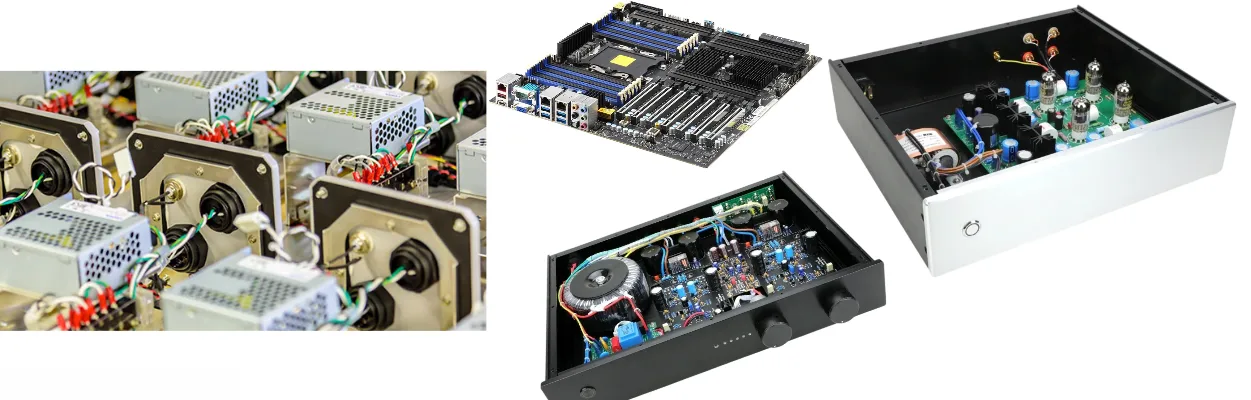
BOM Sourcing for PCB Assembly: Component Substitution, Obsolescence and Risk
BOM sourcing is where most turnkey programs succeed or fail, because the bill of materials is the one input that changes after the design is frozen. A distributor quote that assumes perfect availability is not a plan; a sourcing process that anticipates substitution is.
Price and availability review before commitment. Good turnkey sourcing starts by classifying every line: commodity, multi-source, single-source, or at-risk. Commodity lines can be quoted immediately. Single-source and at-risk lines need a decision from you — accept the price and lead time, approve an alternate, or buy ahead. This classification happens before the quote is issued, not after the order is placed.
Component substitution and qualification. When a part is not available, the substitute must satisfy more than the basic value. Package and footprint compatibility, electrical derating, thermal behaviour, firmware or register compatibility, and regulatory status all matter, and any change to a safety or certified assembly cascades into the approval record. Suppliers offering substitution and obsolescence support should demonstrate the approval trail, not merely offer a lookalike part number.
Obsolescence management. Lifecycle risk is highest on parts that are mature and cheap — the very parts most likely to be minimised by the manufacturer. Capture the manufacturer part number, the lifecycle status at the time of build, and the last-time-buy position on every critical line. Where a design has a multi-year production horizon, plan the last-time-buy as a deliberate purchase rather than as an emergency.
Traceability. Sourcing decisions must be recorded against the lot: which supplier, which date code, which approved vendor. That record is what makes an audit answerable and is part of the lifecycle management described in SMT assembly controls. Send your BOM with lifecycle expectations through the quote request.
Integrated Quality Systems & Performance Metrics
Workmanship per IPC-A-610 Class 2/3, with SPC dashboards tracking paste volume, placement offsets and FPY. AOI detects polarity/alignment; X-ray checks hidden joints (BGA voids ≤25%). Environmental stress (thermal cycling, vibration) and cleanliness testing support high-reliability programs. See PCBA quality control and ISO 9001 notes for documentation and audit readiness.
Cost Control Through BOM and Process Clarity
Turnkey cost is controlled by clean part identity, approved alternates, stable revisions, test strategy, and realistic sourcing constraints. The cheapest line item is not always the lowest-risk build. A good turnkey quote should expose long-lead parts, lifecycle risk, substitution rules, fixture/test needs, and batch-size tradeoffs before procurement begins.
Ready to optimize your PCB costs?
Get detailed cost analysis and maximum value recommendations
Market-Specific Turnkey Solutions
Medical (ISO 13485) emphasizes DHR/traceability; automotive (IATF 16949) adds PPAP and extended environmental testing; aerospace (AS9100) extends documentation retention (10+ years). Telecom programs benefit from coordinating with high-speed PCB/backplane PCB for controlled-impedance builds. Consumer/IoT prioritize speed-to-market with NPI cycles of 4–8 weeks.
Full Turnkey PCBA for IoT and Connected Devices
A full turnkey PCBA engagement covers fabrication, sourcing, assembly, test and packout, so the customer receives a finished board rather than a kit of parts. The model suits teams without a local supply chain, and it suits IoT device assembly in particular, where radio performance and firmware interaction make split responsibility painful.
What full turnkey changes. A full turnkey PCBA solution means one party owns yield and delivery for the whole assembly. The trade is transparency: you should still receive the approved vendor list, the sourcing substitutions that were made, and the test records. A turnkey solution without an audit trail converts a manufacturing risk into a documentation risk.
IoT-specific considerations. For an IoT device program, antenna keep-out areas, shield-can placement, and module pre-certification status all constrain assembly. RF sections often use controlled-impedance material, and mixing that with standard FR-4 in one assembly needs an agreed stackup and impedance test plan. Where a module carries its own certification, the assembly process must not invalidate it — reflow profile and cleaning choices matter.
Turnkey across the build range. A turnkey PCBA model should scale from prototype through pilot to volume without changing the accountability model. That continuity is why a single long-term assembly partner matters: the process, fixtures and test coverage should evolve with the product rather than being rebuilt at each stage. For lower-mix or higher-mix alternatives, compare small batch assembly and large volume assembly.
Engineering Assurance & Certifications
Experience: hundreds of turnkey ramps from EVT/DVT through MP with stable FPY.
Expertise: stencil/paste process control, BGA via-in-pad mitigation, selective solder windows, and DFT.
Authoritativeness: ISO 9001 baseline with workflows for IATF 16949 and ISO 13485; audits supported end-to-end.
Trustworthiness: MES ties reel IDs and lot codes to placements, reflow profiles and test data; quality packs include reports for functional testing and ICT coverage.
Frequently Asked Questions
What files are required for a turnkey quote?
How do you handle component obsolescence and allocation?
Can you support system-level testing and final configuration?
What lead times can I expect?
How is quality documented?
What does turnkey BOM sourcing include?
Experience Advanced PCB Manufacturing Excellence
From simple prototypes to complex production runs, our world-class factory delivers superior quality, fast turnaround and competitive pricing. Join thousands of satisfied customers who trust us with their PCB manufacturing needs.