
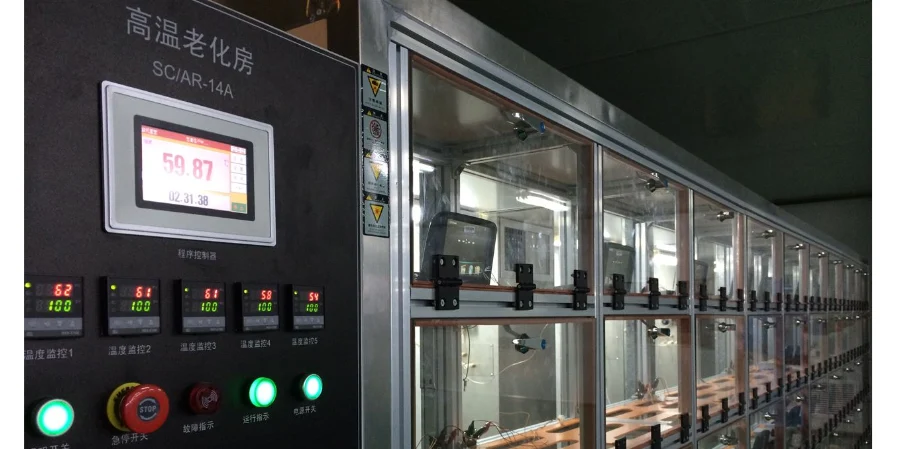
HILPCB can support customer-defined burn-in screening for electronic assemblies when the test scope, fixtures and operating limits are agreed in advance. Powered operation under a validated stress profile can reveal some early-life defects before shipment; it does not establish fault-free operation or replace qualification, functional testing or field-reliability analysis. Confirm equipment availability, temperature range, workload, monitoring and reporting in the project quotation.
PCBA Burn-in Screening and Related Reliability Tests
Burn-in is a powered screening process conducted under specified stress and monitoring conditions. Related qualification and environmental tests may provide complementary evidence, but they are not interchangeable with assembly burn-in.
Choose the test by its purpose and test object:
- Static semiconductor burn-in: Apply a specified bias and temperature at the device level. Some component-level high-temperature bias procedures use elevated junction temperatures, but 125–150°C must not be treated as a default chamber temperature for populated PCBA.
- Dynamic PCBA burn-in: Operate an assembled board under an approved functional workload and monitor specified voltage, current, temperature and error indicators.
- Thermal cycling: Cycle an unpowered or appropriately powered test item across temperature extremes to evaluate thermal-mechanical stresses; this is a separate test from burn-in.
- Power cycling: Repeatedly change device power dissipation to investigate thermal cycling and package/interconnect fatigue where applicable; do not assume a single failure mechanism.
- Accelerated life testing (ALT/HTOL): Apply a qualification or characterization plan to selected products and failure mechanisms; analysis may use Arrhenius acceleration or Weibull models.
- Environmental stress screening (ESS): Apply a defined profile, potentially including temperature and PCB vibration testing, to screen workmanship-related weaknesses; acceptance is application-specific.
- Early-life failure screening: Record detectable failures under the chosen profile; passing screening does not remove every infant-mortality failure mode.
- Parametric monitoring: Collect electrical and thermal measurements during stress exposure to identify defined failure criteria.
- Statistical process analysis: Review failure rates and trends across lots where sufficient data exist; this is analysis, not a physical test method.
For a temperature-activated failure mechanism, an illustrative Arrhenius acceleration factor is AF = exp[(Ea/k) × (1/Tuse − 1/Tstress)], where Ea is activation energy in eV, k is Boltzmann’s constant in eV/K, and both temperatures are in kelvin. The factor is only meaningful when Ea is justified and the dominant failure mechanism remains the same under test and use conditions; no universal 10×–1000× multiplier should be assumed.
Implementation: Select stress levels that do not exceed the weakest assembled component, interconnect, laminate, coating, connector or enclosure limit, and distinguish screening from lifetime modeling. High-thermal PCB assemblies may require a separate thermal validation plan; the material category alone does not imply burn-in is necessary or included.
Manufacturing Integration and Assembly Quality Assurance
Integrate burn-in only where the approved risk assessment and test plan call for it. Define sample size or 100% coverage, operating conditions, fixtures, safety interlocks, pass/fail criteria and test records before release.
Production process integration: During design, provide power connections, test access, appropriate thermal monitoring and a safe workload. For multilayer PCB assemblies, validate temperature at the monitored components rather than assuming chamber air temperature equals component junction temperature. Automation and chamber capacity depend on the agreed equipment and production quantity.
Assembly considerations: Burn-in, if requested, complements SMT assembly process controls, solder-joint inspection and functional tests; it does not independently prove placement accuracy or all solder connections. Turnkey assembly quotes should identify whether screening is included or optional and what report will be delivered.
Volume production: Where equipment and fixtures are qualified, parallel screening may be possible. The agreed risk-based sampling or 100% plan should identify monitored signals, temperature distribution, failure handling, retest limits and traceability for large-volume assembly.
Electronic Component Reliability and Failure Analysis
A reliability program links observed failures to failure analysis and corrective action. Burn-in can support early-life screening, but reliability characterization, component qualification and field-life prediction require additional evidence and sufficient sample sizes.
Semiconductor testing: Temperature/bias screening may reveal selected device-level defects under a qualified method. For a high-speed PCB assembly, functional margins and signal integrity must be verified using appropriate electrical measurements; burn-in by itself does not establish channel loss or bit-error-rate performance.
Passive-component assessment: Drift, insulation or thermal behavior must be evaluated under the relevant component test method and stress rating. Such characterization is separate from routine PCBA screening and should not be presented as a lifetime prediction without a validated model.
Assembly-level screening: Where specified, operate the PCBA and log power-rail stability, critical temperatures, communications and application-specific functions throughout the agreed stress window. Diagnose any observed failure using functional tests, inspection or failure analysis as needed.
Burn-in Testing Standards and Quality Management
Document the agreed test procedure, applicability of cited standards, temperature and electrical limits, sample plan, acceptance criteria, calibration, failures and deviations. Assembly screening requirements must be defined by the product owner and documented in the purchase specification.
Standards and applicability: JEDEC JESD22-A108 (use the project-adopted revision) addresses temperature/bias operating life tests for semiconductor devices, and relevant MIL-STD-883 methods may apply to specified microelectronic programs. IPC-9252 covers electrical testing of unpopulated printed boards—not PCBA burn-in. No single IPC-9252 requirement establishes burn-in conditions for every assembled product; use a customer-approved product or industry test plan.
Reporting: Record serial/lot identifiers, workload, measured board/component temperatures, voltage/current, duration, monitored functions, failures, retests and deviations. Weibull or confidence-interval analysis is appropriate only with sufficient observations and a justified statistical model.
Traceability: Retain the records and conditions agreed with the customer. Long-term statistical trends and failure analysis can be added when the quantity and quality of observations justify them.
Why Choose HilPCB PCB Factory for Professional Burn-in Testing
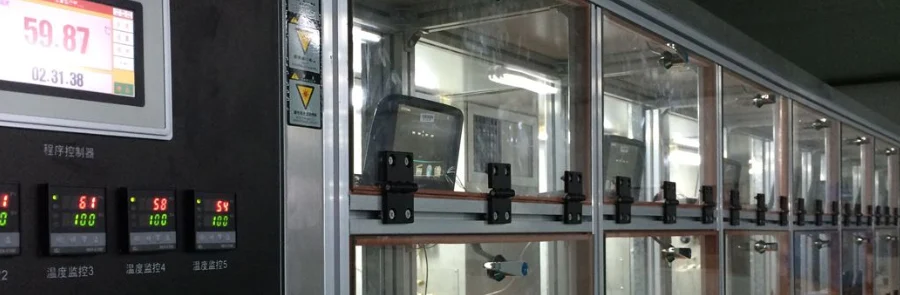
HILPCB offers burn-in screening using advanced thermal chambers, automated handling and real-time monitoring, with parallel capacity for volume lots subject to the quoted load and profile. Reliability engineers can develop test programs, investigate failures, provide statistical-analysis consulting, and advise on design-for-reliability and process optimization. ISO 9001 manufacturing integration, automated reports, database records and lot traceability can be included in the agreed service; screening is not a universal field-life guarantee.
Ask HILPCB to scope powered screening together with fabrication and assembly work. Confirm applicable equipment, monitoring channels, workload, duration, lot/sample coverage, safety controls and quotation terms before the test plan is released.
Test equipment: Temperature chambers, fixtures, interlocks and electrical monitoring must be matched to the actual assembly and validated operating envelope. Obtain a project-specific equipment and reporting confirmation rather than assuming every condition is available.
Reliability engineering: Agree on stress mechanisms, allowable component limits, failure analysis, sample sizes and reporting. Screening results must not be described as a verified field-life prediction without additional study.
Manufacturing integration: Where specified, link the burn-in record to assembly and functional-test results, preserving the customer’s test limits and acceptance authority.
FAQ
Why is burn-in testing important for electronics?
Burn-in may reveal some early-life defects under a validated temperature, voltage and workload profile. Passing a screen does not ensure that only fault-free products reach the field.
What components benefit most from burn-in testing?
Components and assemblies with a defined early-life failure risk may benefit, provided the stress method is suitable and within each part’s rating. Qualification needs vary by product and industry.
How does burn-in differ from regular functional testing?
A routine functional test checks operation at specified conditions. Burn-in adds controlled operating stress over time to screen selected weaknesses; it is not a substitute for lifetime qualification.
How long should burn-in testing last?
There is no universal duration. Some programs use 24–168 hours as an example, but the actual period, voltage, workload and temperature must come from the approved product-specific test plan.
Can burn-in testing predict real-world reliability?
Not by itself. Burn-in data can support an early-failure screening decision, while a field-life estimate requires validated failure mechanisms, representative sampling, statistical confidence and relevant operational conditions.
What is a burn in test for PCB assemblies?
Burn-in testing for PCB assemblies means operating a populated board under an approved workload and temperature profile while monitoring defined pass/fail parameters. Conditions such as 40–85°C may occur in particular programs but are not generic PCBA requirements; specify limits, duration, monitored signals and safety provisions in the test plan.