
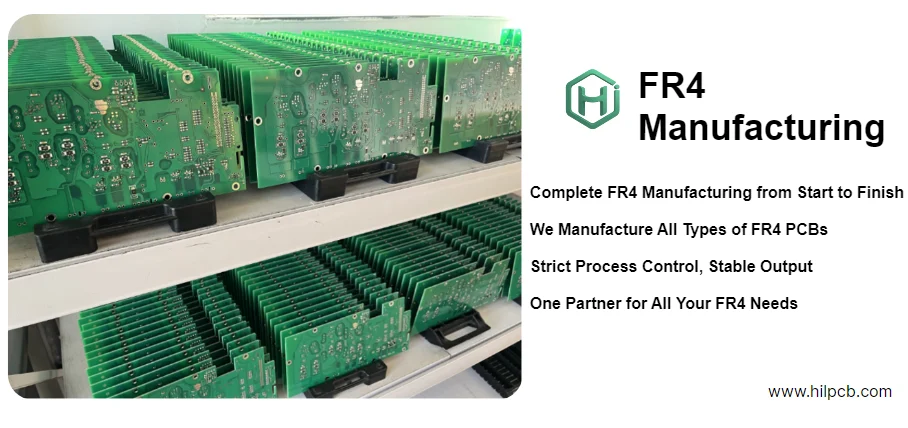
"Chinese PCB manufacturers are cheap but quality is questionable." We hear this concern from overseas buyers constantly. It's partially true — but also dangerously oversimplified.
China's FR4 manufacturing industry isn't monolithic. It ranges from ultra-low-cost shops with minimal quality control to world-class facilities producing boards for aerospace and medical applications. Treating all Chinese manufacturers as equivalent is like judging all European automakers by the cheapest economy car.
At HILPCB Factory, we've manufactured FR4 PCBs for customers in 50+ countries over 15 years. We understand both the opportunities and pitfalls of sourcing from China. This guide explains how to identify quality manufacturers, what certifications actually mean, and how to get the best balance of cost and reliability.
The Reality of FR4 Manufacturing in China
China produces over 50% of the world's PCBs. This massive industry has distinct tiers serving different market segments.
The Three Tiers of Chinese FR4 Manufacturers
Tier 1: World-Class Facilities
- Modern equipment from Japanese and European suppliers
- Comprehensive quality management systems (ISO 9001, IATF 16949, AS9100)
- Engineering support and DFM analysis
- Typical clients: automotive, aerospace, medical devices
- Price range: competitive with US/European manufacturers
Tier 2: Professional Manufacturing (HILPCB Level)
- Good equipment and quality control
- Experienced engineering teams
- ISO certified with documented processes
- Typical clients: industrial equipment, professional electronics, consumer products
- Price range: 30-50% below Tier 1
Tier 3: Budget Shops
- Older equipment with manual processes
- Minimal engineering support
- Basic or no quality certifications
- Typical clients: hobbyists, ultra-low-cost products
- Price range: 70% below Tier 1
The key insight: Lower prices in China come from operational efficiency and scale, not just lower quality. Tier 2 manufacturers like HILPCB offer professional quality at competitive prices due to:
- Lower labor costs (not cut corners)
- High-volume efficiency
- Streamlined operations
- Direct factory relationships
Understanding which tier matches your requirements saves money without sacrificing reliability.
What Drives Cost Differences
Many buyers assume low Chinese prices mean poor quality. The reality is more nuanced.
Legitimate Cost Advantages:
- Labor costs 60-70% lower than North America/Europe
- High manufacturing volumes (economies of scale)
- Proximity to material suppliers (reduced logistics)
- Efficient production systems (shorter cycle times)
Where Quality Varies:
- Material sourcing (premium vs. generic FR4)
- Equipment maintenance and calibration
- Operator training and quality culture
- Testing thoroughness and documentation
Professional Chinese manufacturers achieve cost savings through operational excellence, not material substitution or skipped processes.
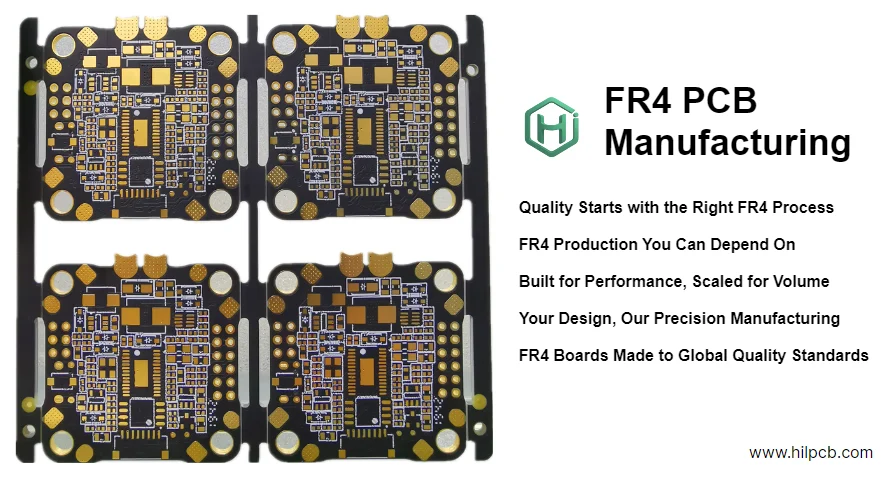
How to Evaluate FR4 Manufacturers in China
Don't rely on website claims and certifications alone. Here's how to genuinely assess capability:
Essential Quality Certifications
ISO 9001 (Quality Management): Baseline certification for any professional manufacturer. However, certification alone doesn't guarantee quality — implementation matters more than the certificate.
UL Certification: Critical for North American markets. UL-listed manufacturers maintain quality standards verified by regular audits. All HILPCB PCB manufacturing carries UL recognition for global market access.
IATF 16949 (Automotive): Required for automotive supply chains. This certification demands stringent process control, traceability, and continuous improvement beyond standard ISO 9001.
IPC Standards Compliance:
- IPC-A-600: Acceptability criteria for PCBs
- IPC-6012: Performance requirements for rigid boards
- IPC Class 2 vs. Class 3: Higher classes require tighter tolerances
We maintain IPC Class 2 and 3 certification, with Class 3 for high-reliability applications like medical and aerospace.
Manufacturing Capabilities Assessment
Beyond certifications, evaluate actual production capabilities:
Layer Count and Complexity: Can they manufacture your most demanding designs?
- Simple: 2-4 layers
- Moderate: 6-10 layers
- Advanced: 12-20+ layers, blind/buried vias
Our multilayer PCB capabilities extend to 20 layers with blind/buried via technology for complex designs.
Minimum Trace/Space: Finer capabilities indicate better equipment and control:
- Basic: 6mil/6mil
- Professional: 3mil/3mil
- Advanced: 2mil/2mil or finer
Surface Finish Options: Multiple finish options indicate equipment investment:
- Basic facilities: HASL only
- Professional: ENIG, OSP, immersion silver
- Advanced: ENEPIG, hard gold for specialized applications
Testing Equipment:
- AOI (Automated Optical Inspection)
- X-ray for BGA and hidden features
- Flying probe or fixture-based electrical test
- Impedance testing for controlled designs
Engineering Support Quality
Quality manufacturers provide value beyond manufacturing:
DFM Analysis: Do they review designs before production, catching potential issues? We perform comprehensive DFM analysis on every design, identifying problems before they become defects.
Material Recommendations: Can they suggest appropriate FR4 grades for your application? Our team regularly advises customers on material selection based on thermal, electrical, and mechanical requirements.
Technical Communication: Responsive, knowledgeable engineers who understand your requirements? We maintain English-speaking technical support for seamless international communication.
HILPCB's Quality Control Process
We've invested heavily in quality systems that match or exceed international standards:
Incoming Material Inspection
Material Verification:
- Vendor certification review
- Sample testing for critical parameters (TG, CTE, dielectric constant)
- Physical inspection for defects or contamination
We use only premium FR4 materials from certified suppliers (Shengyi, Nanya, Isola) with full traceability.
In-Process Control
Critical Process Monitoring:
- AOI inspection after inner layer imaging
- Registration verification before lamination
- Drill quality inspection
- Plating thickness measurement
- Solder mask registration check
Statistical Process Control: We track key parameters to identify trends before they cause defects, ensuring consistent quality across production runs.
Final Inspection and Testing
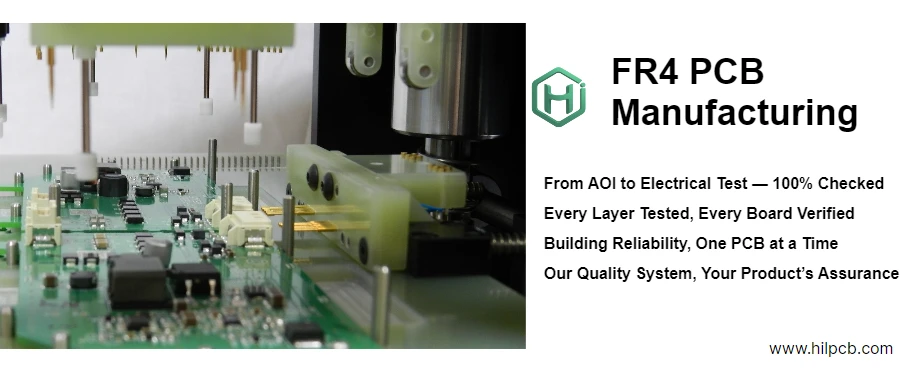
100% Electrical Testing: Every board undergoes electrical verification:
- Flying probe test for prototypes and small-batch assembly
- Fixture-based testing for large-volume assembly
Dimensional Inspection: Random sampling verifies:
- Hole sizes and positions
- Board dimensions
- Copper thickness
- Surface finish thickness
Visual Inspection: Final visual check for cosmetic defects, damage, or contamination before packaging.
Documentation and Traceability
Standard Documentation:
- Material certifications
- Dimensional inspection report
- Electrical test results
- Certificate of compliance
Additional Testing Available:
- Microsection analysis
- Ionic contamination testing
- Thermal stress testing
- Peel strength testing
Getting the Best Balance: Quality and Cost
Smart buyers understand that "cheapest" and "best value" are different things.
Cost Optimization Strategies
Design for Manufacturing: Work with your manufacturer early to optimize designs:
- Use standard materials and processes
- Avoid unnecessary tight tolerances
- Minimize layer count where possible
- Standard board dimensions reduce panel waste
Order Consolidation: Combine multiple designs or timing orders to achieve better pricing through volume efficiency.
Strategic Quality Levels: Not every application requires maximum quality:
- Prototype/testing: Focus on fast turnaround
- Pre-production: Emphasize quality verification
- Mass production: Optimize cost-performance balance
Long-term Relationships: Working with a single manufacturer builds trust and often leads to better pricing and service over time.
Red Flags When Selecting Manufacturers
Avoid suppliers showing these warning signs:
❌ Prices significantly below market (>50% cheaper than competitors)
❌ No engineering support or DFM analysis
❌ Cannot provide material certifications
❌ Unwilling to provide sample inspections
❌ Poor communication or delayed responses
❌ No testing documentation
❌ Vague about quality processes
Green Flags of Quality Manufacturers
✅ Transparent pricing with clear explanations
✅ Proactive engineering communication
✅ Material traceability documentation
✅ 100% electrical testing standard
✅ Clear quality processes and certifications
✅ Responsive technical support
✅ Willingness to provide factory information
At HILPCB, transparency is our foundation. We provide detailed quotes explaining every cost component and welcome technical discussions about your requirements.
Why International Buyers Choose HILPCB
For more than 15 years, HILPCB has been a trusted manufacturing partner for international customers across the automotive, medical, industrial, and consumer electronics sectors. We operate under ISO 9001 certification, comply with IPC standards, and hold UL recognition, ensuring every project meets strict global quality expectations. Our English-speaking engineering team supports buyers with DFM analysis, FR4 material selection, and responsive technical consultation — making collaboration smooth and precise from design to delivery.
HILPCB combines advanced manufacturing capabilities with complete turnkey assembly services. We produce everything from basic 2-layer FR4 PCBs to complex HDI PCB designs exceeding 20 layers, incorporating blind/buried vias and controlled impedance structures. Beyond fabrication, our integrated SMT assembly covers component sourcing, assembly, testing, and logistics. By maintaining high efficiency and in-house control, we deliver professional, export-ready quality at 30–50% lower cost than typical North American and European suppliers — without ever compromising standards.
Common Questions
Is FR4 still suitable for most PCB projects?
For most industrial, consumer, and general control products, FR4 is still the best-balanced choice for cost, mechanical stability, and manufacturing maturity. More specialized materials are usually only required for extreme frequency, temperature, or environmental demands.
How can a buyer judge whether an FR4 manufacturer is reliable?
Look at material traceability, DFM support, electrical test and microsection capability, certifications, and communication quality instead of judging by price alone. A dependable supplier shows the same engineering discipline in prototypes and in production.
When should the lowest FR4 quote not be the deciding factor?
If your project depends on consistent lead time, repeatable quality across batches, export compliance, or assembly integration, a very low quote often means weaker materials, inspection, or engineering support. The lowest unit price can easily create the highest total cost.