
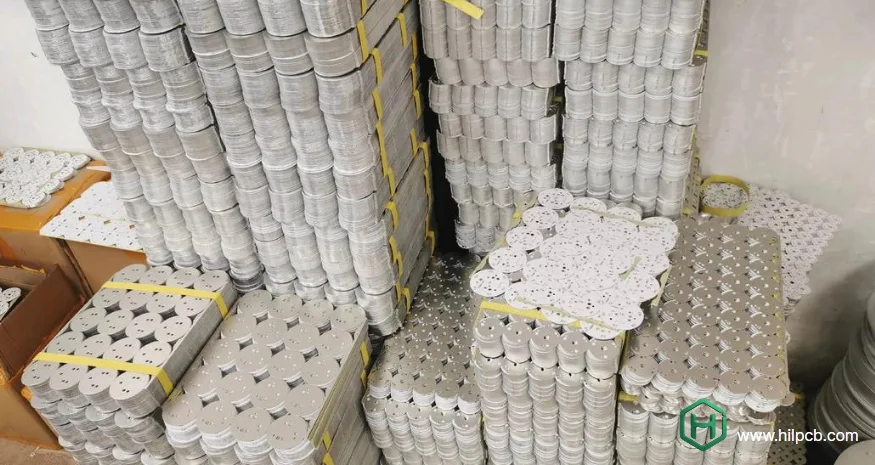
Aluminum PCB production requires more than reliable circuit board fabrication. For applications that generate significant heat, such as LED lighting, power conversion systems, automotive electronics, and industrial controls, manufacturers must coordinate materials, thermal design, component sourcing, assembly processes, and quality testing.
An aluminum PCB turnkey manufacturing service combines these production stages under one supplier-managed workflow. Instead of coordinating separate PCB factories, component vendors, and assembly houses, customers work with one manufacturing partner responsible for engineering review, material control, assembly, testing, and delivery.
At HILPCB, our turnkey production model integrates aluminum PCB fabrication, component procurement, SMT assembly, and final inspection. This approach improves production traceability, reduces supply chain complexity, and helps engineering teams move from prototype builds to volume manufacturing with fewer coordination challenges.
1. What Is an Aluminum PCB Turnkey Service?
An aluminum PCB turnkey service is a complete manufacturing solution where one supplier manages the full production cycle from design review to finished product shipment. The manufacturer coordinates engineering, materials, fabrication, assembly, and testing according to the customer’s specifications.
For aluminum PCB projects, a complete turnkey process typically includes:
- Design Optimization (DFM/DFA) – Engineers review PCB layouts, thermal requirements, component placement, copper thickness, dielectric selection, and manufacturability before production begins.
- Component Procurement – The manufacturer manages BOM sourcing through qualified suppliers to maintain component authenticity, availability, and cost control.
- PCB Fabrication – Controlled production of metal-core PCBs, including aluminum substrate preparation, dielectric lamination, copper circuit formation, drilling, and surface finishing.
- PCB Assembly and Testing – Automated SMT assembly, through-hole assembly, soldering, inspection, and electrical verification are completed within the same production system.
A turnkey approach reduces the number of suppliers involved in a project. This simplifies communication, improves production visibility, and allows faster response when engineering changes or quality issues occur.
For aluminum PCBs specifically, centralized manufacturing control is important because thermal performance depends on multiple factors, including aluminum substrate quality, dielectric thermal resistance, copper thickness, and assembly process control.
2. Key Advantages of One-Stop Aluminum PCB Turnkey Manufacturing
A one-stop aluminum PCB turnkey solution connects fabrication, assembly, sourcing, and testing into a single production workflow. This provides measurable advantages for OEMs, product developers, and engineering teams.
Centralized Project Control:
A single manufacturing partner manages production schedules, engineering communication, material coordination, and quality records. This reduces delays caused by communication gaps between separate suppliers and provides one point of responsibility throughout the project lifecycle.
Improved Cost and Supply Chain Efficiency:
Integrated sourcing allows manufacturers to optimize component purchasing, material utilization, and production planning. Bulk procurement, reduced supplier coordination, and fewer logistics steps can lower overall manufacturing costs.
Reduced Production Lead Time:
Turnkey manufacturers can run multiple processes in parallel. While aluminum PCB fabrication progresses, component sourcing, programming preparation, and assembly planning can continue simultaneously. This can shorten overall project timelines compared with managing separate fabrication and assembly suppliers.
Enhanced Quality Control and Traceability:
A unified quality management system (QMS) and manufacturing execution system (MES) provide production records for materials, assembly processes, inspections, and testing results. This is especially important for high-thermal PCBs used in power electronics and high-reliability applications.
Integrated Engineering Support:
Experienced turnkey manufacturers provide DFM and DFA recommendations before production. Engineers can optimize thermal paths, component placement, soldering requirements, and manufacturing parameters to improve yield and reduce rework.
For companies developing thermally demanding electronics, aluminum PCB turnkey manufacturing provides better production control from initial design validation through high-volume manufacturing.
3. Inside the Aluminum PCB Turnkey Manufacturing Workflow
Professional aluminum PCB turnkey services follow a structured workflow designed to maintain engineering accuracy and production consistency.
Project Onboarding – The customer provides PCB design files, bill of materials (BOM), assembly drawings, specifications, and production requirements.
Engineering Review – Manufacturing engineers perform DFM/DFA analysis, checking PCB structure, thermal requirements, component availability, assembly limitations, and production risks.
Procurement and Production Preparation – Components are sourced while fabrication materials, tooling, process parameters, and production schedules are prepared.
Aluminum PCB Fabrication – The PCB manufacturer completes substrate processing, lamination, drilling, circuit imaging, copper etching, surface treatment, and electrical inspection. Common surface finishes include ENIG, HASL, and OSP.
PCB Assembly – SMT production lines place surface-mount components, while manual processes handle larger power components or special assembly requirements. Aluminum PCB assembly requires controlled soldering parameters because metal-core structures dissipate heat differently from standard FR4 boards.
Testing and Quality Verification – Completed assemblies undergo electrical testing, visual inspection, functional verification, and thermal performance evaluation when required.
Each manufacturing stage is connected through a centralized MES platform, providing production status tracking, process records, and quality data throughout the project.
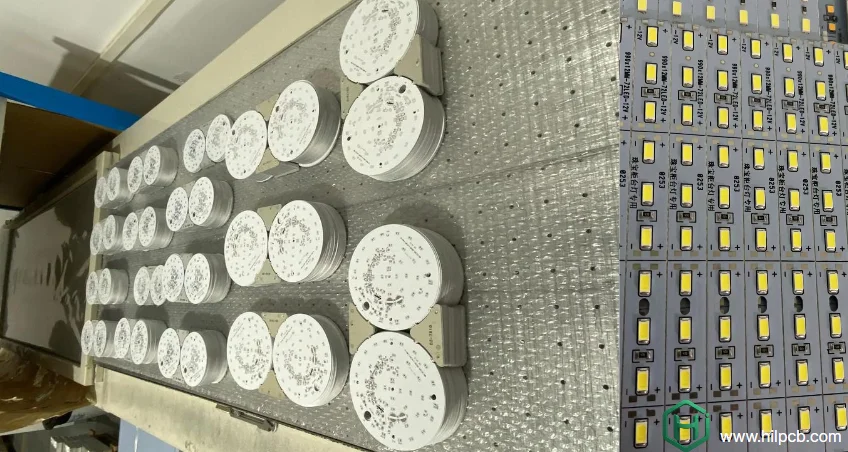
4. Core Components of a Complete Aluminum PCB Turnkey System
A reliable aluminum PCB turnkey manufacturing system requires expertise across multiple production areas.
Component Sourcing – Professional sourcing teams manage BOM review, supplier qualification, component lifecycle risks, and availability planning. This helps prevent production interruptions caused by obsolete or unavailable components.
PCB Fabrication – Aluminum PCB manufacturing requires specialized control of metal substrates, dielectric layers, copper bonding, thermal performance, and stackup design. Manufacturers may also support hybrid structures such as FR4-aluminum combinations for specific applications.
Assembly Services – Turnkey assembly includes automated SMT placement, reflow soldering, selective soldering, and manual assembly processes. Aluminum PCB assembly requires appropriate solder profiles and thermal management considerations.
Testing Infrastructure – Complete testing capabilities may include automated optical inspection (AOI), electrical testing, functional testing, impedance verification, and thermal performance evaluation.
Program Management – Dedicated project managers coordinate engineering communication, production schedules, documentation, and quality feedback between customer teams and manufacturing departments.
Manufacturers that provide turnkey assembly or box-build assembly can extend production beyond PCB manufacturing into complete electronic product integration.
5. Application Areas for Aluminum PCB Turnkey Solutions
Aluminum PCB turnkey manufacturing is commonly selected for products that require efficient heat dissipation, mechanical reliability, and consistent electrical performance. Typical applications include:
- LED lighting systems, including automotive lighting, industrial lighting, architectural lighting, and street lighting
- Power supplies, DC-DC converters, and AC-DC power systems
- Battery management systems (BMS)
- Electric vehicle (EV) chargers and power inverters
- Automotive electronic control units (ECU), ADAS modules, and lighting control systems
- Consumer electronics and home appliances requiring thermal management
- Industrial automation controllers and motor control systems
- Telecommunication base stations and RF power amplifiers
- Renewable energy equipment, including solar inverters, wind power controllers, and battery energy storage systems (BESS)
- Power modules and motor drive electronics
- Medical and healthcare electronic devices
- Aerospace and defense electronic systems
- Audio amplifiers and high-power driver circuits
- Computing equipment and server thermal management modules
- Smart building controllers and IoT devices
Aluminum PCB turnkey services are particularly suitable when product performance depends on controlled thermal resistance, reliable assembly quality, and repeatable manufacturing processes.
6. Selecting the Right Aluminum PCB Turnkey Manufacturing Partner
Choosing the right turnkey PCB manufacturer directly affects product reliability, production efficiency, and long-term supply stability. Engineering teams should evaluate several key capabilities.
Manufacturing Capability – Confirm whether the supplier can manage aluminum PCB fabrication, component sourcing, assembly, and testing through integrated processes.
Quality Systems – Review certifications and quality standards such as ISO 9001, IATF 16949, and UL certification requirements when applicable to the target industry.
Engineering Support – Evaluate the supplier’s ability to provide DFM analysis, thermal design guidance, stackup recommendations, and manufacturing optimization.
Production Communication – Effective project management, clear documentation, and regular production updates help prevent delays and improve collaboration.
Long-Term Production Stability – A reliable manufacturing partner should demonstrate consistent delivery performance, supply chain management capability, and experience supporting lifecycle production.
A capable aluminum PCB turnkey partner acts as an extension of an engineering team. The right supplier provides manufacturing expertise while helping improve product reliability, production efficiency, and scalability.
Conclusion
Aluminum PCB turnkey manufacturing integrates design review, fabrication, sourcing, assembly, and testing into one controlled production process. This approach reduces supplier coordination, improves traceability, and provides engineering teams with a more efficient path from prototype development to mass production.
For applications such as LED systems, automotive electronics, power converters, and industrial controls, a qualified turnkey manufacturer helps maintain thermal performance and manufacturing consistency throughout the product lifecycle.
HILPCB provides complete aluminum PCB turnkey solutions, combining metal-core PCB fabrication, automated assembly capabilities, and quality control processes. By managing the complete production workflow, HILPCB helps customers develop reliable aluminum PCB products with efficient manufacturing support from design validation through production delivery.