
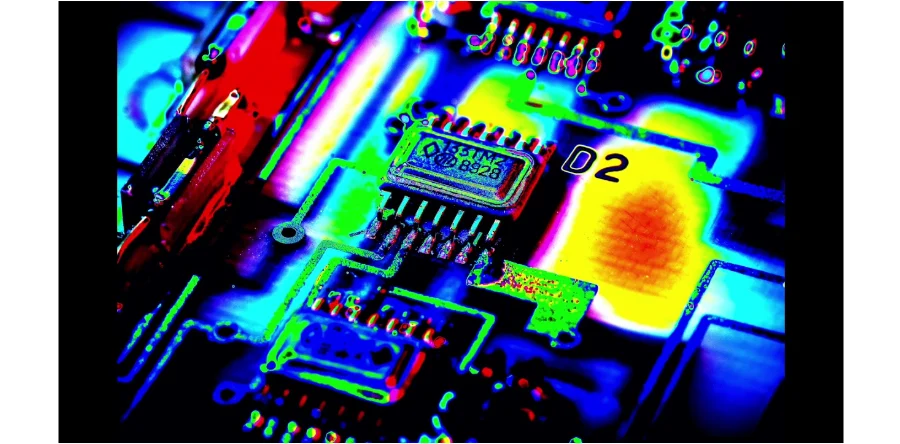
As engineers working on vital-sign monitoring such as ECG, SpO2, and blood pressure, we know the ultimate challenge in medical imaging and wearable devices is not only extreme signal accuracy and low power, but also absolute safety and long-term reliability when the device is in direct or indirect contact with the human body. Under these stringent requirements, Conformal coating has evolved from an “optional extra” into a “must-have” for product success. It is no longer just a moisture/dust barrier; it becomes a core technology for meeting biocompatibility, electrical isolation, signal integrity, and regulatory compliance. This article explains the role of Conformal coating across the full medical PCB design and manufacturing lifecycle, and how to combine it with advanced manufacturing and test strategies to build products that meet top medical standards.
In modern medical electronics—from diagnostic imaging systems to body-worn health monitors—electronics are exposed to complex environments: body fluids, sweat, cleaning agents, mechanical shock, and EMI. A tiny circuit failure can cause incorrect diagnosis or treatment, with unacceptable consequences. That’s why protection must be planned as a system, not as a last-minute spray step. It should be designed-in from concept and carried through NPI EVT/DVT/PVT (engineering/design/production validation testing). From early DFM/DFT/DFA review to final SMT assembly, every step must enable successful Conformal coating without compromising performance or testability.
The core role of Conformal Coating: a biocompatible barrier beyond basic protection
In medical devices, the first job of Conformal coating is to create a reliable barrier that isolates sensitive electronics from the external environment. But medical requirements go far beyond industrial use cases. The coating must be biocompatible so it won’t trigger allergy, irritation, or toxicity when contacting skin or tissue.
1. Material selection and biocompatibility (ISO 10993): Medical-grade Conformal coating materials must meet biocompatibility standards such as ISO 10993. Common material choices and where they fit:
- Silicone (SR): excellent flexibility, moisture resistance, and wide temperature range—ideal for FPC and wearable devices with repeated bending. Soft texture also helps user comfort.
- Urethane (UR): strong chemical resistance and abrasion resistance—good for devices requiring frequent chemical disinfection.
- Acrylic (AR): easy to apply and rework, cost-effective, but generally weaker protection—often used for non-implant devices with less harsh environments.
- Parylene: deposited by vapor deposition; forms an ultra-uniform, pinhole-free thin film that conforms to complex 3D topography. With top-tier biocompatibility and chemical inertness, it’s preferred for implants and high-end sensors—at the highest cost.
2. Electrical isolation and signal purity: For micro bioelectric signals such as ECG/EEG, even tiny leakage currents can bury useful signals. Conformal coating provides high dielectric strength, preventing moisture/contamination-induced shorts and ionic migration, maintaining stable insulation resistance and protecting the ultra-low-noise performance of analog front-end (AFE) circuits. With disciplined DFM/DFT/DFA review, you can pre-plan coating thickness and coverage for high-voltage and sensitive-signal regions to ensure both electrical safety and signal integrity.
Ultra-low-noise AFE: how Conformal Coating protects signal integrity
In vital-sign monitoring devices, the analog front end is the “heart” of the system—its performance directly determines data quality. ECG amplitudes are typically only at the mV level, while noise can come from the power rail, RFI, and leakage current on the PCB itself. Conformal coating plays the “guardian” role here.
Moisture and flux residue contamination can form conductive paths and create small leakage currents between high-impedance nodes (such as amplifier inputs), introducing unpredictable low-frequency noise and DC drift. A high-quality Conformal coating can fully encapsulate these nodes, eliminate the possibility of moisture condensation, and raise surface insulation resistance by orders of magnitude. This is critical for high CMRR and a stable baseline.
However, coating also has risks. The wrong material or process can introduce mechanical stress; sensitive components such as ceramic capacitors may exhibit piezoelectric effects that add new noise sources. Therefore, throughout NPI EVT/DVT/PVT, circuit performance after coating must be repeatedly verified. For testability, during DFM/DFT/DFA review you must define which test points must be tested before coating (e.g., using Flying probe test), which must remain as keep-out (no-coating) areas, or whether a penetrable coating material is required. This demands tight collaboration between design and manufacturing teams.
Medical-grade Conformal Coating material comparison
| Material type | Biocompatibility | Moisture resistance | Flexibility | Typical use cases |
|---|---|---|---|---|
| Silicone (SR) | Excellent (USP Class VI) | Excellent | Excellent | Wearables, flexible circuits, long-term skin contact |
| Urethane (UR) | Good | Good | Good | PCBs inside enclosures requiring frequent chemical disinfection |
| Acrylic (AR) | Average | Average | Average | Cost-sensitive, less demanding non-contact devices |
| Parylene | Top-tier (USP Class VI) | Top-tier | Good | Implantable devices, mini sensors, high-end diagnostic equipment |
Flexible / rigid-flex design: coating process vs. mechanical reliability
Wearables trend toward smaller, lighter, and body-conforming designs. That makes Flex PCB (FPC) and Rigid-Flex PCB mainstream choices. Their dynamic-bending behavior creates unique challenges for Conformal coating.
The coating must be flexible enough to survive tens of thousands—or even hundreds of thousands—of bend cycles without cracking or delaminating. Once the coating cracks, protection fails; moisture and contaminants can enter through the crack and corrode circuits. That’s why high-elasticity materials such as silicone are often critical.
The coating process must also be tightly integrated with flexible-board manufacturing. For example, during SMT assembly, component layout must avoid placing rigid parts in high-strain bend zones. Before coating, FPC surfaces often require plasma cleaning to improve adhesion. At rigid-flex transition regions, coating should transition smoothly to avoid stress concentration from abrupt thickness changes. These details should be discussed and planned early in DFM/DFT/DFA review to prevent reliability issues later. HILPCB has strong experience with complex rigid-flex and can support end-to-end from design to coating application.
Low-power systems and thermal management: impact of Conformal Coating and mitigations
For battery-powered wearables, power is the lifeline. Engineers rely on PMIC, multi-level sleep modes, and efficient wireless protocols (e.g., BLE) to extend runtime. But Conformal coating can become a “double-edged sword” here.
Most conformal coating materials are poor thermal conductors. A uniform coating layer can wrap heat-generating devices (processors, power ICs), blocking heat dissipation and raising junction temperature. Higher temperature not only impacts performance and lifetime but can also increase power consumption. In extreme cases, overheating can reduce wearer comfort or safety.
Thermal management must therefore be treated as a first-class design topic when applying Conformal coating. Typical mitigations include:
- Selective coating: mask major heat sources (e.g., CPU) and avoid coating, or apply an ultra-thin layer. This requires accurate automation and strict process control.
- Thermally conductive coating: special Conformal coating materials with thermal fillers can improve heat conduction while maintaining insulation.
- System-level thermal design: in layout, add thermal vias, enlarge ground copper, or add small heatsinks to provide heat paths.
These strategies must be validated during NPI EVT/DVT/PVT through rigorous thermal shock and full-load testing, ensuring thermal and power targets still hold after coating.
Key reminders: coating and process co-optimization
- Cleaning is critical: after SMT assembly and before coating, PCBA must be thoroughly cleaned to remove all flux residues and contaminants; otherwise adhesion suffers.
- Masking must be precise: connectors, switches, test points, etc. must be accurately masked to avoid functional issues. Automated masking and selective coating improve consistency.
- Cure must be sufficient: whether thermal cure, UV cure, or moisture cure, strictly follow supplier parameters; under-cure reduces final performance.
- Thickness control: too thin gives weak protection; too thick adds internal stress and hurts thermal performance. Use professional thickness measurement for process control.
Manufacturing and test validation: ensuring reliability under the coating
Successfully integrating Conformal coating into production requires lifecycle-level quality assurance—not only coating, but also pre/post-coating manufacturing and test.
1. Compatibility with assembly and soldering processes: On medical PCBA, surface-mount and through-hole parts often coexist. That means combining SMT assembly with Selective wave soldering. Coating must be coordinated with soldering steps. For example: do you finish selective soldering and then coat the full assembly, or do you coat SMT areas first and then solder through-hole parts? This depends on the design. HILPCB’s SMT Assembly supports flexible process flows to match different coating requirements.
2. Design for test (DFT): Once the coating is cured, physical access becomes difficult, and traditional bed-of-nails ICT may no longer be usable. DFT becomes critical:
- Test before coating: before applying Conformal coating, use Flying probe test for 100% net connectivity and component-parameter testing. Flying probe test requires no expensive fixture, fitting medical high-mix/low-volume.
- Keep test points accessible: during DFM/DFT/DFA review, plan key test nodes and design them as keep-out (no-coat) areas for debug and repair.
- Boundary scan (JTAG): for dense packages like BGA, boundary scan can bypass physical probe limitations.
3. Full validation in NPI: During NPI EVT/DVT/PVT, validate the coating process and its effect on performance: thickness uniformity, adhesion, accelerated aging (high temp/humidity, salt spray), plus full electrical regression testing. Only with this verification can volume products be trusted for long-term reliability. HILPCB’s Prototype Assembly can support fast NPI iterations to shorten validation cycles.
Regulatory compliance and certification: ISO 13485, HIPAA, and market access
For global medical devices, meeting target-market regulations is a prerequisite. Conformal coating plays a non-negotiable role.
- ISO 13485 & IEC 60601: ISO 13485 requires validation and control of key processes (including coating). IEC 60601 defines medical electrical safety and basic performance; requirements around clearance/creepage can often be met by certified Conformal coating, enabling denser layouts on HDI PCB.
- HIPAA/GDPR: while these are data privacy regulations, hardware reliability is the foundation of data security. A storage device shorted by moisture can permanently destroy patient data. Improving hardware robustness via Conformal coating is a physical-layer foundation for data integrity and availability.
- Traceability: in ISO 13485 environments, everything from material batch to coating machine parameters must be recorded and traceable, enabling fast root-cause location and corrective actions.
The detailed documentation generated across NPI EVT/DVT/PVT—material certifications, process validation reports, and test data—also becomes critical evidence in submissions to FDA, CE, and other authorities.
HILPCB assembly advantages: one-stop medical PCB solution
- Medical-grade quality system: strict ISO 13485 compliance ensures end-to-end quality control and traceability—from component sourcing to final assembly.
- Advanced process capability: automated selective coating, plasma cleaning, and X-Ray inspection equipment handle complex medical-grade Conformal coating requirements.
- DFx expert support: experienced engineers provide DFM/DFT/DFA review to identify and resolve coating/test/assembly risks early.
- Flexible test strategy: multi-layer testing including AOI, X-Ray, Flying probe test, and functional test ensures every shipped PCBA meets strict quality requirements.
Conclusion
In medical imaging and wearable PCB design/manufacturing, the strategic importance of Conformal coating cannot be overstated. It has long surpassed the idea of “simple physical protection” and has become a system engineering discipline spanning materials science, precision manufacturing, quality control, and regulatory compliance. From protecting ultra-low-noise AFE signal purity, to ensuring mechanical reliability for dynamic-use flexible circuits, to meeting strict biocompatibility and electrical safety standards, Conformal coating is a key enabling technology.
To apply it successfully, you must take a holistic approach and integrate coating requirements seamlessly across the product lifecycle. That starts with comprehensive DFM/DFT/DFA review, runs through precise SMT assembly and Selective wave soldering, is verified via advanced test methods like Flying probe test, and is refined across every stage of NPI EVT/DVT/PVT. Choosing a partner like HILPCB—with deep domain knowledge and complete manufacturing capability—is a practical way to manage these challenges, accelerate time-to-market, and earn market trust.
Common Questions
Why is conformal coating especially important for medical imaging and wearable PCBs?
These products often combine sensitive low-noise analog circuits, strict reliability expectations, and direct exposure to moisture, sweat, cleaning chemicals, or repeated handling. Conformal coating therefore supports both environmental protection and long-term electrical stability.
Why must signal integrity and biocompatibility be considered together?
Medical and wearable boards cannot focus only on electrical performance. The coating must also avoid introducing contamination, material incompatibility, or safety risks while still protecting weak analog signals and dense interconnect structures.
How does flexible or rigid-flex construction change coating strategy?
Flexible circuits experience bending and repeated mechanical stress, so the coating must maintain adhesion and protection without cracking or delaminating. Material choice and process control become much more critical than on a simple rigid board.
Why are validation and regulatory traceability essential for coated medical PCBs?
In regulated products, coating quality must be proven rather than assumed. Process records, material traceability, and verification through EVT/DVT/PVT and production testing are what turn a coating step into a reliable, compliant manufacturing process.