
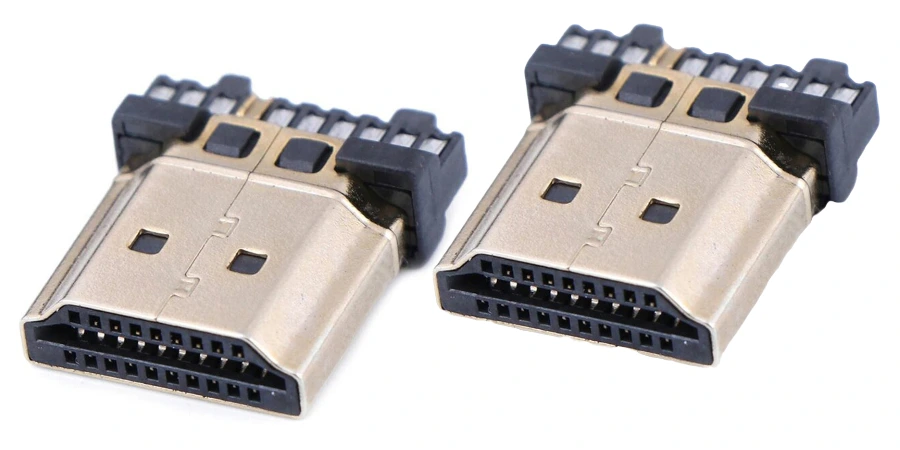
Modern HDMI products demand consistent SMT quality, stable connector soldering, and inspection discipline that supports fast validation and scalable production. HILPCB provides HDMI SMT assembly for a wide range of HDMI applications—adapters, docks, switches, splitters, extenders, capture devices, industrial displays, and automotive video systems—helping teams move from prototypes to volume with confidence.
High-Reliability HDMI SMT Assembly for High-Speed Interfaces
HDMI designs combine high-speed signaling with dense component placement. A strong SMT process ensures stable electrical behavior and consistent performance across cables, sinks, and operating environments.
At HILPCB, our workflow is built around repeatable printing, accurate placement, and controlled reflow, supported by production-grade SMT assembly services.
Key SMT Quality Techniques
- Stable solder paste printing: stencil strategy and process control for consistent joints
- Accurate placement for dense layouts: fine-pitch ICs, small passives, and tight connector regions
- Controlled reflow profiles: tuned heating curves to improve wetting consistency and reduce warpage risk
- ESD-safe handling: protection for sensitive HDMI ICs and protection arrays
Consistent Performance and Reliability
Repeatable SMT quality improves yield, reduces validation cycles, and supports predictable scaling from engineering builds to mass production.
HDMI Connector Assembly Excellence: SMT + Anchoring for Long-Term Durability
HDMI connectors are both electrical and mechanical interfaces. A robust connector assembly approach improves long-term durability and helps products maintain stable performance over repeated insertions and real-world handling.
At HILPCB, connector reliability is treated as a dedicated build focus, integrating SMT with proven anchoring workflows through through-hole assembly when anchor tabs/pins are required.
Key Connector Reliability Techniques
- Anchor joint strength control: reliable soldering for retention pins/tabs
- Coplanarity and wetting management: process tuning for stable connector solder joints
- Connector-zone inspection checkpoints: focused verification of the most stress-sensitive area
- Scale-ready workmanship: connector methods that remain consistent from prototype to volume
Consistent Performance and Reliability
Connector-focused assembly reduces wear-related issues and supports long service life in consumer, industrial, and automotive environments.
Fine-Pitch HDMI IC SMT Capability: QFN/BGA, Thermal Pads, and Process Control
Many HDMI products integrate bridges, retimers/redrivers, controllers, and power devices in QFN/BGA packages. Fine-pitch capability and thermal pad control are essential for reliable assembly and stable operation.
At HILPCB, fine-pitch builds follow a process tuned to package type, board thermal mass, and inspection scope—so the assembly is repeatable at scale.
Key Fine-Pitch SMT Techniques
- Aperture optimization: paste volume tuned for fine pitch and thermal pad needs
- Thermal pad strategy: consistent soldering for heat transfer and mechanical stability
- MSL handling discipline: storage and bake rules aligned to component requirements
- Rework-aware planning: assembly approach that supports engineering validation without sacrificing stability
Consistent Performance and Reliability
Fine-pitch process control supports stable power/thermal behavior and improves first-pass functional validation success.
HDMI ESD/EMI Component Placement in SMT: TVS Arrays, CM Chokes, and Shield Grounding
Protection and filtering parts are core to HDMI product robustness. When placed with the right topology and grounding approach, they improve port protection and EMC readiness without compromising manufacturability.
At HILPCB, we support connector-first placement reviews and production-ready assembly practices. For a fabrication + PCBA overview that connects controlled impedance, stackup execution, and assembly deliverables, see this HDMI PCB manufacturing & PCBA reference.
Key Protection & EMI Techniques
- TVS arrays close to the connector: short placement for effective protection and clean routing
- Low-inductance grounding: via strategy and land pattern alignment for strong discharge paths
- Common-mode choke integration: placement that preserves symmetry and supports impedance continuity
- Shield grounding consistency: practical grounding structures to improve EMI and robustness
Consistent Performance and Reliability
Well-integrated protection components improve product robustness and support smoother compliance testing in later project stages.
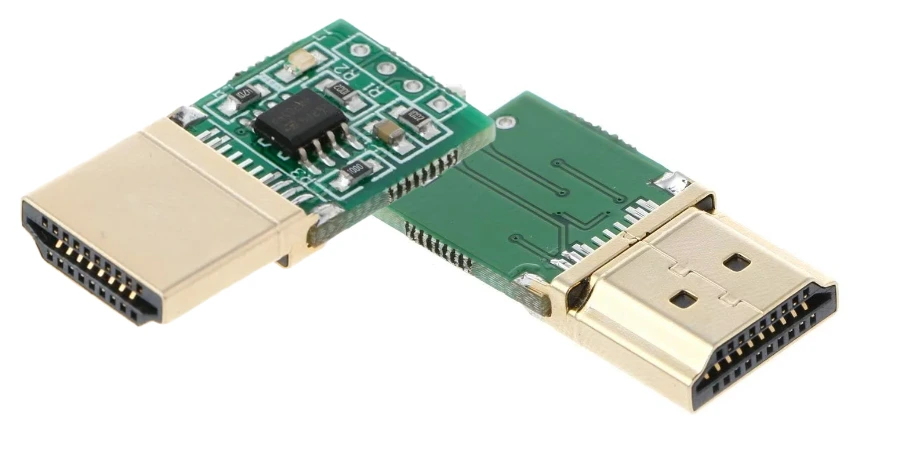
HDMI SMT Assembly Inspection: AOI, X-Ray Options, and Build Documentation
Inspection is a core part of scalable HDMI manufacturing. It protects yield, enables fast debug during validation, and reduces defect escape risk as programs ramp.
At HILPCB, we tailor inspection depth to your package types and production stage, while keeping the workflow efficient for both prototypes and volume.
Key Inspection Techniques
- AOI baseline: fast detection of placement and solder anomalies for most SMT components
- X-ray options: additional visibility for hidden joints (BGA/thermal structures) when required
- Build records and traceability: documentation level aligned to your QA expectations
- Stage-appropriate screening: prototype-friendly checks and scale-ready inspection logic
Consistent Performance and Reliability
A structured inspection plan supports stable yields, faster validation, and consistent production outcomes.
Turnkey HDMI SMT Assembly: Sourcing, Alternates Policy, and Traceability
Turnkey manufacturing helps teams move faster by combining procurement and assembly under one accountable workflow—especially when BOMs include multiple active devices, connectors, and protection arrays.
At HILPCB, we provide end-to-end delivery through turnkey assembly services, with sourcing controls aligned to your cost, schedule, and quality needs.
Key Turnkey Execution Techniques
- BOM review before build: lead-time visibility and risk flagging
- Alternates policy control: approved substitution rules by part category
- Authorized sourcing strategy: traceable procurement for critical components
- Traceability options: lot tracking and documentation depth as required
Consistent Performance and Reliability
Turnkey reduces coordination overhead, accelerates builds, and improves accountability across prototypes and production.
HDMI SMT Assembly RFQ Checklist: Fast Quoting and Prototype-to-Volume Scaling
A complete RFQ package enables faster quoting, smoother DFM alignment, and more predictable build outcomes. It also helps your program scale without process changes that disrupt yield.
At HILPCB, we support early builds with flexible scheduling and scale-up with stable processes from pilot to mass production.
Key RFQ & Scaling Techniques
- Assembly package: BOM (MPNs), pick&place, assembly drawing, and polarity/orientation notes
- Connector definition: connector model, anchoring requirements, and mechanical constraints
- Inspection scope: AOI baseline and X-ray requirements (if any)
- Test expectations: bring-up checks vs functional validation, fixtures if available
- Ramp planning: prototype support via small-batch assembly and scalable output via large-volume assembly
Consistent Performance and Reliability
With a clear RFQ and ramp plan, HDMI programs move faster from validation to stable production, with repeatable quality and predictable delivery.