
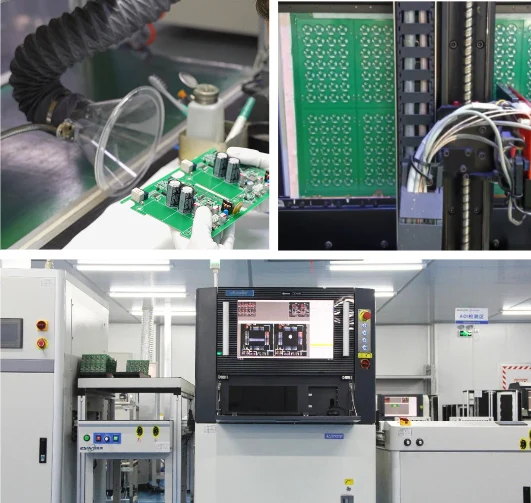
Use IPC-A-610 to assess the specified visual acceptability of an assembly and J-STD-001 to define the applicable soldering materials, process and end-product requirements. A purchase order should name the document revision, product class, relevant addenda and drawing requirements, then define the inspection and test evidence needed for release.
Overview of IPC Standards for PCB and PCBA Manufacturing
IPC documents serve different stages of a PCB build: design (IPC-2221 series), bare-board qualification (IPC-6012 for rigid boards), soldering requirements (J-STD-001), and assembled-board visual acceptance (IPC-A-610). Specify the appropriate document and revision on the purchase order.
| IPC standard | Scope | Where it applies on a PCB build |
|---|---|---|
| IPC-A-610 | Acceptability of electronic assemblies | Final inspection criteria (Class 1/2/3) |
| J-STD-001 | Requirements for soldered electrical and electronic assemblies | Materials, soldering processes and applicable end-product requirements |
| IPC-2221 | Generic PCB design standard | General design requirements used with the applicable detail standard |
| IPC-2222 | Rigid organic PCB design (detail) | Board layout, hole/trace rules |
| IPC-6011 / IPC-6012 | Generic performance framework / rigid PCB qualification and performance | Fabrication acceptance, microsection and test plans |
| IPC-6018 | Microwave and high-frequency printed-board qualification and performance | Application-specific RF board acceptance |
| IPC-A-600 | Acceptability of bare PCBs | Visual acceptance of the unpopulated board |
| IPC-4552 / 4553 / 4554 / 4556 | ENIG / immersion silver / immersion tin / ENEPIG | Surface-finish specifications; confirm the current revision |
| IPC-9252 | Bare-board electrical testing requirements and methods | Continuity/isolation; impedance control and coverage require separate customer specifications |
| IPC-4103 | Base materials for high-speed/high-frequency applications | Specify the actual laminate and construction; IPC-4101 is a separate base-material specification for rigid/multilayer boards |
IPC standards apply internationally. French-language purchasers may use the phrase “norme IPC” in RFQs; use the actual document identifier and revision so that the acceptance criteria are unambiguous.
Use the table above when:
- A buyer asks for the assembly acceptability class; IPC-A-610 gives assembly acceptance criteria, while the applicable fabrication document (such as IPC-6012) governs bare-board acceptance.
- A design review needs trace, spacing or clearance requirements: combine the applicable design documents with the released stackup, electrical conditions and fabricator's process limits.
- An RF program needs printed-board performance requirements: review IPC-6018 applicability alongside the selected Rogers PCB or Teflon/PTFE PCB material. Radio/system qualification is a separate scope.
- A quality engineer requests microsection or dimensional evidence: define the relevant performance document, drawing features, sample/coupon plan and acceptance conditions together.
Linked standards on this site for the next step:
- IPC-A-610 Class 1 vs Class 2 vs Class 3, detailed acceptability criteria by class.
- IPC Class 3 PCB Manufacturing, Class 3 high-reliability build flow.
- IPC-2221 PCB Design Standard, general design requirements and their application.
- HILPCB quality assurance overview, inspection, testing and manufacturing quality-control services.
If an RFQ states only “IPC Class X,” clarify the applicable fabrication performance specification (e.g., IPC-6012 or IPC-6018), assembly criteria and laminate requirements (e.g., IPC-4101/4103). Document the specified revision and customer amendments.
Overview of IPC Standards Framework
IPC-A-610: Acceptability of Electronic Assemblies
- Purpose: Visual acceptance criteria for electronic assemblies
- Scope: Post-assembly inspection standards
- Focus: What constitutes acceptable vs. defective assemblies
- Application: Quality control and inspection processes
J-STD-001: Soldering Requirements
- Purpose: Requirements for soldered electrical and electronic assemblies
- Scope: Pre-assembly through soldering completion
- Focus: Materials, process controls and applicable acceptable end-product conditions
- Application: Manufacturing process control
IPC-A-610 Detailed Analysis
Classification System
- Class 1: General Electronic Products
- Class 2: Dedicated Service Electronic Products
- Class 3: High Performance Electronic Products
Class 1 Requirements
- Selection context: General electronic products where basic function is the principal requirement; the customer specifies the class for the product.
- Inspection: Assess the applicable features with suitable methods, plus the electrical or functional tests defined for the order.
- Acceptance: Apply the actual Class 1 criteria, rather than treating the class as permission to skip an otherwise required check.
Class 2 Requirements
- Selection context: Dedicated-service products where continued performance and extended life are desired; uninterrupted service may be desired without being critical.
- Inspection: Select coverage around the applicable features and contract requirements, including hidden joints or functional tests where needed.
- Acceptance: Evaluate the specified Class 2 requirements; industry name alone does not select the class.
Class 3 Requirements
- Selection context: High-performance products where continued or on-demand operation is critical, subject to the actual product requirements.
- Inspection: Apply the relevant Class 3 feature criteria and the agreed test/qualification plan.
- Acceptance: Workmanship class does not establish the device's safety, environmental lifetime or regulatory qualification.
The product owner chooses the required class. An industrial, medical or aerospace label is not a substitute for that decision, and an IPC-A-610 class for the assembled board does not automatically specify the bare-board performance class.
Solder Joint Acceptance Criteria
Through-Hole Components
Acceptance depends on lead protrusion, hole fill, wetting, fillet shape, component style and the selected IPC-A-610 revision and class. Avoid using a universal “voids acceptable” summary in place of the actual accept/reject criteria.
Surface Mount Components
- Lead/package type: Identify which termination criteria apply before selecting a heel, toe or side-fillet requirement.
- Visible features: Check the applicable wetting, dimensions, alignment and clearance requirements.
- Hidden connections: Define separate X-ray or other coverage where needed; a visual result cannot establish every hidden joint condition.
Visual Inspection Requirements
Magnification Standards
- Magnification depends on feature size, inspection method and the selected IPC-A-610 revision; do not treat one power as the minimum for every Class 1 assembly.
- For Class 2, select magnification that resolves the specified joint and defect features.
- For Class 3, follow the relevant document’s inspection criteria and approved work instruction.
Lighting Requirements
- Set and verify illumination against the selected document's requirements and the inspected feature.
- Use suitable color rendering and inspection equipment for reliable defect recognition.
- Reduce shadowing for the actual package and inspected feature.
- Document work-instruction settings and regularly verify equipment condition.
J-STD-001 Process Requirements
Soldering Materials Specifications
Solder Alloys
- Tin-Lead: 63/37, 60/40 compositions
- Lead-Free: SAC305, SAC387, SAC405
- Specialty alloys: Low-temperature, high-reliability
Flux Classifications (see IPC J-STD-004)
- Flux classification: Specify flux using the applicable IPC J-STD-004 composition/activity/halide designations.
- No-clean: Cleaning requirements depend on residue characterization, reliability risk and the assembly specification.
- Water-soluble: Remove residues using a qualified cleaning process where required.
- Process qualification: Validate chemistry and cleaning with the board finish and end-use requirements.
Process Control Requirements
Temperature-Profiling Considerations
- Heating rate: Follow component and solder-paste specifications; measure on the actual assembly
- Soak: Determine acceptable dwell from the chosen solder and thermal profile
- Peak / time above liquidus: Respect solder-alloy and component exposure limits
- Cooling: Validate joint formation and thermal stress against the assembly process
Hand-Soldering Equipment Control
- Tip-temperature accuracy: Define and measure the requirement for the soldering station and process
- Thermal recovery: Verify the station can heat the actual joint within the qualified process window
- Tip maintenance: Regular cleaning and tinning
- ESD protection: Use suitable equipment and handling controls for the assembly's ESD-sensitive devices
Hand Soldering Procedures
Component Preparation
- Lead forming: Proper bend radius and length
- Surface preparation: Clean, oxide-free surfaces
- Flux application: Appropriate type and quantity
- Component positioning: Correct orientation and spacing
Soldering Technique
- Heat application: Simultaneous heating of joint elements
- Solder application: Feed solder to joint, not iron
- Cooling period: Maintain joint stability during solidification
- Inspection: Visual verification of joint quality
Comparative Analysis: A-610 vs J-STD-001
Complementary Relationship
| Aspect | IPC-A-610 | J-STD-001 |
|---|---|---|
| Focus | Assembly visual acceptability | Soldering materials, processes and end-product requirements |
| Typical use | Evaluate specified workmanship features | Establish and control the soldering route and its requirements |
| Release decision | Which observed assembly conditions meet the applicable criteria? | Which material/process and resulting-joint requirements apply? |
| Boundary | Not a process recipe or a complete electrical-test plan | Used with the drawing, product requirements and applicable acceptance documents |
The publisher's IPC-A-610J scope excerpt, section 1.1, separates visual acceptability from cross-section/X-ray criteria and points to J-STD-001 for X-ray guidance. J-STD-001 also addresses acceptable end-product characteristics; describing the two documents as completely separate “process versus result” rules would miss that overlap.
Overlap Areas
- Solder joint formation: Both address joint characteristics
- Workmanship and process feedback: Inspection findings can identify a process issue that needs controlled disposition.
- Documentation: Apply the governing requirements for work instructions, inspection and release evidence; define any additional customer record package.
- Personnel proficiency: Meet the applicable standard's proficiency requirements and retain the records defined by the quality procedures and order. IPC personnel certification is a separate program used where required.
Certification and Training Programs
HILPCB's quality commitment includes certified personnel and documented continuous-improvement activities. The QA team can assist customers with customized IPC training and coordinate certification programs through authorized providers. Training or coordination does not itself confer IPC certification; the applicable examination and credential remain with the authorized program.
IPC Certification Levels
CIS (Certified IPC Specialist)
- Duration: Depends on the authorized course and current training program.
- Scope: Personnel qualification for the applicable standard/program and completed modules
- Validity and recertification: Confirm the current IPC program rules for the specific standard and certificate before quoting a term
- Training record: Record standard/revision, completed modules, role and certificate expiry so assignments and renewals can be planned
CIT (Certified IPC Trainer)
- Eligibility: Confirm IPC’s current authorized-training and CIT qualification requirements
- Training duration: Depends on course, role and authorized training center
- Scope: Deliver authorized training/certification within the applicable program and trainer authorization
- Validity: Refer to the certificate and current program rules; do not assume a uniform term or annual requirements
MIT (Master IPC Trainer)
- Eligibility: Confirm the applicable IPC program for Master IPC Trainer rather than assuming an automatic CIT-to-MIT progression
- Duration: Advanced training program
- Scope: Train-the-trainer capabilities
- Authority: Defined by the authorized program and training-center role; it is not a general license to create IPC credentials or alter official requirements
Personnel certification, a factory quality-management certificate and a manufacturer's separate validation/listing are different evidence. Use the published IPC certification policies for the applicable program and effective year; the certificate alone does not qualify a product design or replace the build's acceptance records.
Training Content Areas
IPC-A-610 Training
- Visual inspection techniques
- Defect identification and classification
- Measurement and documentation
- Class-specific requirements
J-STD-001 Training
- Soldering theory and practice
- Material selection and handling
- Process development and control
- Hands-on soldering exercises
Implementation Best Practices
Quality Management System Integration
- Document control: Standard operating procedures
- Training records: Personnel certification tracking
- Audit procedures: Regular compliance verification
- Corrective actions: Non-conformance management
Measurement and Monitoring
- Process capability studies: Statistical analysis
- Gage R&R studies: Measurement system validation
- Internal audits: Compliance verification
- Customer feedback: Continuous improvement input
Technology Integration
- Digital inspection: Automated optical inspection
- Data collection: Real-time quality metrics
- Traceability systems: Component and process tracking
- Statistical analysis: Trend identification and control
Industry-Specific Applications
Automotive Electronics
- IATF 16949: Quality management integration
- AEC-Q standards: Component qualification
- Functional safety: ISO 26262 compliance
- Environmental testing: Temperature and vibration
Medical Devices
- FDA regulations (United States): 21 CFR Part 820, the Quality Management System Regulation (QMSR), effective February 2, 2026; it incorporates ISO 13485:2016 by reference for covered device manufacturers.
- ISO 13485: Medical device quality systems
- Risk management: ISO 14971 compliance
- Biocompatibility: Address relevant patient-contact materials and exposure within the device's biological evaluation, where applicable
Aerospace and Defense
- AS9100: Aerospace quality management
- MIL standards: Military specifications
- ITAR compliance: Export control regulations
- Reliability testing: Extended qualification requirements
These are program-dependent requirements to flow into the order, not certifications conferred by an IPC workmanship class. For the United States medical-device context, the FDA's QMSR overview confirms the February 2, 2026 effective date and ISO 13485:2016 incorporation; the finished-device manufacturer must determine the applicable obligations and supplier controls.
Future Developments
Emerging Technologies
- Artificial intelligence: Automated defect detection
- Machine learning: Predictive quality analytics
- Digital twins: Virtual process optimization
- Blockchain: Supply chain traceability
Standard Evolution
- Lead-free updates: Environmental compliance
- Miniaturization: Fine-pitch component requirements
- New materials: Advanced substrate technologies
- Industry 4.0: Smart manufacturing integration
Conclusion
For a sourcing decision, turn the standard names into a released build scope: bare-board performance document, assembly documents/revisions, product class, addenda, drawing notes, material rules and agreed inspection/test coverage. Also name who resolves conflicts, approves deviations and releases the first article.
HILPCB's SMT assembly route supports ISO 9001 quality-system controls and IPC-A-610/J-STD-001 workmanship by order, with stencil/profile review, SPI, AOI, selected X-ray, programming and customer-defined electrical or functional tests. Its NPI workflow can connect the released revision to first-article findings, disposition and the quoted inspection/test records.
For example, a buyer specifying IPC-A-610J Class 2 and J-STD-001J should also identify the BGA/QFN inspection scope, any cleaning/traceability requirements, first-article approval and test limits. Send the assembly drawing, BOM, placement data, quantity and those requirements with the RFQ. That lets engineering select the route and lets procurement compare tooling, test and record costs on the same basis.
For personnel training, use an authorized provider and the relevant IPC program. Manufacturing and inspection services are a separate quotation scope.
Frequently Asked Questions
How to get IPC 610 certification?
IPC-A-610 qualification is available through applicable IPC-authorized training routes. Confirm the current revision (for example IPC-A-610J where appropriate), role, validity period and course availability with the training provider. Certification of personnel is distinct from a manufacturer’s evidence of process compliance.
What do the other IPC references mean?
The identifiers specify different jobs: IPC-222X documents address design, IPC-601X performance/qualification, IPC-A-600 bare-board visual acceptability, J-STD-001 soldered-assembly requirements and IPC-A-610 assembly visual acceptability. State each applicable document, revision, class and amendment on the order; the term “IPC compliant” alone leaves the scope unresolved.