
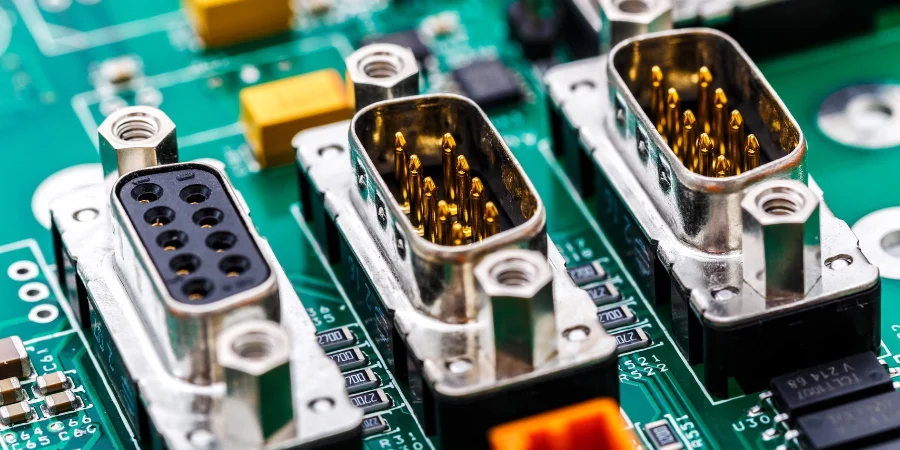
PCB traceability for industrial robot controls is the ability to reconstruct which materials, revisions, processes, inspections, tests, and rework events produced a specific controller PCBA or lot. A manufacturing execution system (MES) can bind those records to a serial number, enforce routing rules, and preserve product genealogy, but it does not by itself prove real-time network performance, functional safety, or field reliability.
This guide helps automation OEMs, quality teams, and buyers define traceability before production.
Key Takeaways
- Define the containment question first: which shipped units used a suspect component lot, process recipe, firmware revision, or test station?
- Select lot-, panel-, board-, or component-level traceability according to product risk and contract.
- A valid history needs identity, genealogy, route enforcement, inspection/test results, and controlled rework—not disconnected spreadsheets created after production.
- MES records manufacturing evidence. EtherCAT or PROFINET conformance, EMC, environmental durability, machinery safety, and functional safety require separate product-level validation.
- Put fields, retention, export, access, and missing-data rules into the RFQ.
Table of Contents
- What is the difference between traceability, MES, and SPC?
- What traceability level does a robot controller PCBA need?
- Which data should be linked to each PCBA?
- How should MES quality gates control production?
- What should be tested on an industrial robot controller PCB?
- How do real-time Ethernet and MES responsibilities differ?
- How should nonconformance and rework be traced?
- How should MES data be integrated and protected?
- What should a traceability RFQ include?
What Is the Difference Between Traceability, MES, and SPC?
These terms are related but not interchangeable.
| Term | Primary purpose | Typical output | Important limit |
|---|---|---|---|
| Traceability | Reconstruct product and material history | Genealogy from supplier lot to work order, PCBA, test, and shipment | A record can be complete yet describe a poorly designed or poorly controlled process |
| MES | Execute and record shop-floor work | Route status, work instructions, material consumption, equipment/test events, holds and release | MES quality depends on master data, integration, rules, and operator discipline |
| SPC | Detect statistically meaningful process behavior | Control charts, trends, capability analysis, alarms | Cpk and control limits are meaningful only for suitable, stable data and a defined characteristic |
| ERP | Plan commercial and material resources | Purchase orders, inventory, supplier and order records | Usually lacks detailed station-level execution data |
| PLM/change control | Manage design identity | BOM, drawings, approved revisions, ECO/ECN history | Does not prove which revision was actually built unless linked to execution |
The useful outcome is a defensible link between released design, materials, process route, test evidence, and shipped serial number.
What Traceability Level Does a Robot Controller PCBA Need?
Traceability depth should match the consequence of uncertainty. Tracking every passive component by individual serial number may be impossible or wasteful, while tracking only a work order may be inadequate for a safety-related controller or long-service industrial platform.
| Level | Identity granularity | Suitable when | Main limitation |
|---|---|---|---|
| Batch/work-order | Build lot and shared material/process records | Low-risk products or early prototypes with controlled quantities | Cannot isolate individual boards within the lot |
| Panel | Panel ID linked to PCB and process history | Fabrication and assembly flow is naturally panel based | Depanelized boards need a preserved parent-child relationship |
| Unit/board | Unique PCBA serial number | Field service, warranty containment, firmware variants, high-value controls | Requires reliable scanning and station integration |
| Critical-component genealogy | Unit linked to designated reel, tray, date/lot code, or component UID | FPGAs, processors, safety ICs, memory, communication controllers, power modules, or customer-designated parts | Data accuracy depends on material labeling, feeder/loading controls, and replenishment handling |
IPC-1782 provides a traceability framework, but customer and supplier must agree on scope, critical parts, unit-versus-lot linkage, and aggregation. A reel-to-work-order record does not prove a specific placement when multiple reels were loaded or replenished.
Which Data Should Be Linked to Each PCBA?
A useful traceability record answers who, what, where, when, under which revision, with which result, and what happened after a failure. The minimum data set depends on risk, but the following matrix is a practical starting point.
| Data domain | Recommended fields | Why it matters |
|---|---|---|
| Product identity | PCBA serial, PCB/panel ID, part number, hardware revision, work order, customer order | Establishes the object being traced |
| Released configuration | BOM/AVL revision, fabrication/assembly drawing revision, approved deviation or ECO | Prevents ambiguity about design intent |
| Bare PCB | Fabricator lot, date code, panel ID, stackup or controlled feature record when specified | Supports containment of fabrication-related issues |
| Components | Manufacturer part number, supplier, incoming lot/date code, internal material ID, critical UID where required | Links suspect material to affected units |
| Material handling | MSL status, dry storage, floor exposure, bake/reconditioning record where applicable | Supports moisture-sensitive-device disposition |
| SMT/THT process | Line/station, program and stencil revision, solder paste/flux lot, reflow recipe/profile reference, operator where required | Reconstructs the actual manufacturing route |
| Inspection | SPI/AOI/X-ray program revision, pass/fail, defect code, disposition, retained image/data according to contract | Separates process evidence from a simple final pass label |
| Programming | Firmware, bootloader, FPGA/CPLD image, configuration/calibration revision, security provisioning status | Prevents mixed software/hardware configurations |
| Electrical/functional test | Fixture and program revision, tester ID, measured limits/results, timestamp, retry count | Shows what was tested and against which limits |
| Rework and release | Failure code, diagnosis, removed/replaced part and lot, authorization, operator, inspection and retest | Preserves genealogy after the original build changes |
| Shipment | Pack lot, finished-product serial linkage, shipment/customer reference | Enables forward containment from a suspect build population |
Define whether the customer needs pass/fail summaries, measured values, images, raw files, or exception records, plus retention and export format. Do not promise indefinite raw-data storage without a retrieval plan.
How Should MES Quality Gates Control Production?
MES creates value when it prevents an invalid state rather than merely recording it later. Each station should have a clear entry condition, required evidence, pass/fail rule, and authorized disposition.
| Gate | MES or traveler rule | Evidence | Failure action |
|---|---|---|---|
| Material issue/loading | Part, revision, lot, MSL status, and approved alternate match the work order | Scan/binding record | Block loading or require approved deviation |
| First article/setup | Correct stencil, programs, feeder map, polarity, and critical placements | First-article approval | Hold lot until correction and re-verification |
| Printing/placement/reflow | Required SPI and process route completed under released settings | Station result and recipe/program revision | Stop, contain defined population, and investigate |
| Post-reflow inspection | AOI and risk-based X-ray criteria completed | Defect and disposition record | Route to review/rework; do not silently convert fail to pass |
| Programming/test | Correct image and test program applied; limits passed | Versioned measured result | Quarantine, diagnose, authorize rework, then retest |
| Final release | All mandatory steps complete and no open nonconformance | Electronic traveler/release status | Prevent pack-out or shipment |
Manual stations need the same logic. A scan is not proof if it can be skipped or another board’s ID reused. Apply permissions, reason codes, revision control, and audit logs according to risk.
What Should Be Tested on an Industrial Robot Controller PCB?
Test coverage should distinguish manufacturing defects from product qualification. An ICT fixture cannot certify protocol interoperability, and an MES record cannot turn an untested function into a tested one.
| Test layer | Typical targets | Production use | What it does not prove |
|---|---|---|---|
| SPI/AOI/X-ray | Paste, presence, polarity, alignment, visible/hidden solder conditions | In-line inspection with risk-based coverage | Electrical function or lifetime |
| Flying probe/ICT | Shorts, opens, accessible components/nets, programming access | Prototype, pilot, or repeat production depending on DFT and volume | Full-speed interfaces and system behavior |
| Boundary scan | Digital interconnects on supported devices/nets | Useful where physical probe access is limited | Analog, power, unscanned nets, complete firmware behavior |
| Functional test | Power rails, boot, I/O, communications, watchdogs, safety-related diagnostics as specified | Defined production screen | EMC, environmental durability, formal protocol conformance, full machinery safety |
| Engineering validation | EtherCAT/PROFINET behavior, timing, network load, fault recovery, thermal and power margin | Design/NPI and change validation | Manufacturing consistency unless translated into repeatable production limits |
| Qualification/certification | EMC, environmental, protocol conformance, functional safety, product-standard tests | Product release and controlled changes | Every future unit unless production controls preserve the qualified configuration |
First-article inspection checks the initial build against released manufacturing data. It does not validate OS scheduling, network jitter, servo performance, or safe-state behavior.
Fixtures need test access, known-good loads, reference firmware, calibrated instrumentation, and objective limits. Packet-error injection or protocol conformance requires specialized tools and is not a default ICT/FCT capability.
How Do Real-Time Ethernet and MES Responsibilities Differ?
EtherCAT and PROFINET performance depends on hardware, firmware, drivers, operating system, topology, and configuration. MES records which configuration was built and which defined tests passed.
For high-speed PCB, review PHY-to-magnetics routing, return paths, isolation, connector launch, and interface protection using component guidance. Avoid universal routing recipes.
Official EtherCAT conformance testing and PROFINET certification evaluate device protocol behavior under their respective programs. A factory functional test may confirm link, traffic, and selected application functions, but it must not be labeled as official conformance unless performed under the applicable authorized procedure.
MES timestamps do not replace synchronized network time. Record clock source, synchronization method, timezone, and expected resolution for each data producer.
How Should Nonconformance and Rework Be Traced?
Traceability often breaks during exceptions. Define paths for replenishment, split lots, missing scans, duplicate serials, scrap, offline equipment, retest, and component replacement.
A controlled nonconformance record should include:
- affected serial, panel, lot, and estimated exposure window;
- station, defect/failure code, evidence, and detection time;
- containment status and units already advanced or shipped;
- authorized disposition: use-as-is, repair, rework, scrap, or return;
- replaced component identity and new lot when required;
- re-inspection and retest route with original and final results preserved;
- approval identity and linked deviation, corrective action, or engineering change.
Never overwrite a failed result with a passing retest; preserve both and show the state transition.
A practical containment query should answer: “List every PCBA and shipped product that used material lot X between feeder load and unload, including replenishments, then show inspection, test, rework, and shipment status.” Test this query during supplier qualification with a redacted historical example.
How Should MES Data Be Integrated and Protected?
IPC-2591 CFX supports information exchange between electronics assembly processes and host systems. ISA-95/IEC 62264 models enterprise-control integration. OPC UA, APIs, files, and vendor adapters are other options; no interface is universal.
Define identifiers, units, limits, timezone, retry and duplicate-event handling, offline buffering, and upload-failure behavior.
Traceability data can expose BOMs, firmware, suppliers, volumes, defects, and serial ranges. Apply access control, authentication, segmentation, backups, retention/deletion rules, audit logs, and tested recovery. The customer owns the applicable ISA/IEC 62443 security scope.
What Should a Traceability RFQ Include?
Identification and genealogy
- required granularity: lot, panel, unit, and designated critical component
- serial format, marking method, code content, label durability, and duplicate prevention
- parent-child links from bare PCB and PCBA to finished controller or shipment
- customer-supplied serials, MAC addresses, certificates, or secure credentials
Manufacturing records
- PCB and component lot fields, MSL handling, solder paste/flux, program/recipe revisions, and operator/station data
- required SPI, AOI, X-ray, ICT, boundary-scan, programming, and FCT evidence
- measurement values versus pass/fail only; image/raw-file requirements
- first article, deviations, nonconformance, rework, retest, and scrap history
Data delivery and retention
- report fields, sample report, file/API format, retrieval time, access method, and language
- retention period, backup expectation, customer ownership, confidentiality, and deletion rules
- acceptable aggregation, missing-record rule, offline procedure, and audit access
- requested standards, revision, contractual precedence, and supplier evidence
Industrial robot controller test scope
- hardware revision, firmware and configuration identity
- fixtures, loads, power supplies, cables, test software, and calibration ownership
- rail, I/O, communication, watchdog, safety diagnostic, and fault-response limits
- separation between production screening, engineering validation, protocol certification, EMC, and functional-safety testing
How Can HILPCB Support Traceable Robot Controller PCBAs?
HILPCB can support SMT assembly, multilayer PCB, small-batch assembly, and turnkey assembly for suitable industrial controller projects. Published turnkey workflows include MES traveler records, serialization, component-lot/build traceability, and scoped SPI, AOI, sample X-ray, ICT, boundary-scan, or functional-test planning.
Agree record depth and test coverage per project. Share identity, critical parts, fields, retention, test limits, firmware handling, rework rules, and a report sample so HILPCB can confirm automated, manual, and customer-owned evidence.
Reference Standards and Responsibility Scope
- IPC-1782 — manufacturing and supply-chain traceability of electronic products
- IPC-2591 — Connected Factory Exchange (CFX)
- ISA-95 / IEC 62264 — enterprise-control system integration
- IPC J-STD-001 — requirements for soldered electrical and electronic assemblies
- IPC-A-610 — acceptability of electronic assemblies
- IEC 61000-4-2 — electrostatic-discharge immunity testing
- IEC 61000-4-4 — electrical fast-transient/burst immunity testing
- IEC 61000-4-5 — surge immunity testing
- ISO 13849-1 — safety-related parts of control systems, where applicable
- IEC 61508 — functional safety of electrical/electronic/programmable electronic safety-related systems, where applicable
- ISA/IEC 62443 series — industrial automation and control-system security, where applicable
The purchase order or quality agreement should name applicable revisions and precedence. PCBA traceability proves what manufacturing evidence was recorded; it does not certify robot safety, protocol conformance, EMC, environmental qualification, cybersecurity, motion performance, or suitability for an intended machine.
Frequently Asked Questions
Does every industrial robot control PCB need unit-level traceability?
No. The appropriate level depends on product risk, field-service needs, customer contracts, regulatory obligations, and containment cost. Unit serialization is valuable for high-value or configurable controllers, while lower-risk subassemblies may use panel or lot traceability.
Is a barcode enough to claim MES traceability?
No. A barcode identifies an object. Traceability requires reliable links from that identity to materials, revisions, stations, processes, inspection, test, rework, and shipment, plus controls that prevent missing or incorrect bindings.
Should MES retain every AOI and X-ray image?
Only if the quality agreement requires it and the factory can retrieve it for the retention period. Many programs retain pass/fail and defect data while storing selected images or exception evidence. Define the requirement before quoting.
Can MES prove EtherCAT or PROFINET timing performance?
MES can store the hardware, firmware, test-program version, and measured result from an approved test. It does not create deterministic timing or replace protocol conformance and system validation.
What happens if a board fails and later passes retest?
Keep both results. The history should show the original failure, diagnosis, authorized repair or rework, replaced material where applicable, re-inspection, retest, and final release. Overwriting the failure destroys useful quality evidence.
What is the most useful supplier traceability audit test?
Select a redacted shipped serial number and ask the supplier to reconstruct its design revision, component lots, process route, inspection/test history, rework, and shipment link. Then select one component lot and request the full affected serial population.
Specify the Containment Query Before the Dashboard
An effective MES traceability system lets manufacturing and quality teams identify what was built, what changed, which evidence exists, and which units are affected. Send HILPCB your robot controller data package, traceability matrix, test specification, and retention requirements for a scoped manufacturing review and quotation.