
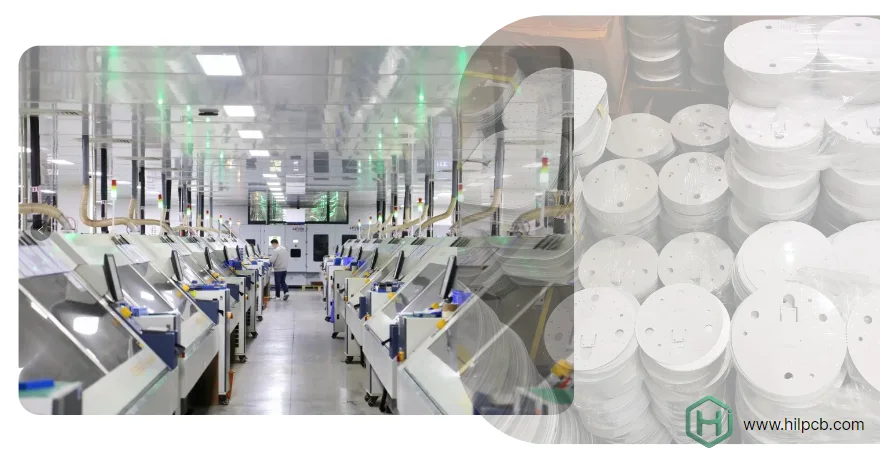
Selecting an aluminum PCB factory requires more than checking product samples or equipment lists. A reliable manufacturing partner must demonstrate control over materials, fabrication processes, testing procedures, and production scalability.
Aluminum PCBs are widely used in applications that require efficient heat dissipation, including LED lighting, automotive electronics, power converters, and industrial control systems. Because these applications often operate under high thermal and electrical stress, factory capability directly affects PCB reliability, lifetime, and field performance.
This guide explains the key factors engineers and procurement teams should evaluate when selecting an aluminum PCB manufacturer, from production infrastructure and quality management to engineering collaboration and smart manufacturing systems.
1. The Manufacturing System Behind a Reliable Aluminum PCB Factory
A professional aluminum PCB factory is not defined by individual machines alone. Reliable production depends on how materials, equipment, operators, inspection systems, and engineering teams work together.
The strongest manufacturers build a controlled production system that reduces variation throughout the entire manufacturing cycle.
Important evaluation factors include:
- Integrated Production Management – Advanced factories use ERP and MES systems to connect order management, production scheduling, material tracking, and inspection records. This improves traceability and reduces communication errors between departments.
- Controlled Material Management – Aluminum substrates, dielectric layers, copper foils, and solder mask materials must be stored, verified, and tracked according to defined procedures.
- Process Integration Capability – Factories with more in-house processes can maintain better control over critical steps such as drilling, lamination, surface finishing, and electrical testing.
- Continuous Process Improvement – Production data should be analyzed regularly to identify yield issues, reduce defects, and improve manufacturing consistency.
- Preventive Equipment Maintenance – Regular maintenance programs help reduce unexpected downtime and maintain stable production output.
Factories without structured production management often experience problems such as inconsistent thermal performance, unstable yields, longer lead times, and difficulty supporting design changes.
2. Evaluating Aluminum PCB Manufacturing Equipment and Technical Infrastructure
Aluminum PCB fabrication requires different process control compared with traditional FR4 PCB production. The metal core structure introduces additional challenges in drilling, lamination, thermal management, and dimensional stability.
When evaluating a factory, review both equipment capability and process experience.
What to Examine:
- CNC drilling systems capable of maintaining precise hole positioning and dimensional accuracy.
- Automated optical inspection (AOI) systems for detecting circuit pattern defects.
- X-ray inspection capability for verifying internal structures in multi-layer metal-core PCB designs.
- Controlled lamination equipment for high-thermal PCBs with consistent dielectric thickness and bonding quality.
- Surface treatment equipment with controlled chemical processes and traceable parameters.
- Automated testing systems for electrical verification before shipment.
A capable aluminum PCB factory should also have production flexibility for different board specifications, including:
- Single-layer aluminum PCBs.
- Double-layer aluminum PCBs.
- Multi-layer metal-core PCB structures.
- High-power LED thermal boards.
- Power electronics substrates requiring improved heat transfer.
Equipment investment is important, but manufacturing results depend on how effectively the factory controls each process step.
3. Process Control and Quality Management Systems
Advanced equipment cannot compensate for weak process control. Aluminum PCB reliability depends on maintaining stable manufacturing parameters from raw material preparation through final inspection.
A strong factory uses quality systems that prevent defects rather than only detecting them after production.
Core quality practices include:
- Statistical Process Control (SPC) – Monitoring key variables such as lamination temperature, pressure, etching conditions, and plating parameters to identify process variation early.
- First Article Inspection (FAI) – Validating initial production samples before starting mass production.
- Material Traceability – Linking finished PCBs back to substrate batches, process records, and inspection data.
- Measurement Equipment Calibration – Ensuring testing instruments remain accurate and traceable to recognized standards.
- Root Cause Analysis – Investigating defects through structured methods and implementing corrective actions.
Certifications such as ISO 9001 and IATF 16949 demonstrate that a factory follows documented quality management practices. However, certification alone does not guarantee manufacturing excellence. Strong manufacturers combine certification with continuous improvement programs and real production discipline.
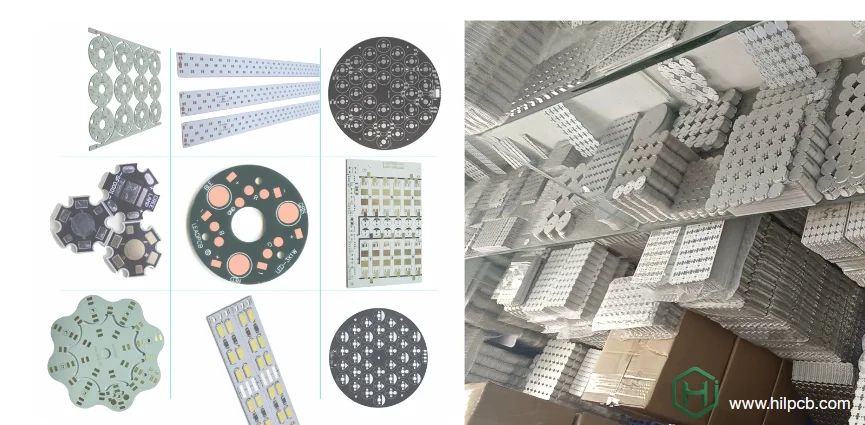
4. Engineering Support and Design Collaboration
A capable aluminum PCB factory should provide engineering support before production begins. Manufacturing expertise can help optimize thermal performance, improve reliability, and prevent costly redesigns.
Professional engineering teams support customers through:
- Design for Manufacturing (DFM) Reviews – Identifying layout, spacing, material, and process risks before fabrication.
- Thermal Performance Recommendations – Helping optimize aluminum PCB structures for LED modules, power supplies, and heat-sensitive components.
- Material Selection Guidance – Comparing substrate options and recommending suitable solutions for different thermal requirements.
- Process Rule Consultation – Explaining factory capabilities, limitations, and recommended design parameters.
- Production Feasibility Analysis – Reviewing whether a design can move efficiently from prototype to volume manufacturing.
Engineering collaboration is especially important for complex projects involving heavy copper PCBs and HDI PCBs, where material selection and manufacturing precision directly affect performance.
A factory that provides early technical feedback helps reduce development cycles and improves first-pass production success.
5. Quality Culture and Manufacturing Workforce Capability
Automation improves production efficiency, but skilled personnel remain essential for maintaining manufacturing quality.
When auditing an aluminum PCB factory, evaluate whether the organization has:
- Structured operator training programs.
- Clear work instructions for critical processes.
- Regular quality review meetings between production and engineering teams.
- Defined responsibility for defect analysis and corrective actions.
- Stable employee retention in key manufacturing positions.
Experienced operators understand process details that cannot always be captured by automated systems. Their knowledge helps identify abnormal conditions before they become production problems.
A factory with strong quality culture maintains consistency during production expansion, urgent orders, and new product introductions.
6. Smart Manufacturing and Digital Production Management
Modern aluminum PCB factories are increasingly using digital systems to improve production visibility and process control.
Smart manufacturing technologies help manufacturers detect problems earlier and improve manufacturing efficiency.
Common digital capabilities include:
- IoT Process Monitoring – Sensors collect production data from drilling, plating, lamination, and testing equipment.
- Automated Material Tracking – Digital records connect incoming materials with production history and final inspection results.
- MES Production Management – Real-time dashboards provide visibility into production status, quality data, and manufacturing performance.
- Predictive Maintenance Systems – Equipment data helps identify potential failures before they interrupt production.
- Digital Quality Records – Electronic inspection records improve traceability and customer communication.
For customers, smart manufacturing provides measurable benefits:
- Faster problem identification.
- Better production transparency.
- More consistent batch quality.
- Improved support for repeat orders.
Digital systems are valuable because they convert manufacturing activities into measurable data that engineers can analyze and improve.
7. Evaluating Supply Chain Reliability and Production Scalability
Choosing an aluminum PCB factory means evaluating long-term manufacturing capability, not only current pricing or delivery schedules.
A reliable supplier should demonstrate the ability to support changing production requirements while maintaining quality.
Key evaluation points include:
- Experience serving different industries and application requirements.
- Stable supply channels for aluminum substrates and PCB materials.
- Compliance with environmental requirements such as RoHS and REACH.
- Reliable export processes and international logistics experience.
- Ability to provide additional services such as turnkey assembly or box-build assembly.
A factory with scalable production systems can support projects from prototype quantities to large-volume manufacturing without significant changes in quality performance.
Supply chain stability is especially important for industries such as automotive, industrial equipment, and power electronics, where production interruptions can create significant costs.
8. Future Development Trends in Aluminum PCB Manufacturing
The aluminum PCB industry is moving toward higher automation, improved thermal performance, and more sustainable production methods.
Future manufacturing improvements will include:
- AI-assisted optical inspection for earlier defect identification.
- More energy-efficient lamination and thermal processing equipment.
- Automated production optimization using manufacturing data.
- Improved material recycling and environmental management.
- Digital twin technology for production simulation and process improvement.
These technologies will help factories achieve higher production efficiency while maintaining tighter quality control.
The next generation of aluminum PCB factories will combine manufacturing expertise, digital systems, and engineering collaboration to support increasingly demanding electronic applications.
Conclusion
Evaluating an aluminum PCB factory requires a complete review of manufacturing capability, process control, engineering support, and long-term reliability.
The strongest suppliers combine:
- Advanced production equipment.
- Stable process management.
- Strict quality systems.
- Experienced engineering teams.
- Digital manufacturing capabilities.
- Reliable supply chain operations.
A qualified aluminum PCB manufacturer does more than produce circuit boards. It helps engineers develop manufacturable designs, reduce production risks, and achieve consistent product performance.
HILPCB applies advanced manufacturing systems, engineering expertise, and quality management practices to support reliable aluminum PCB production for customers worldwide.
Common Questions
What makes an aluminum PCB factory truly reliable?
A reliable aluminum PCB factory combines manufacturing equipment, process control, quality management, and engineering support. The factory must maintain stable production parameters, verify material quality, and provide consistent results across different production batches.
Why is process control more important than advanced equipment alone?
Advanced equipment improves manufacturing capability, but process control determines repeatability. Without proper control of materials, lamination conditions, drilling accuracy, inspection methods, and testing procedures, production quality can still vary.
Why is engineering collaboration important when selecting an aluminum PCB factory?
Engineering collaboration helps identify manufacturing risks before production begins. A factory that provides DFM feedback, thermal recommendations, and process guidance can reduce redesigns, shorten development cycles, and improve production success.
Why does smart manufacturing matter in aluminum PCB production?
Smart manufacturing improves traceability, process monitoring, and production visibility. Digital systems help factories identify variation earlier, maintain stable quality, and support higher production volumes.