
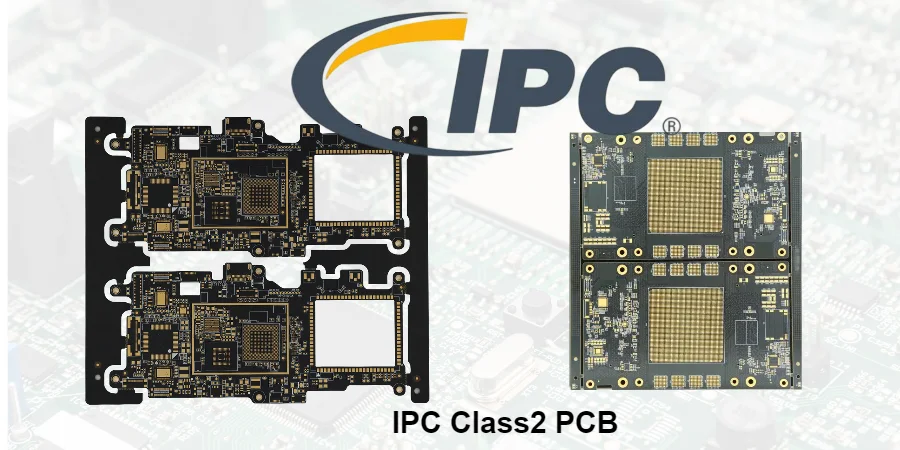
IPC Class 2 covers dedicated-service products where continued performance and extended life are required, while uninterrupted service is desired rather than critical. It is a product/performance classification used within applicable standards, not a separate circuit-board technology or a guarantee of operating life. The customer’s application and contract determine whether Class 2 is appropriate.
IPC Class 2 describes the acceptability level for dedicated-service electronics under applicable PCB or PCBA specifications. Request the drawing, standard revision and supplier acceptance records; the label alone does not prove a particular product lifetime or factory certification.
Applicable Documents and Acceptance Requirements
For bare rigid boards, IPC-6012 defines performance requirements by class and IPC-A-600 illustrates visual acceptability; for assembled products, IPC-A-610 and J-STD-001 address workmanship and soldering requirements. Specify the applicable class and revision contractually.
Translate the specified class into the applicable document and released construction:
- Conductors: Use drawing dimensions and applicable acceptance limits; Class 2 does not mean every geometric tolerance is tighter than Class 1.
- Holes and vias: Specify construction, plating and acceptance evidence for the actual multilayer PCB; workmanship acceptance does not establish every field failure mechanism.
- Soldered assemblies: Apply assembly/soldering requirements separately from bare-board acceptance. A high-speed PCB still needs its own electrical interface and channel limits.
- Cleanliness: Agree the applicable process, residue/insulation requirements and verification method; a class label is not a universal cleaning recipe.
- Lamination: Verify the specified material, bonding construction and required acceptance records for the purchased board.
- HDI: HDI PCB microvia construction and inspection must be covered by the agreed specification and supplier process; Class 2 alone does not qualify any via structure.
Use high-Tg PCB materials only where thermal/process requirements justify them. For rigid-flex PCB work, identify the applicable flexible-board specification, bend construction and acceptance scope; the class does not supply a dynamic bend rating.
Specialized Manufacturing for Professional-Grade Reliability
For a HILPCB Class 2 enquiry, specify the board/assembly documents, revisions, drawings and any additional product requirements. Confirm the supplying site and the evidence it will deliver:
- Process controls: Identify critical geometry/process variables and agreed capability or control records.
- Assembly: For large-volume assembly, define workmanship, sampling, rework and functional-test coverage.
- Materials: Select named high-frequency PCB laminates and approved substitutions from the actual channel/environment needs.
- Environmental tests: Specify relevant exposure, specimen, monitoring and pass/fail criteria; the class label alone does not prescribe a wider operating range.
- Documentation: Agree material/lot links, inspections, nonconformity disposition and retention.
- Reliability work: Where required, use tests addressing specified failure mechanisms under defined loads and durations. Accelerated results need an applicable model/correlation before predicting service life.
Do not infer an implemented SPC system, laboratory capability or complete traceability from an article. Review actual records and resolve gaps before order release.
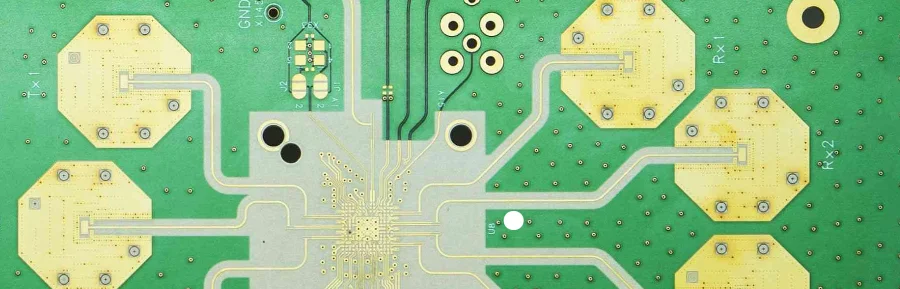
Power Distribution and Signal Integrity Management in IPC Class 2 PCB Design
Electrical and environmental requirements remain application-specific. Class 2 acceptance supports the specified build; it does not replace design verification.
Electrical Performance Inputs
- Power distribution: Define rail voltage/current, allowable drop, transient response and thermal limits. Verify conductors, vias, connectors, regulators and decoupling as a network.
- Signal integrity: Specify interface targets, geometry, loss/crosstalk budget and coupon/channel methods. Class 2 does not automatically set a tighter impedance tolerance.
- EMI/EMC: Review current returns, filtering, shielding and cable/enclosure interfaces, then assess the complete product against applicable EMC requirements. Workmanship class is not EMC approval.
- Thermal management: Select the complete package/board/interface/enclosure heat path and measure the intended operating modes; neither a class nor high Tg guarantees cooling.
Environmental Requirements
- Temperature: State storage/operating limits, power and exposure history for the actual assembly.
- Moisture: Define humidity, condensation, insulation and enclosure/coating requirements with suitable verification.
- Mechanical loading: Define mounting, vibration/shock and any bend cycles; a Class 2 board is not universally vibration-qualified.
- Chemicals: Check actual materials, finishes, coating, seals and exposure; classification does not establish chemical compatibility.
Reliability Evidence
- Accelerated testing: Identify the failure mechanism, stress, specimen and model assumptions; a test does not simply simulate an arbitrary number of years.
- Stress validation: Record thermal, mechanical and electrical conditions and monitoring. Separate production screening from design qualification.
- Assembly interactions: Evaluate package/board expansion, solder joints, connectors and intended rework rather than infer whole-life performance from visual acceptance.
- Field correlation: Use relevant operating and failure data where available, with population, time and maintenance assumptions recorded. Unverified field experience is not reliability evidence.
Professional Electronics Applications and Market Segments
Applications may select Class 2 when the required service and acceptance criteria fit. Product category alone does not decide the class or guarantee savings:
Industrial Automation: Controllers and monitoring equipment need their own environment, availability and safety requirements. A safety-critical function may require additional specifications and validation.
Telecommunications: Compare channel, thermal, uptime and field-service requirements against the purchased construction and any applicable addenda. Continued operation is a system requirement, not a result conferred by Class 2.
Commercial Buildings: HVAC, security and automation controls need installation-specific environmental, power-loss and functional requirements. Assess each role instead of assigning one class to every building product.
Test and Measurement: Calibration, accuracy, drift and uncertainty require separate instrument verification. Board/assembly acceptance does not establish measurement performance.
Integrated Quality Systems for Professional Manufacturing
A reviewable quality plan links each requirement to its owner, method and record. Confirm these activities for the actual order:
Quality Management:
- Critical process/control or capability data where specified
- Released drawings, BOM, inspection and test revisions
- Reliability-test scope and the conclusions it can support
- Corrective actions and approved nonconformity dispositions
Manufacturing Controls:
- Relevant production-environment and process controls
- Required component/material lot traceability
- Inspection coverage, sampling and acceptance limits
- Test specimens, operating conditions and retained raw data
Engineering Support:
- DFM review against the specified construction
- Named material and substitution decisions
- Assignment of product reliability and qualification work
- Agreed delivery documents rather than a generic certification promise
Why Choose HILPCB for IPC Class 2 PCB Manufacturing
For HILPCB sourcing, request the actual supplying entity/site, applicable certificate and scope where needed, process capability and representative acceptance records. No current ISO 9001 certificate or IPC program certification is established by this article. A contractual IPC class, a personnel/site credential and an ISO quality-system certificate are different evidence.
Provide the released data, standard/revision/class, addenda, deviations, inspection/test plan and required report package. Agree change control and disposition authority before fabrication or assembly. Do not automatically substitute a newer standard revision for the contractually specified edition.
For Class 2 projects, HILPCB offers dedicated manufacturing support that can include SPC and process-capability monitoring, environmental controls, traceability, inspection and reliability-test planning, plus DFM, material and reliability engineering. Prototype and volume-production teams can agree the required records and acceptance evidence independently of the IPC class designation; class selection alone does not set every tolerance or establish a lifetime guarantee.
Frequently Asked Questions
What are the key differences between IPC Class 2 and Class 1?
The classes describe different product/performance needs and applicable acceptance criteria. Class 2 addresses dedicated-service products; compare the relevant document, revision and feature criteria with Class 1. It does not automatically tighten every tolerance or require one generic environmental test program.
How does Class 2 affect cost and reliability?
Cost depends on construction, process controls, inspection/testing, quantity and additional requirements. Agree the appropriate class from product needs, then quote that scope. The class alone does not predict yield, price, failure rate or service life.
Which applications can use Class 2?
Industrial, telecom, building and test products may use it when their requirements fit. The design authority must assess function, downtime consequences and environment; a market label does not determine suitability.
What additional testing is required?
Use the tests, acceptance limits and sampling in the applicable contracted board/assembly specifications plus customer requirements. Do not assume Class 2 always adds extended thermal cycling, all environmental tests or whole-product functional qualification beyond Class 1.
Can Class 2 support high-frequency boards?
A high-frequency PCB can be purchased to an applicable Class 2 specification. Its material, loss, impedance, transitions and channel measurements still require separate design and acceptance limits.
What documentation should be requested?
Agree drawings/revisions, material and lot traceability, inspection/test reports, deviations and disposition records. SPC, reliability tests or certificates must be explicitly included and verified; they are not automatically delivered by a Class 2 label.