
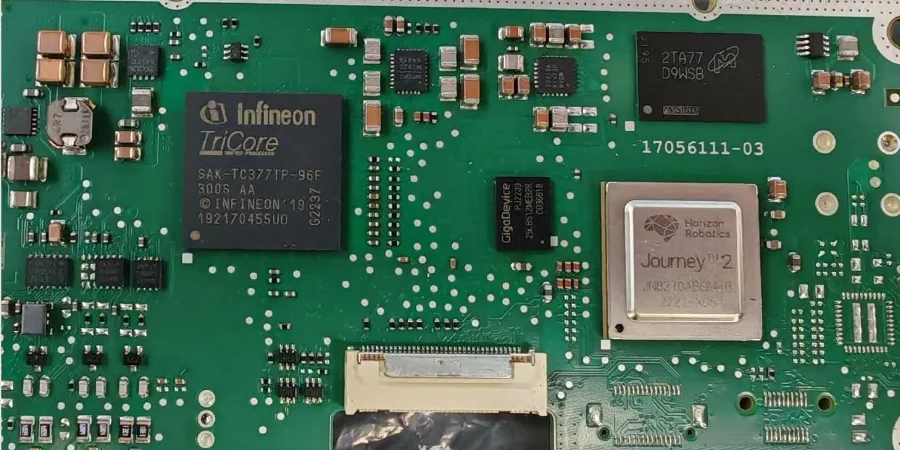
Driven by the wave of automotive electrification and intelligence, Advanced Driver Assistance Systems (ADAS) and Electric Vehicle (EV) power management systems have become the core of technological innovation. These systems are not only functionally complex but also impose unprecedentedly strict requirements on safety and reliability. As an automotive reliability engineer responsible for salt spray, thermal shock, and wide-temperature life assessment, I deeply understand the immense responsibility borne by the heart of every Electronic Control Unit (ECU) — the Printed Circuit Board Assembly (PCBA). A comprehensive Turnkey PCBA solution is not just simple component procurement and placement assembly; it represents a quality assurance system spanning the entire lifecycle of design, manufacturing, testing, and validation. It is the key to ensuring that automotive electronics can operate stably under extreme operating conditions.
The Turnkey PCBA service provided by HILPCB is born to meet this challenge. It integrates design verification, supply chain management, precision manufacturing, rigorous testing, and full-process traceability, providing a solid and reliable physical carrier for the high-speed data processing of ADAS and the high-voltage, high-current management of EV power systems. This article will analyze from the perspective of automotive reliability how an integrated Turnkey PCBA flow systematically addresses ISO 26262 functional safety, AEC-Q series component standards, and OEM special specifications, ensuring that every delivered PCBA meets the most stringent automotive application requirements.
Integrating AEC-Q and ISO 26262: The Cornerstone of Automotive Grade from Development to Mass Production
In the field of automotive electronics, any discussion detached from standards is a castle in the air. The ISO 26262 functional safety standard and the AEC-Q series (such as AEC-Q100 for integrated circuits, AEC-Q200 for passive components) reliability standards together constitute the "constitution" of automotive-grade PCBA development. An excellent Turnkey PCBA supplier must internalize these standards into the DNA of their processes, rather than treating them merely as a checklist for post-event inspection.
It all starts with the DFM/DFT/DFA review (Design for Manufacturing/Testability/Assembly review) at the project kickoff. This is by no means a simple Gerber file check. At HILPCB, our team works closely with the customer's design engineers, starting from functional safety goals (ASIL levels), to scrutinize key design elements such as PCB layout, component selection, thermal management paths, and electrical clearances. For example, for an ASIL-D grade ADAS controller, we assess whether the redundancy design of critical signal paths meets safety requirements and whether the creepage distance of high-voltage parts complies with ISO 26262 hardware design specifications. A detailed DFM/DFT/DFA review can proactively discover potential manufacturing bottlenecks or reliability hazards, such as the inspectability of BGA solder joints or assembly stress on high-density connectors, thereby avoiding them during the design phase and laying a solid foundation for subsequent stable mass production.
Furthermore, adherence to AEC-Q standards is not limited to component procurement. It also profoundly affects the PCBA manufacturing process. For instance, selecting AEC-Q200 compliant High Tg PCB materials to withstand the high-temperature environment within the engine compartment; and precisely controlling the reflow temperature profile during soldering to avoid thermal damage to AEC-Q100 certified sensitive chips. This systematic approach of embedding standard requirements into every link is the only way to achieve automotive-grade reliability.
PPAP/APQP Process Integration: Ensuring Consistency and Controllability of the Manufacturing Process
If standards are the "code of law," then APQP (Advanced Product Quality Planning) and PPAP (Production Part Approval Process) are the "judicial system" ensuring the strict execution of this code. These quality management tools, originating from the automotive industry, are the bridge connecting design to stable mass production and are the core embodiment of the value of Turnkey PCBA services.
APQP is a structured process that divides new product development into five phases, from concept definition to feedback and continuous improvement after mass production. In PCBA manufacturing, this means that from the moment we receive the design drawings, we initiate a series of planning activities including process flow charts, PFMEA (Process Failure Mode and Effects Analysis), and Control Plans. In the PFMEA analysis, we identify potential risks in every process step, from solder paste printing and component placement to soldering and cleaning, and formulate corresponding prevention and detection measures. For example, regarding voids that may occur in BGA soldering, we will explicitly specify in the Control Plan to use X-ray for 100% or sampling inspection and set acceptable standards.
PPAP is the final validation of the entire APQP planning output. It requires the supplier to submit a dossier containing 18 documents to prove that their manufacturing process is ready to continuously and stably produce products that meet all customer requirements. Among these, the initial process capability study (SPC/CPK) is particularly critical. By statistically analyzing key process parameters (such as critical dimensions, soldering quality), we must demonstrate that the process capability index (Cpk) reaches the industry-recognized level of 1.67 or higher. To achieve this goal, a powerful Traceability/MES (Manufacturing Execution System) is indispensable. This system can collect and analyze production data in real-time, providing precise input for SPC studies, and ensuring that the PPAP approved status is stably maintained throughout the product lifecycle.
APQP Implementation Flow: Quality Planning from Concept to Mass Production
| Phase | Core Tasks | Key Outputs |
|---|---|---|
| Phase 1: Plan and Define Program | Understand customer needs, set quality goals, conduct preliminary feasibility analysis. | Design goals, reliability and quality goals, preliminary Bill of Materials. |
| Phase 2: Product Design and Development | Finalize design, conduct **DFM/DFA** review, develop engineering specifications. | Final **DFM/DFA review** report, engineering drawings, material specifications. |
| Phase 3: Process Design and Development | Design manufacturing process, develop process flow chart, PFMEA, and Control Plan. | Process flow chart, PFMEA, Control Plan, work instructions (SOP). |
| Phase 4: Product and Process Validation | Conduct trial run (Run@Rate), execute Measurement Systems Analysis (MSA), submit PPAP. | PPAP approval records, initial process capability study report, qualified test results. |
| Phase 5: Feedback, Assessment and Corrective Action | Mass production monitoring, continuous improvement, implement 8D problem solving. | Reduce process variation, improve customer satisfaction, lessons learned. |
Rigorous Environmental and Reliability Testing: Validating the Extreme Endurance of PCBA
No matter how well the design and process control are executed, the performance of the final PCBA must be validated in simulated extreme environments. As a reliability engineer, this is the core of my work. The automotive operating environment is extremely complex, ranging from the freezing cold of the Arctic to the scorching heat of the desert, from salt spray corrosion in coastal areas to continuous vibration on rugged roads; the PCBA must remain functional under all these conditions.Our environmental and reliability test matrix is customized according to AEC-Q and mainstream OEM specifications (such as VW, GM). It mainly includes:
- Temperature Cycling/Thermal Shock Test (TC/TS): Rapid switching between extreme temperatures from -40°C to +125°C (or even higher), typically requiring over 1000 cycles. This test aims to expose issues such as solder fatigue and delamination caused by material CTE mismatches.
- Temperature Humidity Bias Test (THB): Applying reverse bias to the PCBA in an environment of 85°C/85%RH for 1000 hours. This is to accelerate the assessment of electrochemical migration and insulation failure risks caused by moisture intrusion.
- Vibration and Mechanical Shock Test: Simulating bumps during vehicle operation and accidental collisions to verify the secure fixation of components and the mechanical strength of solder joints.
- Salt Spray Test: Simulating the corrosive environment of coastal areas or winter salted roads to evaluate the corrosion resistance of the PCBA's protective coating, connectors, and exposed metal.
In these rigorous tests, Potting/encapsulation technology plays a crucial role. For ECUs installed in harsh locations such as the chassis or engine compartment, potting the entire PCBA with materials like epoxy resin or silicone can form a robust protective layer. This not only effectively isolates moisture, salt spray, and dust but also greatly enhances resistance to vibration and mechanical shock. Selecting the appropriate potting materials and processes, and ensuring their compatibility with all components on the PCBA, is the key to successful Potting/encapsulation and is also one of the focuses of our reliability assessment.
Process Control and Comprehensive Traceability: The Core of Quality Big Data and Smart Manufacturing
In the mass production of automotive-grade PCBA, preventing defects is far more important than detecting them. This is why modern Turnkey PCBA services rely heavily on SPC (Statistical Process Control) and comprehensive Traceability/MES systems.
The core idea of SPC is to ensure that the entire manufacturing process remains under control by monitoring Key Process Parameters (KPPs) in real-time, such as solder paste printing thickness and volume, component pick-up accuracy of pick-and-place machines, and reflow oven temperature profiles. Once monitoring data shows a trend deviating from control limits, the system immediately triggers an alarm, allowing engineers to intervene quickly and resolve the issue before a large number of non-conforming products are produced.
The Traceability/MES system acts as the nerve center of all this. It assigns a unique serial number to each PCBA and records information about the entire process from bare board warehousing to final product shipment. This includes: which batch of PCB and components were used, which machine produced it on which day and shift, which tests it underwent, and what the test results were, etc. This traceability capability down to the "single board level" is of inestimable value. In the event of a market failure, we can quickly trace back to the specific production batch via the serial number, lock down the scope of potential issues, avoid large-scale recalls, and provide precise data support for 8D root cause analysis.
Testing strategy is another key link in process control. For projects at different stages and volumes, we adopt different testing methods:
- Flying probe test: In the sample and early small-batch stages, the Flying probe test does not require making expensive needle beds and offers extremely high flexibility. It can quickly detect opens, shorts, and incorrect component values, making it an ideal choice for the New Product Introduction (NPI) stage.
- Fixture design (ICT/FCT): When products enter mass production, efficiency becomes key. Customized ICT (In-Circuit Test) and FCT (Functional Test) fixtures can achieve rapid, automated testing. An excellent fixture design (ICT/FCT) must not only ensure test coverage and stability but also consider ease of operation and durability for long-term use. HILPCB's test engineering team has extensive experience in fixture design (ICT/FCT), ensuring that the testing phase becomes a reliable guarantee of quality rather than a production bottleneck.
HILPCB Manufacturing Capabilities Overview
We integrate advanced manufacturing equipment with strict process control to ensure every PCBA meets automotive-grade standards.
- Fully Automated SMT Production Lines: Equipped with top-tier pick-and-place machines and 3D SPI/AOI, achieving high-precision, high-efficiency [SMT Assembly](/products/smt-assembly).
- X-Ray and ICT/FCT Capabilities: Comprehensive testing covering everything from BGA solder joint inspection to full board functional verification.
- Comprehensive Traceability/MES System: Achieving single-board level traceability from components to finished products, providing data support for quality control.
- Environmental Reliability Laboratory: In-house capability to perform key automotive tests such as temperature cycling, vibration, and salt spray.
Mass Production Introduction and Continuous Improvement: Smooth Transition from Pilot Production to Stable Delivery
Successfully completing PPAP does not mean the end of the work, but the beginning of large-scale, high-quality delivery. The core of the mass production introduction phase is to ensure that quality levels do not slip during production cadence and volume ramp-up. The Run@Rate activity is a key milestone in this phase, requiring us to produce a specified quantity of qualified products within a stipulated time using mass production equipment, personnel, and processes, to verify our actual capacity and process stability.
In this process, the importance of preliminary work is highlighted once again. A design that has undergone a thorough DFM/DFT/DFA review will exhibit a higher first-pass yield and fewer unexpected issues during mass production. The flexible Flying probe test helps us iterate and verify quickly during the pilot production stage, while robust fixture design (ICT/FCT) guarantees testing efficiency and consistency during the mass production stage. For PCBA requiring extra protection, the Potting/encapsulation process must also achieve automation and scale synchronously to match the cadence of the main production line.
Continuous improvement is the essence of automotive quality culture. The massive amount of production and test data collected through the Traceability/MES system has become our gold mine for continuous improvement. We regularly analyze data to identify minute fluctuations in the process or potential improvement opportunities, and continuously optimize through the PDCA (Plan-Do-Check-Act) cycle. Whether it is adjusting the reflow oven temperature profile to further reduce BGA void rates, or optimizing AOI algorithms to reduce false calls, every tiny improvement will accumulate into a huge enhancement in product reliability. This data-driven culture of continuous improvement is the fundamental reason why the Turnkey Assembly service provided by HILPCB can long-term meet and exceed customer expectations, especially when dealing with highly challenging products like Heavy Copper PCB required for EV power systems.
Conclusion
Mastering the reliability and safety challenges of automotive ADAS and EV power PCB is a complex systems engineering task. It requires suppliers to transcend the traditional manufacturing role and become a quality and reliability partner capable of deeply understanding and executing automotive standards. The core value of a true Turnkey PCBA solution lies in seamlessly integrating the requirements of standards such as ISO 26262 and AEC-Q into every link from DFM/DFT/DFA review to final mass production through an integrated process.
Through integrated APQP/PPAP processes, rigorous environmental reliability verification, data-driven process control, and a perfect Traceability/MES system, HILPCB ensures that every PCBA delivered to customers possesses traceable and trustworthy automotive-grade quality. Whether it is quickly verifying prototypes through Flying probe test, ensuring mass production using efficient ICT/FCT fixtures, or enhancing product weather resistance using Potting/encapsulation technology, we are committed to providing solutions that best fit customer needs. Choosing a professional Turnkey PCBA partner means choosing a reliable path to market success for your automotive electronic products.