
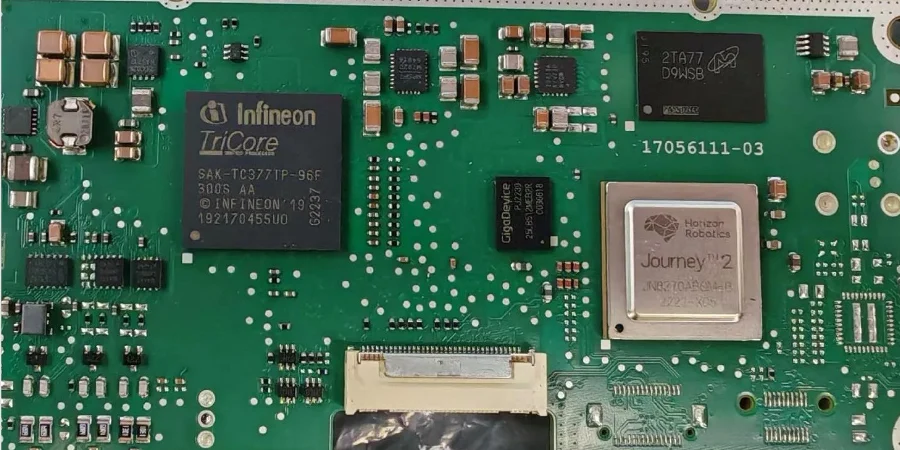
Highleap PCB Factory (HILPCB) delivers cutting-edge ADAS PCB manufacturing and assembly solutions designed for advanced driver assistance systems and autonomous vehicle applications. Our precision manufacturing processes combine high-reliability fabrication, safety-critical assembly techniques, and automotive-grade quality systems to produce superior ADAS PCBs for mission-critical automotive safety applications.
Modern ADAS PCB designs require sophisticated integration of sensor interfaces, high-speed processing units, and safety-critical communication protocols while maintaining stringent automotive reliability standards. Our ADAS-grade manufacturing and assembly ensures compliance with ISO 26262 functional safety, ISO/TS 16949, and AEC-Q100 standards for reliable operation in safety-critical autonomous driving systems.
ADAS PCB Design Excellence and Sensor Integration
ADAS PCB design demands sophisticated integration of multiple sensor technologies, high-performance processing units, and safety-critical communication interfaces. HILPCB implements advanced layout optimization, signal integrity techniques, and electromagnetic compatibility solutions ensuring reliable sensor data processing and autonomous system performance.
Core ADAS Technologies:
• Multi-Sensor Integration: Strategic design accommodates radar sensors, LiDAR interfaces, camera modules, and ultrasonic sensors while maintaining signal integrity through optimized routing and controlled impedance design
• High-Speed Processing: Advanced microprocessor and GPU integration with optimized power delivery networks, thermal management, and high-speed digital signal routing for real-time sensor data processing
• Safety-Critical Communication: CAN-FD, Ethernet AVB, and FlexRay protocol support enables reliable vehicle network communication while meeting ISO 26262 functional safety requirements
• Electromagnetic Compatibility: Advanced EMC design techniques minimize interference between sensor circuits and ensure compliance with automotive EMC standards for reliable operation in electromagnetic environments
Our ADAS designs utilize specialized high-frequency PCB techniques for radar and communication signals while multilayer PCB configurations provide optimal power distribution and signal isolation for sensitive sensor circuits.
Advanced ADAS PCB Assembly and Manufacturing Processes
ADAS PCB assembly at HILPCB combines automotive-qualified materials with precision manufacturing processes and safety-critical assembly techniques. Our integrated approach encompasses PCB fabrication through comprehensive functional testing, ensuring ADAS systems meet stringent automotive safety requirements.
Precision Material Systems: Safety-critical substrates including low-loss dielectrics, high thermal PCB laminates, and automotive-grade materials provide enhanced reliability for ADAS applications operating from -40°C to +85°C with long-term stability requirements.
Advanced Assembly Techniques: SMT assembly capabilities include ultra-fine pitch component placement for advanced processors, memory devices, and sensor interface circuits using high-precision pick-and-place equipment with advanced vision systems ensuring accurate component placement and orientation verification.
Safety-Critical Component Integration: Specialized assembly processes handle high-pin-count processors, memory modules, sensor connectors, and safety-critical components with automated insertion equipment, precision torque control, and comprehensive traceability documentation meeting ISO 26262 requirements. Through-hole sensor and power connectors on these boards are often joined by selective wave soldering.
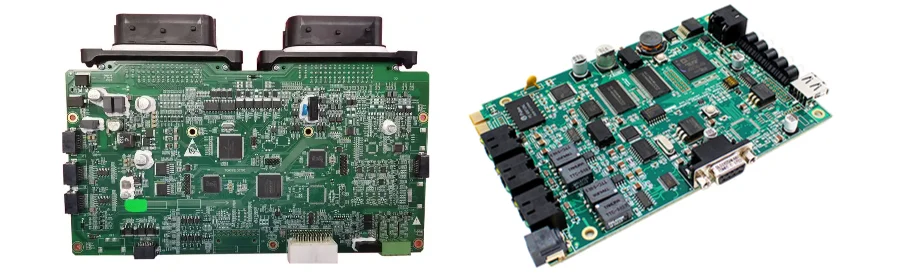
Thermal Management and Safety-Critical Assembly Testing
ADAS PCBs process intensive sensor data requiring sophisticated thermal management strategies and comprehensive safety validation. HILPCB implements advanced thermal design techniques and extensive testing protocols ensuring optimal performance and safety compliance throughout automotive lifecycles.
Strategic thermal management includes optimized copper pour design, thermal via implementation, and heat spreading techniques distributing thermal loads across PCB structures. Metal core PCB configurations provide enhanced thermal conductivity for high-power processing units and sensor interface circuits.
Comprehensive Assembly Validation: Safety-critical testing includes in-circuit testing (ICT) for electrical verification, boundary scan testing for digital circuits, and functional testing with actual sensor interfaces. Advanced X-ray inspection validates critical solder joints in BGA packages and fine-pitch components essential for ADAS reliability.
Environmental testing encompasses thermal cycling, vibration testing, and humidity exposure evaluation per automotive standards. Accelerated life testing and statistical analysis validate long-term reliability while ensuring consistent ADAS performance throughout vehicle operational life under safety-critical conditions. These tests are usually staged across the NPI EVT/DVT/PVT phases of an automotive program.
Complete ADAS Assembly Solutions and HDI Integration
Modern ADAS PCB assembly supports diverse sensor technologies from basic parking assistance to full autonomous driving systems. HDI PCB assembly technologies enable ultra-compact designs with high-density component integration supporting advanced sensor fusion and real-time processing capabilities.
Complete Assembly Services:
- Sensor interface integration and calibration
- High-performance processor assembly and testing
- Memory module installation and validation
- Communication interface assembly and verification
- Power management system integration
- Software programming and functional validation
Rigid-flex PCB assembly accommodates complex ADAS geometries while maintaining signal integrity under mechanical stress. Specialized assembly techniques handle flexible sections, sensor cable connections, and multi-board interconnections typical of distributed ADAS architectures. Sensor modules exposed to moisture and vibration may also need potting and encapsulation.
Turnkey Assembly Integration: Complete ADAS solutions include component sourcing with authentic part verification, inventory management, assembly scheduling, and comprehensive testing protocols. Our turnkey approach encompasses PCB fabrication, component procurement, assembly, validation testing, and packaging for direct integration into automotive ADAS production lines.
Professional ADAS PCB Manufacturing and Assembly Services
Highleap PCB Factory delivers comprehensive ADAS PCB manufacturing and assembly services with specialized equipment and safety-critical qualified processes. ISO 26262 functional safety compliance and ISO/TS 16949 certification ensure consistent quality while PPAP documentation provides complete manufacturing and assembly traceability for automotive safety programs.
Our integrated manufacturing and assembly capabilities include controlled impedance fabrication for high-speed signals, precision component placement for ultra-fine pitch packages, and specialized assembly processes for sensor connectors and safety-critical interfaces. Small batch assembly services support prototype and validation requirements while large volume assembly capabilities scale to automotive production demands.
Quality assurance protocols encompass automated optical inspection, flying probe testing, functional verification with sensor simulation, and environmental stress screening validating complete ADAS assembly performance under automotive operating conditions with comprehensive documentation supporting automotive safety qualification requirements.
Advanced traceability systems track every component, assembly process, and test result throughout the manufacturing lifecycle, providing complete genealogy records essential for safety-critical automotive applications and regulatory compliance requirements.
Common Questions
Why is an ADAS PCB more demanding than a typical automotive control board?
Because it has to combine sensor interfaces, high-speed processing, functional safety, EMC discipline, and long-term automotive reliability on the same platform. In many ADAS projects, the challenge is not one single subsystem, but the need to make all of them behave predictably together under vehicle conditions.
What design risk is most often underestimated in ADAS PCB projects?
Teams often underestimate system-level interaction between sensors, processing hardware, power delivery, and noise control. A board may look electrically correct in isolation, then run into real problems once radar, cameras, compute load, thermal stress, and vehicle-network behavior all start interacting at the same time.
What should be validated before ADAS hardware moves toward production?
Priority should go to signal quality, power stability, EMC performance, thermal behavior, sensor-interface consistency, and traceability across critical components and processes. For ADAS hardware, the key question is not just whether the board works in the lab, but whether it stays safe and repeatable across production and field conditions.
What should teams look for in an ADAS PCB manufacturing partner?
They should look beyond basic automotive PCB capability and confirm experience with safety-oriented documentation, sensor and processor assembly, controlled manufacturing traceability, and realistic validation support. A supplier that can build the board but cannot support calibration, verification, and failure feedback usually becomes a bottleneck later.