
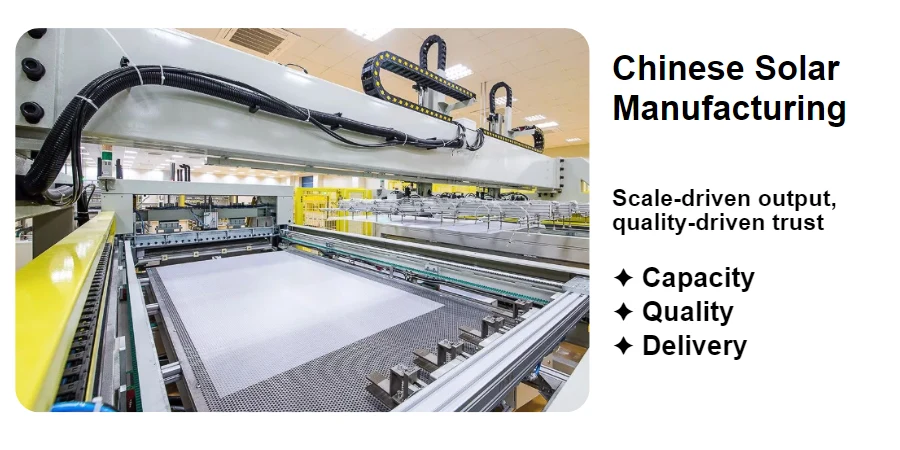
Chinese solar manufacturing supports a large share of the global solar supply chain—from PV modules and inverters to monitoring hardware, battery systems, and balance-of-system equipment. For buyers, developers, EPCs, and investors, the value is clear: strong industrial capacity, fast scaling, and competitive cost structures.
But as more solar programs are funded and evaluated under Carbon Neutral, Carbon Neutrality, and Net Zero Emissions / Net Zero Carbon targets, sourcing expectations are changing. Procurement teams aren’t only asked to hit price and lead time—they’re asked to reduce risk, improve traceability, and support compliance and reporting with more consistent supplier governance.
This playbook shows how to evaluate Chinese solar manufacturing with practical procurement controls—especially for electronics-heavy products where PCB and PCBA consistency influences long-term field reliability.
Why Carbon-Neutral and Net Zero Targets Change Solar Sourcing
In Carbon Neutral and Net Zero programs, risk is not only technical—it’s also operational and reputational. A preventable quality escape, a delayed delivery, or weak documentation can affect commissioning schedules, warranty exposure, and stakeholder confidence.
Carbon-related goals don’t mean every supplier must “claim net zero” immediately. It means buyers should build a sourcing system that supports:
- Predictable quality and lifetime (fewer replacements and truck rolls)
- Process traceability (clear accountability and audit readiness)
- Documentation discipline (specs, revisions, test records aligned across vendors)
For electronics inside solar equipment, this is where a strong sourcing strategy can materially reduce downstream risk.
What Buyers Should Demand From Chinese Solar Manufacturing
A solar program scales smoothly when suppliers deliver repeatable outcomes—not just successful prototypes.
Practical buyer requirements
- Stable production from pilot to volume: consistent yields, controlled process windows
- Clear specs and revision control: ECO discipline and locked documentation
- Quality system maturity: incoming QC, in-process inspection, final testing, containment
- Traceability: lot-level tracking and test records suitable for long warranty cycles
- Transparent lead-time drivers: materials, fabrication, assembly, and test capacity
These requirements are also the foundation of credible supplier governance in Carbon Neutrality and Net Zero procurement frameworks.

Capability-First Supplier Evaluation (Beyond Price)
Price is important, but solar programs often lose more money through indirect costs: rework, retesting, late shipments, field returns, and warranty settlements.
What to verify before awarding volume
- DFM quality: whether feedback is specific (thermal stress, copper balance, spacing, coating/potting constraints)
- Process capability evidence: samples, control plans, and measurable process parameters
- High-current experience: if your product is power-heavy, confirm copper structure options such as heavy copper PCBs and how they manage yield
- Thermal/aging resilience: for heat and cycling sensitivity, validate material strategy (often improved with high-Tg PCBs)
- Responsiveness: turnaround time for engineering questions, issue containment, and corrective actions
The goal is to reduce “prototype success, volume instability”—one of the most expensive patterns in solar procurement.
Lead Time Control: Protecting Project Schedules
In solar deployments, schedule risk often costs more than component cost. A single slip can cascade into missed commissioning windows and idle site labor.
Delivery controls that work in practice
- Freeze specs and revisions before mass production (define change rules)
- Require a lead-time breakdown (materials vs. fab vs. assembly vs. testing)
- Define acceptance criteria in the RFQ (test coverage, sampling rules, pass/fail)
- Use pilot runs to validate yield before large POs
Suppliers that are transparent about lead-time drivers are easier to scale with—and easier to defend in stakeholder reviews.
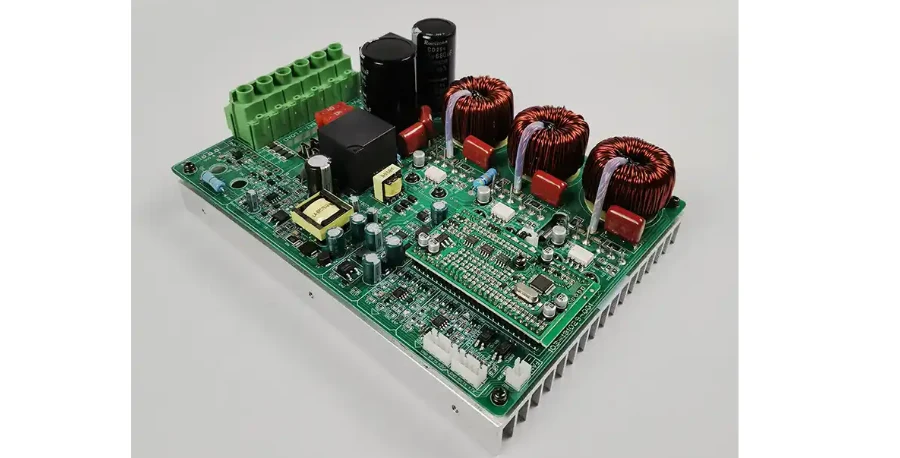
One-Stop PCB + PCBA: A Low-Friction Model for Solar Procurement
Many solar products depend on electronics platforms: inverter control boards, monitoring gateways, protection units, smart controllers, and battery system boards. When PCB fabrication and PCBA are split across vendors, coordination overhead rises and accountability weakens.
A one-stop workflow reduces handoffs and accelerates issue closure.
Advantages procurement teams care about
- Clear accountability: one owner for fabrication and assembly quality
- Faster root-cause analysis: fewer cross-vendor disputes
- Better revision alignment: PCB, BOM, and test/firmware stay synchronized
- More stable ramp planning: fewer schedule dependencies and handoffs
For assembly execution, consistent production typically combines SMT assembly with through-hole assembly for mechanically stressed and higher-current components.
How HILPCB Supports Chinese Solar Manufacturing Programs
HILPCB is an electronics manufacturing factory in China providing both PCB manufacturing and PCB assembly for solar and energy-related products. Our focus is practical: stable manufacturing, clear documentation, and procurement-friendly delivery models that help projects scale with fewer surprises.
Typical solar electronics we support
- PV inverter control and driver boards
- Monitoring and gateway electronics
- Energy storage control and protection boards
- Outdoor controllers for solar lighting and power distribution
For buyers who want fewer vendors and simpler coordination, we also support consolidated delivery models such as turnkey assembly under a controlled workflow.
In Carbon Neutrality and Net Zero procurement environments, this integrated approach helps reduce communication gaps, shorten resolution cycles, and improve traceability from pilot builds through volume production.
Conclusion
Chinese solar manufacturing offers unmatched scale and cost efficiency, but dependable outcomes require a capability-based sourcing strategy—especially for programs aligned with Carbon Neutral, Carbon Neutrality, and Net Zero Emissions / Net Zero Carbon targets. The best results come from suppliers with disciplined process control, strong documentation, transparent lead-time planning, and reliable quality systems.
HILPCB helps solar buyers simplify sourcing by delivering integrated PCB manufacturing and PCB assembly under one workflow. If you want fewer vendors, clearer accountability, and production consistency you can scale with confidence, a specialized electronics factory partner can make Chinese solar manufacturing significantly easier to manage.