
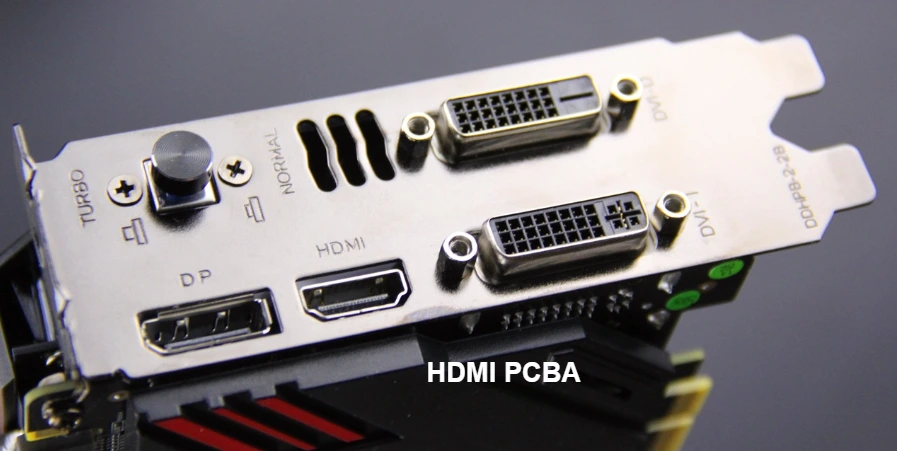
HDMI PCBA is the complete build of an HDMI board—from PCB fabrication to component sourcing (if needed), SMT assembly, connector anchoring, inspection, and delivery. HILPCB does not manufacture HDMI connectors themselves, but we manufacture the PCBs and assemble the PCBAs used in products with HDMI interfaces. We also manufacture all types of PCBs, so HDMI can be produced as part of a broader system program with mixed interfaces and multi-board assemblies.
HDMI PCBA for Different HDMI Applications
“HDMI PCBA” covers many end products: adapters, docks, switches, splitters, extenders, capture cards, industrial displays, and automotive video systems. Different applications drive different assembly priorities—port count, density, mechanical stress, and validation timelines—so a single “one-size” approach is rarely efficient.
At HILPCB, we tailor HDMI PCBA flow to your application and build stage so the configuration you validate is the same configuration you can scale.
- Compact single-port boards optimized for fast prototype cycles
- Multi-port distribution/switching boards that need stable port-to-port consistency
- Conversion/capture boards with dense IC zones and fine-pitch packages
- Rugged products where connector anchoring and long-term durability matter
A product-type approach keeps the build practical: you avoid over-specing for simple boards while protecting margin and yield on complex, connector-heavy designs. It also helps sourcing teams standardize BOM policies and documentation expectations across multiple SKUs, making the ramp from prototype to production smoother and more predictable.
PCB Fabrication Choices That Impact HDMI PCBA
HDMI PCBA success starts with a PCB that assembles well: stable flatness, compatible surface finish, and a build structure that supports connector coplanarity and repeatable soldering. Even when a design is electrically correct, the wrong fabrication choices can reduce assembly yield and increase rework.
At HILPCB, we align PCB fabrication with assembly realities, using scalable baseline processes and upgrading capability when your program needs tighter control.
- Practical baseline builds using FR-4 PCB manufacturing
- Better plane control and routing flexibility through multilayer PCB builds
- High-density breakout support via HDI PCB fabrication for tight connector/IC areas
- Repeatable high-speed build discipline using high-speed PCB manufacturing when needed
- Fabrication notes that match assembly needs: thickness, finish, copper, and special processes
When PCB fabrication is chosen for assembly stability, HDMI PCBA becomes easier to scale: connector seating remains consistent, reflow warpage risk drops, and port-to-port behavior is more uniform on multi-port boards. This also reduces “hidden cost” from rework, line holds, and repeated pilot runs—improving overall delivery speed and production predictability.

HDMI PCBA SMT Assembly for Dense Layouts and Fine-Pitch ICs
HDMI boards often mix dense passives, fine-pitch ICs, and protection components around the port. A stable SMT process is key for repeatable solder joints, consistent placement accuracy, and predictable yields across lots.
At HILPCB, HDMI PCBA uses production-grade SMT assembly workflows built for repeatability from prototype to volume.
- Stencil strategy tuned for mixed component sizes and fine pitch
- Placement accuracy control for dense IC zones and small passives
- Reflow profile discipline to improve wetting consistency and reduce warpage risk
- MSL handling and process control aligned to component requirements
- DFM-driven refinements that improve yield without changing function
Strong SMT execution improves first-pass yield and stabilizes functional validation because the electrical behavior is less affected by solder variability. For sourcing and production teams, repeatable SMT reduces scrap/rework and keeps throughput stable as volumes increase—especially when the program is ramping quickly or running multiple variants.
HDMI PCBA Connector Anchoring and Through-Hole Operations
HDMI connectors are mechanically stressed and often include anchor tabs/pins. Reliable anchoring is essential for durability under repeated insertion/removal and for maintaining stable port behavior over the product’s life.
At HILPCB, connector anchoring is integrated into the build plan using through-hole assembly workflows when required, with connector-zone workmanship treated as a critical quality focus.
- Robust soldering for anchor pins/tabs to support mechanical retention
- Connector-zone process planning that integrates cleanly with SMT
- Targeted inspection checkpoints around the connector area
- Consistent workmanship across ports for multi-port boards
- Scale-friendly methods that remain stable from pilot to mass production
A connector-first assembly approach improves long-term product durability and reduces connector-related returns. It also helps teams avoid late-stage “mechanical fixes” that disrupt manufacturing flow, because the anchoring method is already planned for scale and verified during early builds.
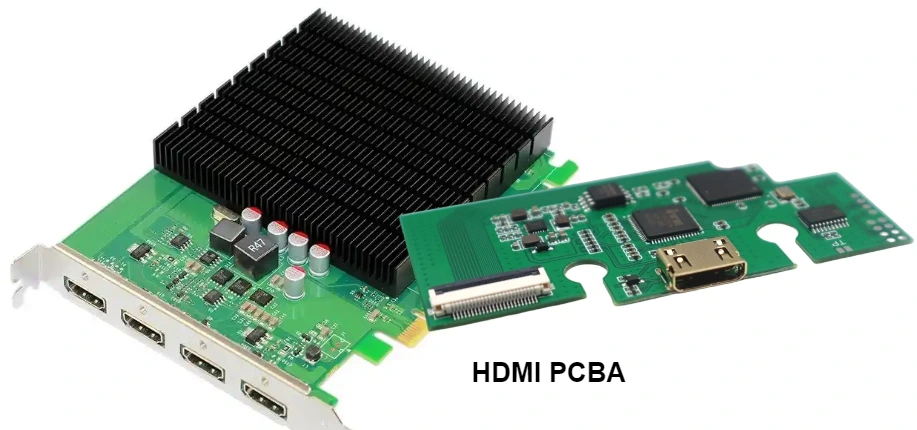
HDMI PCBA Protection and Port-Zone Integration
The HDMI port zone typically includes ESD/EMI protection parts such as TVS arrays and filters. Their effectiveness depends heavily on placement and grounding quality, and their manufacturability depends on footprint choice and process planning.
At HILPCB, we support port-zone DFM review so protection parts are effective and assembly-friendly without forcing routing or placement compromises.
- TVS arrays placed close to the connector to minimize unprotected routing
- Low-inductance ground return using practical via strategies
- Symmetric port-zone implementation to preserve high-speed pair behavior
- Footprints and placements that support clean assembly and inspection
- Consistent implementation across ports to keep behavior uniform
A well-integrated port zone improves robustness and helps products pass later compliance and reliability validation more smoothly. It also reduces assembly risk because the connector area remains organized, inspectable, and repeatable across builds and production lots.
HDMI PCBA Inspection, Testing, and Documentation
Quality gates should match your build stage: prototypes need fast feedback, while production needs stable screening and consistent documentation. HDMI PCBA benefits from inspection plans that protect yield without slowing delivery.
At HILPCB, we align inspection and documentation depth to your acceptance needs while keeping the workflow scalable.
- AOI baseline for placement and visible solder quality
- X-ray options when hidden-joint visibility is required (package-dependent)
- Electrical screening aligned to volume and cost targets
- Functional test coordination when fixtures/validation steps are provided
- Reporting and traceability agreed per build lot
A staged quality plan reduces defect escape and accelerates internal approvals because outputs are consistent and traceable. It also makes production ramp smoother by catching systematic issues early and keeping yields stable as volumes scale.
RFQ Checklist for HDMI PCBA
A complete RFQ speeds quoting and prevents build ambiguity. For HDMI PCBA, the most important inputs are PCB parameters, connector definition, assembly files, sourcing rules, and inspection/testing expectations.
At HILPCB, you can reference this practical planning resource: HDMI PCB manufacturing and PCBA guide.
- PCB data: Gerber/ODB++/IPC-2581, thickness, copper, surface finish, special requirements
- Assembly package: BOM (MPNs), pick&place, assembly drawing, polarity/orientation notes
- Connector details: exact HDMI connector model, anchor requirements, mechanical constraints
- Sourcing rules: alternates policy, traceability level, authorized sourcing preference
- Inspection/testing: AOI baseline, any X-ray needs, electrical/functional expectations
- Quantity and schedule: prototype qty, pilot run, volume forecast, target lead time
A strong RFQ reduces back-and-forth and helps you receive an accurate quote that matches the real build the first time. It also sets the foundation for a clean ramp—requirements are already structured for production, not only for prototypes—so scaling becomes faster, more predictable, and easier to manage across teams.