
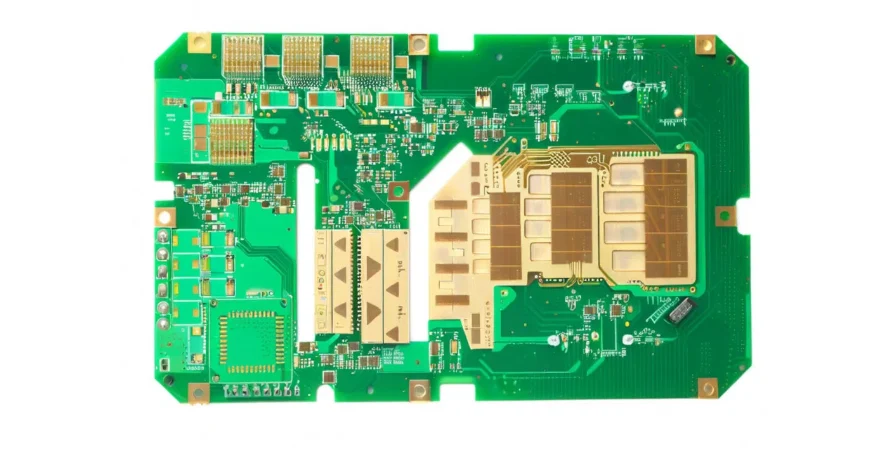
High-reliability electronics demand design-specific risk analysis, material selection, workmanship criteria, testing and traceability. A PCB can be manufactured to an agreed acceptance class, but that alone does not guarantee zero failures over a product lifetime.
HILPCB supports project-specific fabrication and assembly requirements. Specify the applicable bare-board performance standard (for example IPC-6012), bare-board acceptability criteria (IPC-A-600), and assembly workmanship standard (IPC-A-610/J-STD-001) separately.
What Makes a High-Reliability PCB Different
A high-reliability program defines the operating environment, failure consequences and required acceptance evidence. Consumer, industrial and regulated products can each have demanding requirements; the market label does not establish the needed construction or IPC class.
- Laminate and interconnects: Select thermal endurance, expansion, moisture behavior, hole plating and via structures for the actual process and mission profile. High Tg alone does not establish service life.
- Power and heat: Derive copper thickness and geometry from current, temperature rise and cooling. Heavy copper is an option, not a universal reliability requirement.
- Protection: Select surface finish, solder mask, cleanliness and any coating against assembly and exposure conditions; none makes a board immune to corrosion.
- Acceptance: Define annular-ring, plating, dimensional and electrical criteria from the contracted standard/revision/class and approved exceptions. Do not replace those requirements with an unsupported universal “no breakout” rule.
- Testing: Agree bare-board continuity/isolation and any additional qualification or screening. Flying probe and dedicated fixtures are alternative test approaches with different access and throughput; both are not automatically required.
Review high-Tg PCB, heavy copper PCB and backplane PCB constructions against these requirements rather than assuming a product-category label proves reliability.
Demanding Applications Need Their Own Qualification
Potential applications include aerospace navigation, defense RF, automotive ADAS, medical imaging and industrial motion control. Each program has its own acceptance, supplier and product-qualification requirements. Medical device risk classes are not PCB quality classes, and an application list does not establish approved customer history.
Agree AOI, X-ray, microsection and electrical-test coverage for the actual build. Microsections inspect selected samples, X-ray visibility depends on the structure, and a Class 3 workmanship result is not a lifetime prediction or system approval.
Material Engineering for High-Reliability Demands
Material selection starts with the mission profile and the qualified fabrication/assembly route. Provide the thermal, mechanical and electrical limits, then confirm feasible materials and substitutions with the supplier.
Material options have distinct qualification questions:
| Material Type | Selection and qualification focus |
|---|---|
| Ceramic PCB | Exact ceramic grade, conductor/attachment process, heat path and frequency-specific electrical properties |
| Metal-core PCB | Dielectric isolation, thermal interface, board support and package compatibility; metal alone does not prove vibration endurance |
| Rigid-flex PCB | Static versus dynamic flex, bend radius, copper construction and fatigue qualification |
| HDI with stacked vias | Fine-pitch escape routing with process-specific stacked-via qualification; added density is not itself added reliability |
| Custom stackups | Defined geometry, return paths, insulation and fabrication evidence for the selected interfaces |
The Gerber Viewer and 3D PCB Viewer can aid file and mechanical review. They do not independently qualify materials, electrical connectivity, solder joints, insulation or lifetime. Correlate the released data with manufactured-sample inspections and the required tests.
High-Reliability PCB Assembly Workflow
Define fabrication, assembly and equipment qualification as separate scopes. For through-hole assembly or box-build assembly, submit the BOM, approved footprints, component handling instructions, workmanship criteria and test plan.
- Pre-build review: Check BOM revisions, component availability, land patterns and mounting details. A 3D PCB Viewer helps identify visible fit issues, but library/BOM validation needs the actual component data.
- Assembly process: Agree feasible SMT/THT methods and package-specific thermal profiles using the solder alloy, component limits, copper distribution and board construction. Automated insertion is not assumed for every package.
- Inspection and test: Define AOI/X-ray coverage and any ICT, flying probe or functional tests for the populated board. These differ from bare-board continuity/isolation; burn-in and environmental screening require justified profiles and acceptance limits.
- Protection and enclosure: Specify coating, potting or enclosure work where required, with compatible materials and access for testing, cooling and maintenance.
- Traceability and change control: Agree the material/component lots, process records, inspection results and lot/unit identification to retain. Set approval requirements for substitutions and rework.
Confirm available services and report scope in the quotation. A documented build process supports qualification but does not establish failure-free field life; the product team must validate the complete system against the intended mission profile.
Why Engineers Trust HilPCB PCB Factory
HILPCB supports high-reliability IPC Class 2 or Class 3 fabrication and assembly for aerospace, defense, ADAS, medical and robotics applications. Engineering options include mission-profile/material review; ceramic, metal-core, rigid-flex, stacked-via HDI, custom and hybrid stack-ups; copper balance and controlled-weave support. Eligible assembly can include SMT/THT, automated insertion, box build, BOM-risk and footprint review, profile tuning, ICT, flying probe, FCT, coating and optional burn-in. Lot/unit traceability and serialized QA reports, controlled cleanroom lamination, DFM, inspection/class verification, global delivery and technical support can be scoped. IPC-6012, IPC-A-600, IPC-A-610 and J-STD-001 have distinct scopes and must be specified. Qualification is construction-specific; no zero-failure, lifetime or risk-elimination guarantee is implied.
HILPCB provides manufacturing and assembly support for demanding projects. Specific customer history, certifications, and quality-system scope should be supported by current records rather than a general claim of decades of experience.
Before selecting a supplier, compare:
- Exact material and interconnect capability for the proposed construction
- Inspection methods, sample plans and acceptance criteria
- Relevant plant and special-process approvals, including their current scope
- Material/component traceability, change control and approved rework
- Specialist test-provider responsibilities, schedule and required delivery records
For a high-reliability program, request the relevant plant certificates, process capability evidence and sample test records, then agree the required standards and acceptance criteria in the RFQ.
Frequently Asked Questions
What does "high reliability" mean for a pcb assembly?
High-reliability PCB and PCBA work requires project-specific material qualification, documented traceability, verified workmanship and test coverage. IPC Class 3 is a defined acceptance class, not a blanket warranty of field reliability.
Expert pcb fabrication services in this context means DFM review, stackup and material control, impedance coupons, and documented test coverage at RFQ, not just higher price.
Who leads in high-reliability pcb manufacturing?
There is no single leader or universal certificate for high-reliability PCBs. Compare IPC-A-600/IPC-6012 bare-board criteria, IPC-A-610/J-STD-001 assembly requirements and any industry-specific quality management or special-process approvals that actually apply.