
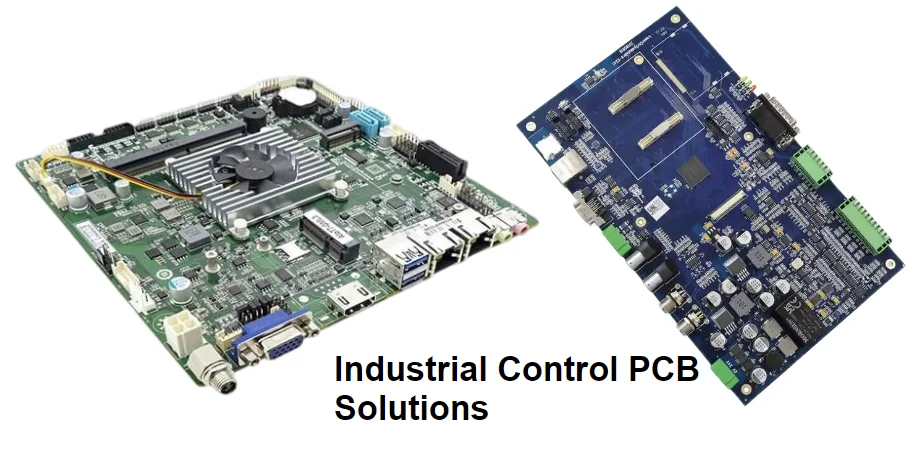
Industrial control electronics power modern automation—from PLC CPU/I/O modules and servo drives to remote I/O, industrial gateways, and process instrumentation. These systems must run reliably in environments with wide temperature swings, continuous vibration, electrical transients, and airborne contaminants. For OEMs and sourcing teams, choosing the right industrial PCB manufacturer is about more than bare-board capability: it’s about rugged materials, stable processes, traceable quality, and scalable industrial PCB assembly that keeps production lines running.
HILPCB provides end-to-end industrial control PCB solutions for automation systems, including prototype-to-volume fabrication, controlled build notes, and PCBA services aligned to long-life industrial equipment programs.
Wide-Temperature Industrial PCB Design and Manufacturing
Industrial equipment is deployed in cabinets, outdoor enclosures, and near heat sources where boards must survive long-term operation and cycling. A temperature-capable PCB stackup and stable lamination processes are the foundation for maintaining dimensional stability, plated-through-hole integrity, and solder joint reliability.
At HILPCB, we support wide-temperature industrial PCBs for PLCs, motor control, and automation electronics with material selection and process controls designed for long service life.
Key Wide-Temperature Manufacturing Practices
- High-Tg Laminate Options: Using high-Tg PCB materials to improve thermal stability and reduce risk under sustained heat and rework.
- Balanced Stackup Planning: Symmetric layer structures and controlled resin flow reduce warpage and improve assembly yield on industrial PCBA builds.
- Copper Weight Selection: Choosing copper thickness based on load and thermal rise (standard to heavy copper as needed) for stable current delivery.
- Thermal Path Features: Thermal vias, copper planes, and heat-spreader planning for power components and regulators.
- Surface Finish for Reliability: ENIG or other finishes selected for long-term solderability and corrosion resistance in industrial environments.
- Validation by Stress Profiles: Temperature cycling and high-temperature operating life validation aligned to industrial duty cycles.
Long-Life Stability for Automation Programs
By combining stable materials, controlled stackups, and verification-ready build notes, HILPCB helps OEMs achieve industrial PCBs that remain consistent across production lots—supporting qualification, sustaining builds, and multi-year lifecycle supply.
EMI/EMC-Ready PCB Stackups for PLC and Automation Systems
Factory electrical noise is unavoidable. Industrial controllers, PLC networks, and drive systems require EMI/EMC-ready PCB design support and manufacturing consistency so immunity measures remain effective after fabrication and assembly.
HILPCB supports PCB for PLC systems and automation electronics with layout-friendly stackups, grounding integrity, and production controls that help customers meet industrial EMC targets.
Key EMI/EMC Manufacturing Considerations
- Continuous Reference Planes: Multilayer structures that maintain uninterrupted return paths for clean signal behavior.
- Power Filtering Land Patterns: Stable soldermask alignment and copper registration support consistent filter and protection placement.
- Controlled Impedance Where Needed: For Ethernet/industrial Ethernet and high-speed links, controlled impedance capability using high-speed PCB manufacturing.
- Ground Stitching Support: Via capability and registration controls that keep stitching strategies effective in production.
- Isolation Clearance Control: Process control around creepage/clearance features for isolated interfaces and power sections.
- EMC-Oriented Documentation: Build notes and inspection points that reduce variability across builds.
EMC Consistency from Prototype to Volume
A robust EMC concept can be undermined by variation. HILPCB focuses on process repeatability so immunity and emissions behavior remain stable when programs move from prototype to pilot to volume.
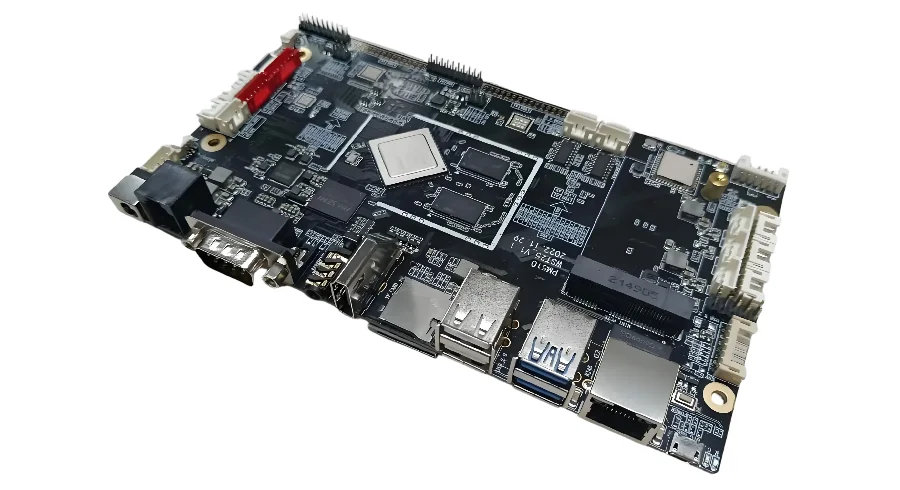
Vibration-Resistant Industrial PCBA for Connectors and Power Components
Industrial control boards often include heavy components—connectors, relays, inductors, and large capacitors—plus frequent cable interaction. Assembly quality and anchoring strategy are critical for resisting vibration and shock.
HILPCB provides industrial PCB assembly service with mixed-technology capability to improve mechanical durability for automation deployments.
Key Vibration and Shock Reliability Practices
- Mixed SMT + Through-Hole Assembly: Robust soldering for mechanically stressed connectors and high-mass parts using through-hole assembly where appropriate.
- Reflow Profile Discipline: Thermal profiling matched to board mass and component sensitivity to reduce joint fatigue risk.
- Reinforcement Options: Adhesives, staking, or mechanical supports for vibration-critical components (project dependent).
- Mounting Feature Integrity: Tight control of holes/slots and mounting areas to prevent stress concentration.
- Inspection Controls: AOI and targeted inspection for solder fillets, pin fill, and connector coplanarity.
- Build Records for Traceability: Lot-level documentation supporting failure analysis and maintenance programs.
Assembly Reliability That Matches Industrial Lifecycles
By aligning assembly methods with mechanical realities—connectors, vibration, and handling—HILPCB helps customers reduce intermittent failures and improve field stability across long-running industrial equipment.
Environmental Protection for Dust, Moisture, and Chemical Exposure
Many industrial installations face dust, humidity, and exposure to oils or cleaning chemicals. Protection is achieved by combining PCB finish choices, assembly cleanliness, and coating/encapsulation strategies that match the enclosure and service model.
HILPCB supports ruggedization options for industrial control PCBs based on application risk and maintenance needs.
Key Environmental Protection Options
- Conformal Coating: Acrylic/urethane/silicone coatings for moisture and contamination resistance (selective or full coverage).
- Selective Keep-Out Planning: Masking of connectors, test points, and adjustable components to preserve serviceability.
- Encapsulation/Potting (Optional): For sensors and exposed modules requiring maximum sealing.
- Corrosion-Resistant Finishes: Surface finishes chosen for humid or mixed-chemical environments.
- Cleanliness Control: Pre-coating cleaning and ionic contamination control to reduce leakage and corrosion risk.
- Validation Testing: Temperature-humidity-bias and condensation testing when required by customer specs.
Environmental protection works best when it matches the enclosure, maintenance cycle, and real exposure conditions. HILPCB helps customers implement practical protection strategies that improve field reliability without over-complicating production.
Scalable Industrial PCB Manufacturing and Turnkey Assembly
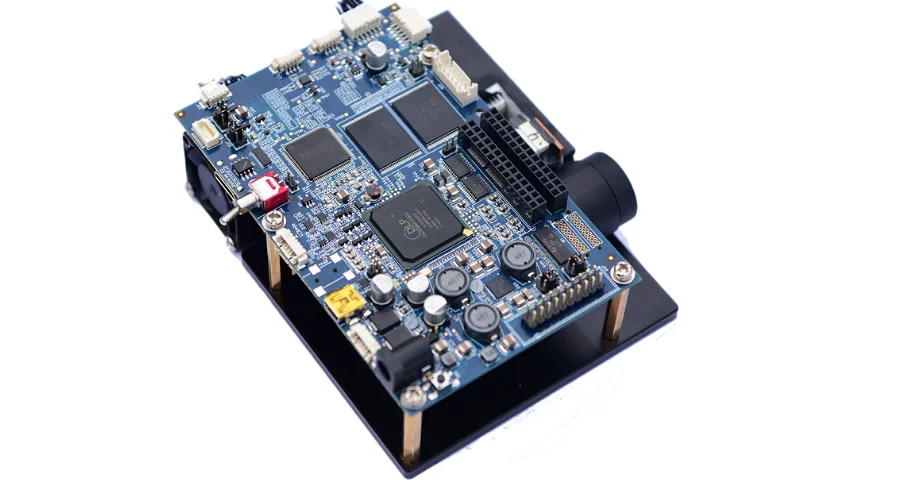
Automation programs often start with engineering validation, then move to pilot runs and finally stable volume production. A supplier must scale capacity while keeping build parameters consistent.
HILPCB supports industrial projects with scalable PCB fabrication and PCBA options, including flexible volume planning and supply chain coordination.
Key Scale-Up Capabilities
- Industrial Multilayer PCB Production: Layer counts and plane structures for control, I/O, and communication-rich designs via multilayer PCB manufacturing.
- Single/Double-Layer Support: Cost-effective options for simpler sensor and interface boards through single & double layer PCB services.
- Stable FR-4 Baseline Builds: Reliable mainstream builds using FR-4 PCB fabrication where performance allows.
- Turnkey PCBA Options: One-stop procurement + assembly via turnkey assembly when customers prefer a single accountable supplier.
- Production Traceability: Lot records and documentation aligned with industrial quality requirements.
- Lead-Time Flexibility: Quick-turn prototypes and planned production windows for rolling demand.
From initial prototypes to repeat orders, HILPCB focuses on process stability and documentation continuity—helping automation OEMs avoid parameter drift that can disrupt qualification and production.
Industrial PCB RFQ Checklist for Faster Quoting and DFM
A complete RFQ improves quote accuracy, shortens back-and-forth, and helps DFM review catch issues early—especially for industrial control PCBA with connectors, power sections, and isolation features.
Provide these items to accelerate quoting for industrial control PCB supplier evaluation and production readiness.
What to Include in Your Industrial PCB RFQ
- PCB Data: Gerber/ODB++/IPC-2581, board outline, layer count, thickness, copper weight.
- Environment Targets: Operating temperature range, humidity/contamination exposure, coating/potting requirement (if any).
- Electrical Needs: Any controlled impedance (Ethernet/high-speed), isolation requirements, creepage/clearance notes.
- Manufacturing Specs: Surface finish preference, soldermask color, special tolerances, impedance coupons if applicable.
- PCBA Package: BOM, pick&place, assembly drawing, polarity notes, connector types, torque/mechanical notes.
- Testing Needs: ICT/FCT requirements, programming, functional checks, inspection/document expectations.
- Quantity & Forecast: Prototype qty, pilot qty, annual volume estimate, target lead time and shipping destination.
Faster Quotes, Fewer Risks, Smoother Ramp
A clear RFQ enables HILPCB to recommend the right stackup/material options, confirm manufacturability early, and align PCB + PCBA processes with long-life industrial requirements—reducing schedule risk and improving first-build success.
FAQ
Why are industrial control PCBs more demanding than ordinary commercial boards?
Industrial control boards usually have to survive wider temperature swings, harsher EMI environments, higher vibration exposure, and much longer field lifetimes than typical commercial electronics. That pushes designers to treat material selection, stackup planning, connector robustness, environmental protection, and documentation discipline as system-level requirements rather than optional upgrades.
What matters most when designing industrial control PCBs for long-term reliability?
The most important factors are stable materials, conservative spacing and isolation rules, robust connector and power-component anchoring, and protection against dust, moisture, chemicals, and electrical noise. Long-life reliability also depends on keeping manufacturing parameters repeatable from prototype through volume, not just passing an initial engineering sample.
Why is EMI/EMC planning important so early in an industrial PCB project?
Because EMC issues are expensive to fix late. Stackup choices, return-path continuity, grounding strategy, connector layout, shielding provisions, and enclosure interaction all affect compliance outcomes. If those items are left until after layout or pilot builds, teams often end up with redesigns, unstable test results, or inconsistent field behavior.
What should be included in an industrial PCB RFQ before moving toward production?
A strong RFQ should include fabrication data, environment targets, isolation and impedance requirements, assembly package details, test expectations, and realistic quantity forecasts. That information helps the supplier align DFM, material choices, PCBA planning, and traceability requirements before production risk becomes expensive.