

At HilPCB PCB Factory, display-board fabrication and assembly can be scoped for controller, driver, backlight or LED-module boards. Define which board is supplied and which panel, optics, enclosure and software remain part of the complete display system.
At HilPCB PCB Factory, we've manufactured Display PCBs for global brands since 2008.
Modern display technology demands sophisticated PCB designs integrating timing controllers, power management, signal processing, and interface circuits within increasingly compact form factors. LCD, OLED, LED, electronic-paper and microLED designs use different drive, power and interconnect architectures; a suitable process for one does not establish support for every display technology.
Display PCB Design Architecture and Signal Management
Display PCB design requires comprehensive understanding of video signal processing, power distribution, and electromagnetic compatibility. The fundamental challenge lies in managing high-speed digital signals while maintaining excellent visual performance and minimizing electromagnetic interference.
Core Display PCB Components:
Timing Controllers (TCON): Manage panel-specific pixel timing, synchronization and data mapping. Required timing follows the panel and interface; a TCON alone does not guarantee flicker-free operation.
Power Management Systems: Provide the panel-specific logic, analog, gate-drive, backlight or LED-current rails. Follow startup/shutdown sequencing, ripple, current and fault limits from the selected panel and devices, including negative rails where required.
Interface Controllers: HDMI, DisplayPort, LVDS or MIPI DSI interfaces with the required version, lane count and data rate. Resolution, refresh rate, pixel format, compression and protocol overhead determine bandwidth; the interface name alone does not establish 8K support or EMC compliance.
Display Driver Integration: Panel-specific source/gate drivers, LED current drivers and gamma or other compensation circuits, which may be on the board, flex or panel assembly.
Display PCB timing and interface bandwidth vary widely by panel type, resolution and link protocol; some designs require high-speed routing while maintaining signal integrity across multiple layers. Use the selected interface constraints for impedance, pair skew, reference continuity and layer transitions; route geometry and an approved stackup must fit the actual link. MIPI DSI is one defined processor-to-display interface, rather than a generic label for any display data connection.
Related board types include OLED/LCD controllers, LED display PCB modules, touch interfaces and backlight controls. Outdoor brightness, environmental protection and touch performance require their own complete-system design and validation.
Advanced Display PCB Manufacturing Processes
Professional Display PCB manufacturing employs specialized fabrication techniques optimized for high-speed digital signals and precise analog performance. Material selection and process control directly impact display quality, electromagnetic compliance, and long-term reliability.
High-Speed Signal Optimization:
Consider high-frequency PCB materials when the actual loss budget and construction require them. Compare exact-grade dielectric data, frequency, copper roughness and temperature dependence with channel length and connector losses; a supplier brand alone does not establish performance.
A suitable FR4 PCB construction can serve many display controllers. Verify the selected link and reach rather than assuming either an expensive RF laminate or a generic FR-4 grade is always necessary.
Precision Manufacturing Techniques:
HDI Construction: HDI PCB technology enables ultra-compact display designs with via-in-pad structures supporting fine-pitch display controller ICs
Thermal Management: Copper spreading and thermal vias can connect hot devices to a suitable heat path. Metal-core substrates may suit LED power modules, while dense controller boards may use other constructions. Review package attachment, interfaces, enclosure and cooling together; metal core is not itself active cooling.
EMI Mitigation: Continuous return references, compact switching loops, suitable filtering and properly bonded shielding can reduce interference. Unconnected guard copper can introduce coupling; verify configured board, panel, cables and enclosure emissions/immunity.
Flexible Integration: Flex PCB solutions for curved displays, foldable devices, and space-constrained applications
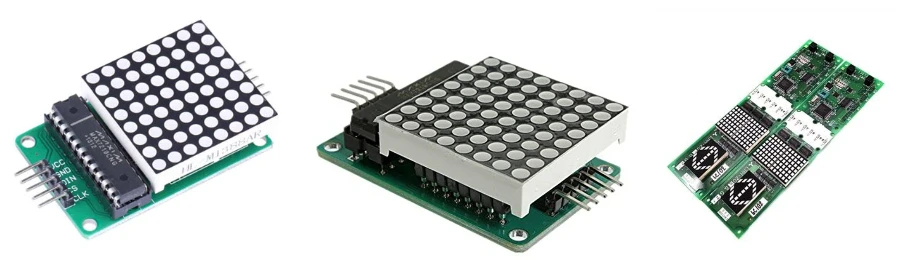
Professional Display PCB Assembly and Testing
Display PCB assembly requires package-specific printing, placement and soldering controls for fine-pitch controller ICs. Inspect and test the defined features; workmanship evidence alone does not establish channel performance or lifetime. Component selection and assembly processes directly impact display quality and system performance.
Critical Assembly Considerations:
Display controller ICs utilize advanced packaging including fine-pitch BGA and QFN packages requiring specialized SMT assembly equipment. Set placement and paste tolerances from package/land geometry and the qualified process. Placement accuracy does not prevent thermal damage: measure the board profile and respect component, flex, connector and panel-attachment heat limits across all soldering operations.
Display PCB Categories:
Smartphone Display PCBs: Ultra-compact main boards supporting high refresh rates, touch integration, and power efficiency optimization
Automotive Display Controllers: Select components qualified for their intended automotive conditions and validate the board/system temperature, transients and EMC. AEC-Q100 concerns integrated-circuit qualification; it is not a PCB or complete-display certification.
Industrial Display PCBs: Enhanced reliability designs for medical devices, factory automation, and outdoor installations with conformal coating options
Large Format Display Systems: High-power controllers for digital signage, video walls, and stadium displays with advanced thermal management
Advanced Assembly Technologies:
Sequential lamination and blind vias are fabrication choices where the routing density justifies them. Assembly is a separate route: qualify stencil, reflow and any later connector/panel attachment, then specify AOI/X-ray, programming and functional coverage for the actual build.
Display PCB Applications and Market Solutions
The following applications impose different board and system requirements; identify the acceptance evidence for the selected use case.
Consumer Electronics Applications: Display PCBs for smartphones, tablets, laptops, gaming devices, and smart TVs prioritize compact design, power efficiency, and high-resolution support. A high-refresh or foldable design needs a defined bandwidth, power and flex-life plan; these examples describe application requirements, not documented HILPCB project results.
Automotive Display Systems: Instrument clusters, infotainment and heads-up display controllers need program-specific operating/fault behavior, temperature cycling, transients and EMC evidence. Critical telltales and driver information have requirements beyond displaying a valid video stream.
Industrial and Medical Displays: Medical-imaging, industrial and outdoor displays have different intended uses. The finished medical device may require a US FDA pathway or EU MDR conformity assessment; neither is a generic PCB standard or approval. Specify image quality, calibration, alarms where relevant and EMC evidence for the actual system.
Emerging Display Technologies: Micro-LED display controllers, transparent display systems, and AR/VR display interfaces representing the next generation of visual technology applications.
Why Choose HILPCB for Display PCB Manufacturing
HILPCB supports LCD, OLED, LED, e-paper and microLED board programs subject to technology-specific feasibility. Reviewed options include ±25 µm placement, 2–20 layers, HDI, controlled impedance and material selection; eligible schedules include 5–7-day prototypes, 3-day express service and 15–20-day production after scope and material review. Design review can cover signal integrity, thermal, power and EMC, with authorized sourcing and obsolescence support by agreement. Panel, optics, software and image-quality qualification remain product responsibilities.
At HILPCB, we deliver comprehensive Display PCB manufacturing and assembly solutions, accelerating your product development from prototype through high-volume production. Agree design inputs, build scope, review outputs and test responsibilities before fabrication; schedule and performance depend on the actual design and evidence.
Manufacturing Excellence:
- Construction review: Confirm layers, materials, copper, holes, HDI and impedance geometry together for the quoted board.
- Quality evidence: Verify the supplying site and applicable QMS certificate; agree bare-board and assembly acceptance documents, revisions, coverage and records.
- Prototype planning: Confirm material/component availability, fabrication and assembly steps, test fixtures and approval dates in the schedule.
- Global Compliance: RoHS/REACH material-compliance documentation where applicable with comprehensive material documentation and regulatory support
Technical Advantages: For panel and component sourcing, identify exact part numbers, approved suppliers, firmware/panel revisions and substitutions. Check connector pinout, interface voltage, timing and power sequencing before accepting an alternate; a local source alone does not establish compatibility, cost or lead time.
Frequently Asked Questions About Display PCB Manufacturing
How quickly can a factory deliver display PCB prototypes?
Lead time depends on the released board data, materials, components, tooling, assembly route and test coverage. Ask for fabrication, sourcing, assembly, approval and shipment dates separately, with the assumptions behind any expedited schedule.
What quality evidence should I request for a display PCB?
Agree bare-board acceptance and electrical continuity/isolation tests, then assembly workmanship, programming and functional tests where ordered. Verify the supplying site's relevant QMS certificate and scope. A bare-board test does not establish panel image quality, full link compliance or medical/automotive approval.
Can the same process handle simple LCD controllers and complex OLED drivers?
Review the actual package pitch, panel connector, stackup, power rails and assembly route. The technology name alone does not determine complexity. HDI or flex can be useful where geometry requires them, but neither is necessary for every display controller.
Can turnkey assembly include component sourcing?
A turnkey quotation can include sourcing, fabrication, assembly and specified tests. Agree BOM/MPNs, approved sourcing channels, traceability, alternates, programming and delivered state; sourcing authorization and obsolescence support must be established for the order.
What should a display-board design review cover?
Provide the panel/interface specifications, timing and bandwidth budget, rail/sequencing limits, stackup, connector pinout, mechanical envelope and thermal path. Agree which SI, power, thermal, DFM and EMC checks are included, their limits and the evidence needed from a powered board with the intended panel and cables.