

An Isola PCB uses specified Isola laminates and prepregs. Material choice depends on the electrical channel, thermal exposure, mechanical construction and manufacturing route. The laminate brand alone does not establish finished-board performance or a fabricator’s available capability.
For a HilPCB quotation, provide the exact grade, layer construction, copper foil, fabrication/assembly files and acceptance plan. Confirm material availability, process compatibility and required evidence for the complete build. HilPCB supports 2–64-layer Isola constructions. Standard impedance tolerance is ±10%, with ±5% available for critical applications when specified for the approved stackup and construction.
Understanding Isola PCB Materials and Their Applications
Isola offers several resin systems and performance classes, including FR-4 grades. Compare a proposed Isola grade with the exact alternative FR-4 PCB material rather than treating Isola and FR-4 as mutually exclusive categories.
| Material | Selection context | Evidence to check |
|---|---|---|
| FR408HR | High-speed digital channels where its loss and thermal properties fit | Exact glass/resin construction, foil, frequency-dependent Dk/Df and channel margin |
| I-Speed | Loss-sensitive digital channels | Grade-specific properties and complete channel/coupon results |
| Tachyon 100G | Demanding low-loss channels | Product name is not a guaranteed lane rate; assess channel length, geometry, launches and connectors |
| 370HR | Thermally robust epoxy construction | Assembly profile, expansion, moisture and relevant CAF evidence; Tg alone does not establish service reliability |
| P96 | Polyimide construction | Material availability, moisture/process guidance and application qualification |
| G200 | A distinct laminate/prepreg system | Current grade datasheet and processing guide, not a temperature inferred from the name |
For example, Isola’s FR408HR datasheet revision E lists typical Dk 3.65 and Df 0.0095 at 10 GHz using Bereskin stripline. These are material test values, not an impedance or loss guarantee for every construction. Obtain construction-specific design data and validate representative channels.
Isola’s G200 datasheet revision C lists typical DSC Tg of 180°C, not 200°C. Tg is a measured transition and is not the same as continuous-use temperature, decomposition temperature or a finished-board thermal-cycling rating. Confirm the supplied product and current specification before release.
Advanced Manufacturing Processes for Isola Circuit Boards
HILPCB has named Isola material and fabrication specialists who advise on electrical, thermal and mechanical selection, source specified Isola grades, and process them in dedicated qualified production routes. Depending on the grade and released build, manufacturing options include vacuum lamination, controlled drilling, plasma desmear, optimized plating, backdrilling, sequential lamination, depth routing, roughness control, profiled reflow and humidity-controlled or vacuum storage/conditioning. These are grade- and process-specific controls, not a guarantee of zero voids.
Use the selected grade’s processing guide and qualify the actual stackup. A process suitable for one epoxy or polyimide system is not automatically suitable for another.
- Lamination: Define storage/conditioning, material layup, resin content, pressure, heat-up, cure and cooling conditions. Verify dielectric thickness, registration and bond quality; vacuum equipment alone does not eliminate voids.
- Drilling and desmear: Match tools, feed/speed, hole depth and desmear to the resin/glass construction. Mechanical drilling, laser microvias and plasma or chemical desmear are process choices to qualify, not universal requirements.
- Metallization and plating: Confirm hole-wall preparation, copper adhesion, finished thickness and inspection criteria. Smooth copper foil can reduce conductor loss but still needs a qualified bond/process system.
Request build-specific feasibility and records; a generic Isola service description does not establish dedicated production lines or support for every grade.
Isola PCB Solutions for High-Speed Applications
Signal Integrity Excellence
For high-speed PCB channels, derive material and geometry from the interface budget. Include frequency-dependent dielectric/conductor loss, copper roughness, trace length, vias, launches and connectors. A nominal lane rate alone does not select a material.
Specify impedance targets, tolerance, coupon geometry and test method with the fabricator. Field solvers and electromagnetic models support design decisions but do not guarantee first-pass operation.
- Backdrilling may reduce unused via stubs where the channel and connector geometry permit it.
- Sequential lamination or microvias may support package escape and selected transitions; they add processing and reliability requirements.
- Controlled-depth routing requires a defined mechanical/electrical purpose and tolerance.
- Copper foil and finish choices should be evaluated for both loss and manufacturability.
Thermal Reliability for Lead-Free Assembly
Isola 370HR can support qualified lead-free assembly profiles; peak component temperature, time above liquidus, moisture handling and laminate thermal limits must be validated for each build. Its nominal Tg alone does not determine reflow survivability.
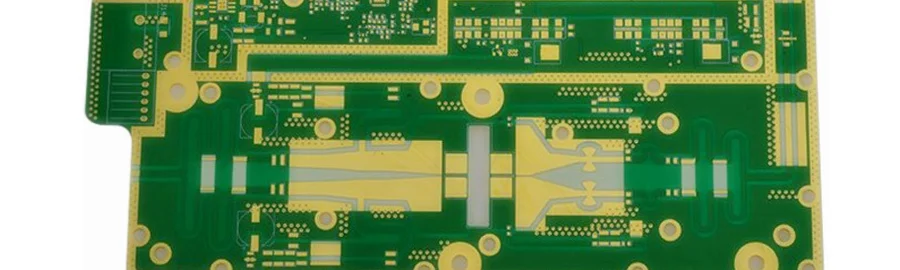
Fabrication and Assembly Scope to Confirm
| Build input | Quotation and release evidence |
|---|---|
| Stackup | Exact laminate/prepreg, glass/resin construction, thicknesses, foil and substitution rules |
| Geometry | Layer count, outline, copper, trace/space, hole types and aspect ratios evaluated together |
| Process | Lamination, drilling/desmear, plating, backdrill and finish feasibility for this grade |
| Acceptance | Applicable IPC-6012 revision/class, drawings, coupons, sampling and reports |
| Schedule | Material stock/procurement, tooling, qualification, fabrication, assembly and delivery milestones |
No universal layer, thickness, fine-line or quick-turn range follows from using Isola. Confirm an achievable construction and written schedule after review rather than relying on conflicting generic lead times. Hybrid Isola/Rogers/Taconic/FR-4 constructions are part of the reviewed scope — see hybrid stackup support; feasibility still depends on compatible lamination, drilling, expansion and adhesion between the selected grades.
Quality Assurance and Material Traceability
HILPCB’s recorded Isola throughput is more than 20,000 m² of laminate per month; total-volume capacity is more than 50,000 m² per month. Eligible capability options include 0.2–8.0 mm board thickness, 0.5–10 oz copper, 2/2 mil trace/space and 0.1 mm vias. Available finishes include ENIG, immersion silver, OSP and hard gold, subject to construction and quote. Electrical continuity/isolation testing, flying probe or bed-of-nails, specified TDR, microsections and CAF evaluation can be scoped with lot traceability and material CoC. IPC Class 2/3 is a build-acceptance option; applicable UL recognition and ISO 9001/IATF 16949/AS9100 quality-system claims are limited to the current listed material/product or certified entity/site and certificate scope.
Agree bare-board continuity/isolation coverage, impedance-coupon measurements, dimensional inspection and selected microsections. TDR checks the defined impedance structure; it does not establish all channel performance or test every hidden feature.
CAF evaluation requires a specified coupon, geometry, bias, environment, duration and acceptance limit. A material designation or one coupon test does not prove lifetime freedom from CAF on every board.
Request material identity, lot records and the agreed conformance reports. Supplier laminate data and finished-board measurements are different evidence. Confirm any quality-system certificate or UL recognition against the legal entity, site, product and applicable scope.
Assembly and Delivery Requirements
HILPCB offers turnkey Isola assembly, authorized sourcing, 01005 and 0.3 mm-pitch BGA placement, vapor-phase reflow options, X-ray, ICT and FCT. The recorded eligible schedule tiers are 24-hour urgent service, 24–48-hour standard quick turn, 48–72-hour prototype expedite, 5–7-day standard prototype, 7–10-day standard shipment and 12–15-day sequential-lamination/backdrilled builds. These routes have different start/finish definitions and construction limits; confirm the applicable tier, logistics and release inputs in the quote. HILPCB offers free DFM, stackup/impedance modeling and substitution consultation, custom TDR/microsection/ionic reporting, and export/logistics support including invoice/tariff codes, origin, MSDS and customer quality documents. Payment options include wire transfer, PayPal, credit card and letter of credit; NET terms are available to eligible accounts. Multilingual support is available 24/7.
For turnkey assembly or SMT assembly, provide the BOM, exact package dimensions, placement, soldering and test requirements. Confirm handling, stencil/placement access, reflow method, hidden-joint inspection and any ICT/functional coverage for the specific build. An Isola grade does not establish fine-pitch placement or vapor-phase equipment availability.
Qualify the measured assembly profile, moisture handling and support for the actual laminate/components. Do not automatically pre-bake every material: follow the selected product’s processing guidance and approved conditioning route.
Agree component sourcing and substitutions, packaging, delivery documentation and commercial terms in the quotation. A shipping/payment option does not establish technical qualification. For RF paths, evaluate the exact high-frequency PCB construction against frequency, loss and interface requirements.
Frequently Asked Questions
What are typical lead times for Isola PCB manufacturing?
Obtain a written schedule for the actual grade, stackup, quantity and inspection/assembly scope. Material procurement, tooling and qualification can dominate the schedule; confirm any expedited option and its deliverables before ordering.
How do you ensure impedance control on Isola high-speed materials?
Define the target impedance, tolerance, geometry, foil and dielectric construction. Confirm the fabricator’s stackup model, manufacturing controls, coupon plan, measurement method and reporting scope. The impedance calculator can support an initial estimate but does not replace a solved stackup or measurements.
Can you process both standard and halogen-free Isola materials?
Specify the exact supplier product and required halogen-content definition/test evidence. Do not infer halogen-free status from a brand, FR-4 classification, lead-free compatibility or an unverified product suffix. Confirm grade availability and process compatibility in the quotation.
What Isola materials do you recommend for automotive applications?
Select the grade against the installation temperature, moisture, assembly and channel requirements. 370HR, P96 or G200 is not automatically approved for an under-hood ECU or automotive program. Customer qualification and supplier approval remain separate requirements.
Do you support hybrid stackups mixing Isola with other materials?
Submit the exact grades and proposed layer construction for review. Hybrid Isola/Rogers/Taconic constructions may be feasible, but require compatible lamination, drilling, expansion, adhesion and electrical properties. Cost and performance benefits need evaluation on the actual stackup.
What design support do you provide for Isola PCB projects?
Agree the scope of DFM, stackup and impedance review, required input files and deliverables. Any proposed substitution must be reviewed for electrical, thermal, process and qualification consequences rather than assumed equivalent or cheaper.
How do you handle moisture sensitivity of Isola materials?
Follow the specific grade’s storage, shelf-life, handling and conditioning guidance. Agree exposure and lot records where required; pre-baking is a material/process decision, not an automatic step for every Isola product.
What certifications are available for Isola PCB manufacturing?
Request current site-specific certificates, material identity/lot records and the conformance/test reports specified in the order. IPC-6012 acceptance class, material UL recognition and a finished product’s UL scope are different claims; verify each applicable scope and construction.
What are the Isola FR408HR values at 10 GHz?
Df means dissipation factor or loss tangent. The FR408HR revision E datasheet lists typical Dk 3.65 and Df 0.0095 at 10 GHz by Bereskin stripline. Confirm the supplied construction and current design data before using the values in a channel model.
How do I qualify an Isola PCB manufacturer?
An “Isola pcb manufacturer” fabricates boards using specified Isola materials; Isola Group is the laminate/prepreg supplier. Identify whether the request concerns raw material or finished boards, then verify exact-grade sourcing, process qualification, stackup/coupon evidence and the proposed manufacturing site.