
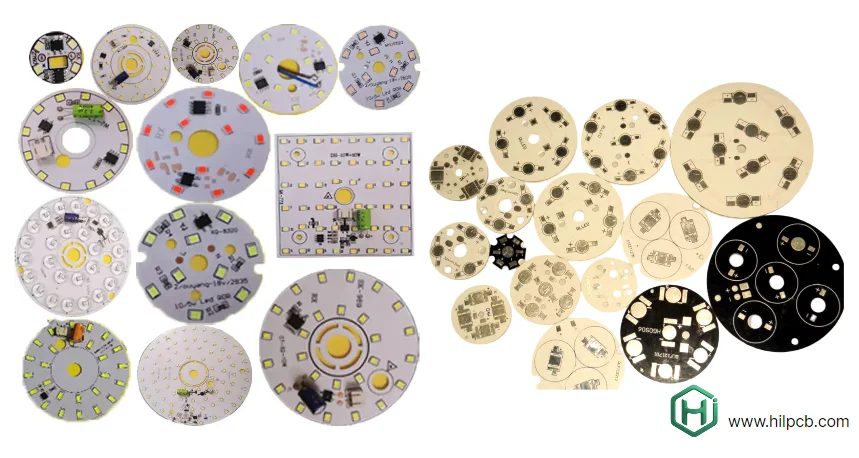
Prototype manufacturing bridges the gap between design and full production. For aluminum PCB projects, it ensures thermal, electrical, and mechanical performance are verified under realistic conditions — before mass investment begins.
At HILPCB, we combine rapid aluminum PCB prototyping with production-grade processes, supporting both small-batch and volume-scale transition. Our end-to-end services — from metal-core PCB fabrication to turnkey assembly — provide reliable, production-representative results in just 5–7 days.
1. Why Professional Prototyping Matters
Production-Grade Accuracy
A high-quality prototype uses the same materials, lamination pressure, and dielectric systems as full-scale manufacturing — ensuring results translate directly to production. Even slight variations in thermal interface layers can distort heat-transfer data for high-thermal PCBs.
Fast and Consistent Turnaround
5–7 day delivery is achieved through lean workflows and prototype-dedicated lines — not shortcuts. Automation, real-time scheduling, and fast material access ensure reliability without compromising traceability.
Iteration Support
Each prototype cycle serves a distinct purpose:
- Proof-of-concept validation
- Layout and material optimization
- Pre-production confirmation
Every iteration moves your design closer to mass production readiness.
2. Prototype Fabrication Capabilities
Material Options
Thermal conductivity range:
- 1–2 W/mK: Standard cost-effective builds
- 2–4 W/mK: Balanced LED and control circuits
- 4–6 W/mK: High-power or automotive systems
- 6–8 W/mK: Extreme-performance applications
Base alloys: 5052, 6061, 1100 aluminum.
Copper & Surface Finish
- Copper weight: 1–10 oz (standard to heavy copper)
- Finishes: HASL, ENIG, OSP, or immersion silver — compatible with SMT assembly and lead-free soldering.
Precision & Scale
- Min trace/space: 100–150 µm
- Drill size: 0.3 mm typical
- Hybrid FR4-aluminum builds and HDI PCB structures for high-density designs.
3. Design Validation and Testing
Comprehensive validation ensures prototypes reflect actual performance before production investment.
Thermal Testing
- Junction-to-base resistance measurements
- Infrared imaging under operating load
- Temperature rise mapping
Electrical & Mechanical Testing
- Continuity and isolation checks
- Impedance control validation
- Hi-pot testing up to 3000V
- Mechanical flatness and adhesion inspection
Assembly Verification
- Small-batch builds (5–50 pcs) for process trials
- Reflow simulation with aluminum base thermal profiles
- Post-reflow X-ray inspection and solder analysis
Environmental Testing
- Thermal cycling (-40°C to +125°C)
- Humidity and vibration exposure
- Aging and reliability simulation
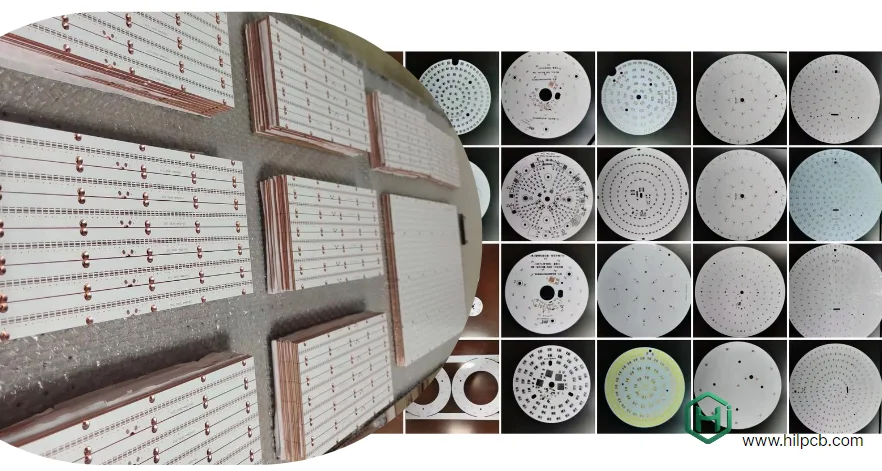
4. Small-Batch and Large-Volume Transition
After prototype validation, many customers require small-batch or pilot runs before full-scale production. HILPCB bridges these stages seamlessly with flexible capacity and consistent quality systems.
Small-Batch Production (50–1000 pcs)
- Ideal for design verification, beta testing, or limited product release
- Same materials, stack-up, and processes as volume runs
- Enables early market feedback while controlling cost
Large-Volume Manufacturing (1000+ pcs)
- Automated panelization for cost optimization
- Statistical process control for repeatability
- Supply chain integration for stable component sourcing
Both stages use unified quality systems, ensuring results scale predictably from prototype to mass manufacturing.
Parallel Scaling Advantage:
During small-batch production, our engineering team refines process parameters and tooling for upcoming high-volume runs — shortening your time-to-market by up to 40%.
5. Comprehensive PCB Prototyping Capabilities
While aluminum PCBs are core to thermal management applications, we also provide rapid prototyping for other PCB technologies, enabling mixed-technology product development.
- FR4 PCB: Standard rigid boards for control and signal circuits.
- Flex PCB: Lightweight flexible circuits for wearables or compact modules.
- Rigid-Flex PCB: Combines rigidity and flexibility in one structure.
- High-Frequency PCB: RF and microwave boards with controlled impedance.
- Ceramic PCB: Exceptional heat resistance and dielectric stability for precision sensors.
This multi-technology capability allows single-source management — particularly valuable when aluminum substrates are part of hybrid or multilayer assemblies.
6. Selecting the Right Prototype Partner
When choosing a prototype supplier, consider:
- Proven aluminum and hybrid PCB expertise
- Small-batch and volume-scale readiness
- ISO 9001 and IPC-A-600 process certification
- DFM and thermal analysis support
- Transparent communication and pricing
A capable partner ensures not only quick turnaround but also a consistent path to reliable, high-volume manufacturing.
Common Questions
Why is aluminum PCB prototyping important before volume production?
It verifies thermal, electrical, and mechanical behavior with production-representative materials and processes before major volume investment. That reduces the risk of discovering heat-transfer, assembly, or reliability issues after the design has already moved too far downstream.
What should a prototype run confirm besides basic electrical continuity?
A useful prototype run should also confirm heat dissipation, assembly behavior, flatness, adhesion, and manufacturability under realistic conditions. For many products, thermal imaging, reflow evaluation, and environmental stress checks provide more decision value than a simple pass/fail electrical test.
How does a supplier support the move from prototype to small-batch and mass production?
A capable supplier keeps materials, stack-up, process controls, and quality systems aligned from prototype through pilot and volume builds. That consistency makes small-batch results transferable and shortens the ramp to full production.
When is an aluminum PCB a better prototype choice than FR4?
Aluminum PCBs are usually the better option when the design has meaningful thermal loads, such as LED, power conversion, or automotive electronics. If heat spreading and thermal resistance are critical design variables, prototyping on FR4 would not represent final product behavior well enough.
Conclusion
Aluminum PCB prototype manufacturing lays the foundation for fast, reliable product development. By integrating rapid prototyping, small-batch flexibility, and multi-type PCB capability, you can validate your designs faster and scale with confidence.
HILPCB combines short lead times, precision fabrication, and cross-technology expertise — from aluminum and FR4 to flex and ceramic boards. Whether you need a single prototype, a 500-piece pilot run, or full-scale production, we provide seamless, high-quality manufacturing that accelerates your innovation cycle.